
The HFX 2025 Nobel Laureate Essays: Oleksandra Matviichuk with ‘Democracies Don’t Despair’
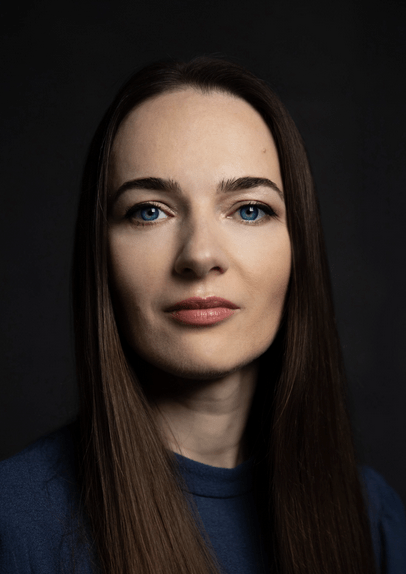
By Oleksandra Matviichuk
2022 Nobel Peace laureate and chair of the Centre for Civil Liberties
From the Policy Magazine HFX 2025 Nobel Peace Laureate Essays on Democracy Series
November 18, 2025
I don’t know how future historians will describe this historic period. The world order, based on international law and the UN Charter, is collapsing. Fires occur more and more frequently in different parts of the world because the international wiring is faulty, and sparks are everywhere.
We are losing freedom. Although last year, half of the world’s population were offered elections, we mustn’t be under any illusion. More than 80 percent live in societies that are not free or are only partially free. This means that only a minority have the right to vote for who they want.
The problem is not only that the space of freedom in authoritarian countries has narrowed to the size of a prison cell. The problem is that even in developed democracies, people are starting to call into question the Universal Declaration of Human Rights.
There are reasons. Current generations inherited democracy from their grandparents. They began to take it for granted. They’ve become consumers of democracy. Their understanding of freedom is the opportunity to choose between different cheeses in the supermarket. They are ready to exchange freedom for populist promises, economic benefits, and first and foremost, their comfort.
Perhaps people could afford such behaviour in peaceful times, but we are no longer in peaceful times. Decades of freedom are over even for Western societies, let alone for those parts of the world that have never had that luxury.
With the development of new technologies, change is the new norm. People spend more and more time in virtual space, polluted with fakes and disinformation. As a result, they lose the ability to distinguish between truth and lies.
Even residents of small communities no longer have a shared sense of reality. Without this shared sense of reality, people are unable to act together. Without common action, how can we protect our democracy?
Today’s authoritarian regimes don’t share a common ideology. However, they promote common narratives. They insist that facts don’t matter and truth doesn’t exist. They combat humanistic ideas, such as human rights, independent courts, and freedom of the press. They erode trust between people, infecting them with cynicism and apathy. They argue that dictatorship means stability and security while democracy means weakness and inefficiency.
The history of humankind convincingly proves that we should not give up, we should not despair. Even when we have no tools, our own positions and our own words remain.
It’s true that democracy is not perfect. Many are disappointed with it because a number of problems, including social inequality, remain unresolved. But authoritarian regimes don’t solve these problems either. People simply don’t have the right to complain.
We were so confident that democracy was the final answer that we stopped promoting it. No one emphasized to each generation that we have to perform two tasks in parallel: to protect our democracy and to perfect our democracy. There is no alternative.
We are used to thinking in categories of states and interstate organizations. But ordinary people have more power than they can even imagine. I know from my own experience that if you cannot rely on the international system of peace and security, you can always rely on people.
I recorded the testimony of Ukrainian scientist and professor Ihor Kozlovskii after his 700 days in Russian captivity. I had previously interviewed hundreds of survivors, and they had told me how they were beaten, raped, locked in wooden boxes, electrically shocked through their genitalia; their fingers were cut, their nails were torn away, their knees were drilled. Little could surprise me. However, Ihor mentioned a detail that struck me.
He described his daily life in solitary confinement. It was a basement room with no windows or sunlight and was poorly ventilated, making it difficult to breathe. Sewage flowed across the dirty floor. Rats crawled out of the sewer opening. And this renowned scientist told me how he gave lectures on philosophy to these rats just to hear the sound of a human voice.
Legally, Ihor Kozlovskii was a victim. He was abducted and held in inhumane conditions. He was tortured so severely that he had to learn to walk again. Yet, even this did not lead him to identify as a victim. He said that the foundation of our existence is not victimhood but dignity.
Dignity is action. We are not hostages of circumstance, but participants in this historical process. Dignity gives us the strength to fight, even in unbearable circumstances.
Right now, in countries worldwide, people are fighting for freedom and human dignity. Sometimes this fight may seem senseless because they face enormous power.
However, the history of humankind convincingly proves that we should not give up, we should not despair. Even when we have no tools, our own positions and our own words remain. In the end, that is not so little.
Despite everything, the story of our struggle is life-affirming, because these are dramatic times that raise hope.
This hope is not the confidence that everything will be fine. Rather, it is a profound understanding that all our efforts have meaning.
Nobel laureate Oleksandra Matviichuk and the Centre for Civil Liberies have been documenting war crimes in Ukraine for more than a decade. In related reading from 2024, Policy Q&A: Nobel Laureate Oleksandra Matviichuk on Ukraine, Human Rights and Winning the War.
With many thanks to the Halifax International Security Forum.