
Poilievre Should Win his Leadership Review, then Quit
June 20, 2025
Conservative leader Pierre Poilievre has been in political purgatory since the Conservatives’ loss in the April election, worsened by his own loss in the Ottawa riding of Carleton.
Instead of grilling Prime Minister Mark Carney in question period — his longstanding battleground of choice — Poilievre has been making calls to Conservatives around the country, both to gather their thoughts on why they lost the election and to shore up support for the leadership review now set for January 29-31 in Calgary.
That review may be easier for Poilievre to win than it otherwise would be if potential rivals were not holding back in the face of Carney’s popularity. While that may change between now and January, there is a risk that Poilievre’s perception of his own long-term viability will be skewed by that factor as he runs the gauntlet between loss and comeback.
Knowing that, Poilievre should do the right thing for his party and step aside after the review, even if he aces it. Though this was not necessarily clear on election night, the loss of Poilievre’s own seat has made him too vulnerable as leader. It’s time for him to pass the torch to someone whose political baggage won’t be a constant disadvantage in any policy debate or electoral battle.
Damien Kurek, the Conservative who was elected to represent Battle River-Crowfoot in Alberta, resigned to allow Poilievre to run, and Carney indicated long ago that he’d waste no time in calling the by-election, so Poilievre’s immediate purgatory may soon end.
No one is denying that Poilievre and his team moved the party forward in this election both in terms of seat count and popular vote. As has been pointed out many times, in any other circumstances, the Conservatives would have formed government with 41.3% of the popular vote. But it was not enough this time.
The party needs a new strategy and a new leader that are suited to dealing with Mark Carney as an opponent rather than Justin Trudeau.
Every politician has a finite reservoir of political capital and Poilievre’s has been draining steadily and rapidly since he lost his seat. In a recent Nanos poll, only 24.2% of respondents want Poilievre to be prime minister, compared to 49.7% for Carney.
Sure, these numbers might improve when Poilievre gets back into the House, but not necessarily — especially if he keeps saying and doing the same things he’s always done, which surely contributed to his election loss at both the national and riding levels. These numbers are not based on unfamiliarity. They are based on what Canadians know of Poilievre and how he compares to Carney.
Every politician has a finite reservoir of political capital and Poilievre’s has been draining steadily and rapidly since he lost his seat.
While the 46-year-old career politician is all but guaranteed to win both the byelection at the riding level and the leadership review at the party level, Poilievre’s April loss in his old riding has undermined his authority as leader and, in practical terms, has made it very difficult for his voice to be heard. On top of this, the process of getting him back into the House through a byelection — though understandable and expected once it was clear he lost in Carleton — has turned into a spectacle in its own right. The logistics are much easier to manage than the optics.
To be clear: there is nothing improper or illegal about Kurek deciding to step aside, nor is there anything barring Poilievre from running in Battle River-Crowfoot. Candidates don’t have to live where they run. And, if enough voters choose to support him, then he is their legitimate representative.
But it seems unfair that a winner must step aside for a loser. It would have been different had the Conservatives won the election, as then it would be a question of somebody stepping aside for the prime minister. As it is, the whole thing looks like Poilievre refuses to accept the results in his own riding and believes himself entitled to a seat even though he lost.
Mr. Kurek has been trying to deflect the media’s attention from the awkwardness of the situation and act like there’s nothing to see here, even though he’s leaving just four months before he reaches his pension eligibility. He told CTV’s Vassy Kapelos: “I didn’t get into politics for my pension.” Fair enough. But surely he didn’t get into politics to quit and give his seat to Pierre Poilievre either. And yet, here we are. And frankly, it’s not Kurek’s work to convince the public of the rightness of all of this. That’s for Poilievre to do.
Both the party and Poilievre himself would benefit from him winning the byelection, having a strong showing at the leadership review in January, and then leaving on his own terms and handing the party over in strong shape to a new leader.
It would be a distinguished end to his political career and a moment of transition for the Conservatives. Also, it would prevent the development of an internal leadership crisis should Poilievre’s numbers stay low compared to Carney’s. Poilievre would be wise to learn from Trudeau’s example: don’t wait until they push you out.
As Parliament winds down for the summer, Mark Carney is sitting at an approval rating of 67%. Bill C-5, his pivotal One Canadian Economy legislation has the Conservatives’ support. Poilievre was the right person to go up against Trudeau. They had a kind of political symbiotic relationship in that they both came alive in sparring with one another. Poilievre had a gift for harnessing the public’s frustration with the former prime minister.
But Carney is a different guy altogether. He’s more conservative, for one thing, which changes the relationship between the two parties. They are no longer defining themselves in opposition to one another.
The right leader will be the one that is the most effective critic of Carney’s performance without being overly consumed with partisanship. Poilievre should let the party use its strong showing in the last election to help them recruit that person.
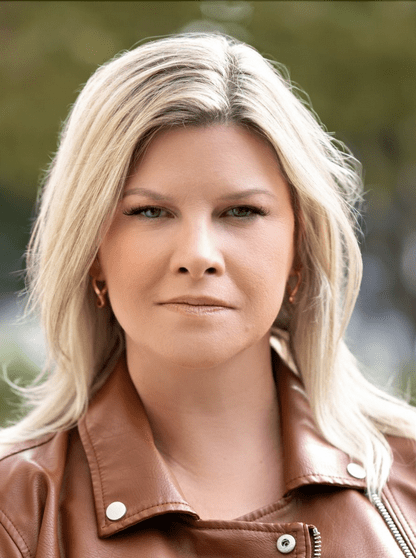
Policy Columnist Lori Turnbull is a professor in the Faculty of Management at Dalhousie University.