
The Digital Services Tax Standoff: An Own Goal We Could Do Without
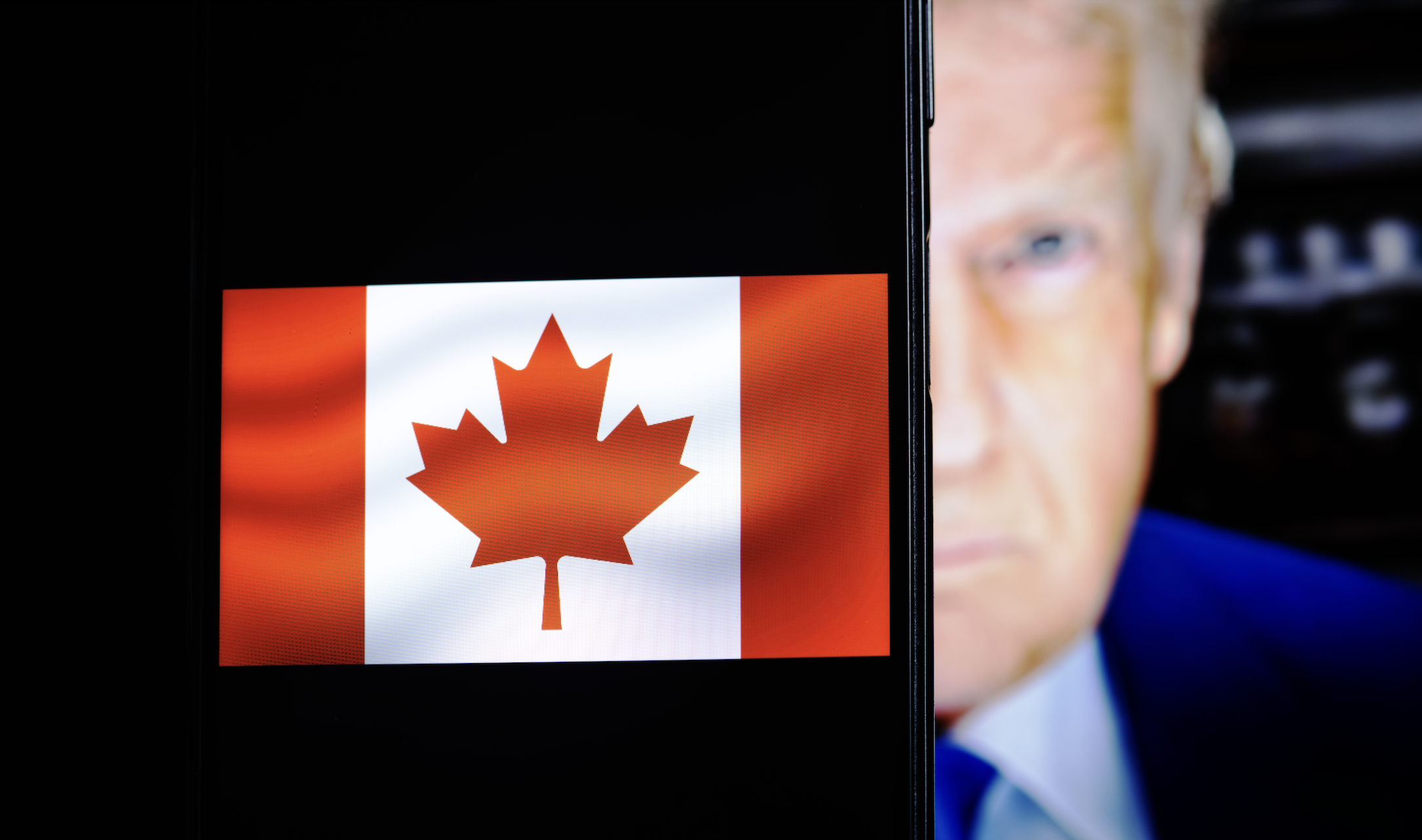 Donald Trump has halted Canada-US trade talks over Canada’s digital services tax/Shutterstock
By Perrin Beatty and Fen Osler Hampson
June 27, 2025
For the most part since coming to office, Prime Minister Mark Carney has deftly used a mixture of discretion and flattery in managing Donald Trump. The process has been remarkably successful – it’s even been several days since Trump last talked about annexing Canada.
Unfortunately, at a moment when Canada most needed to tread carefully, we’ve managed to score a classic “own goal.” The decision to start collecting the Digital Services Tax (DST) while we were engaged in delicate trade and security talks with the United States has put us on the defensive and handed President Trump a convenient stick to beat us with.
For a government that has shown sure-footedness on many files, this was a serious unforced error—and the consequences are now playing out in real time.
To be clear, there’s broad agreement—both here and elsewhere—that massive multinationals should pay an appropriate amount of tax in the countries where they generate revenue. The digital economy has made it far too easy for global giants to book profits in low-tax jurisdictions, leaving countries like Canada with a shrinking tax base.
The DST was conceived as a way to address this imbalance, and the principle behind it is hard to argue with.
But everything is politics to Donald Trump, and politics is as much about timing and tactics as it is about principle. Canada’s DST was introduced even as OECD members had agreed to a standstill on new digital taxes while negotiations continued on a global approach. Instead of waiting for a common solution—or at least for the U.S. to signal it could live with one—Canada pressed ahead, despite repeated and bipartisan warnings from American lawmakers, business groups, and the administration that this would provoke countermeasures.
What worries the “tech bros” in Silicon Valley isn’t so much the amount they’d pay to Canada, but the precedent Canada’s DST sets. If one G7 country can impose a unilateral digital tax, what’s to stop others from following suit? For the global tech industry, the risk is a patchwork of national taxes that could quickly become unmanageable—and very costly.
The DST could have been a useful bargaining chip in our negotiations. With trade discussions underway, it made sense to keep the option in reserve, not to implement it just as negotiations were reaching a critical stage. Instead, we’ve given Trump a ready-made grievance. He’s responded with his trademark escalation—declaring all trade talks with Canada over and threatening new tariffs within days. That’s classic Trump: maximum pressure, unpredictable moves, and a narrative that frames America as the aggrieved party.
What worries the ‘tech bros’ in Silicon Valley isn’t so much the amount they’d pay to Canada, but the precedent Canada’s DST sets.
When Trump posts on social media that “We have just been informed that Canada…has just announced that they are putting a Digital Services Tax on our American Technology Companies,” he is accusing his embassy in Ottawa and the State Department of astonishing incompetence in either not noticing the DST before now or not mentioning it to him before his meeting with Mark Carney just over a week ago.
And when he says there are “no negotiations,” that’s more show than substance. Behind the scenes, officials on both sides are no doubt still talking, searching for ways to get things moving again. That’s how diplomacy works, especially in dealing with a president who thrives on brinkmanship and drama.
The real pity is that this crisis was foreseeable and avoidable. The DST’s first payments are due imminently, covering revenues retroactively to 2022—a move that was always going to provoke a sharp American response. Business leaders, pension funds, and the tech sector all urged Ottawa to pause, warning of higher costs for Canadians and the risk of a trade war. Their advice was ignored.
There’s also a deeper policy lesson here. The DST, in many ways, resembles the old Manufacturers’ Sales Tax that Brian Mulroney wisely replaced with the GST. Like the MST, the DST is an upstream, business-level tax that’s mostly invisible to consumers but distorts the market and invites retaliation. The GST, by contrast, is a broad-based, transparent consumption tax that treats all goods and services equally.
If we want to tax digital services, another option is to do so at the point of use, as we do with the GST, rather than singling out a handful of foreign firms.
In the end, Canada’s handling of the DST should serve as a reminder of the need for constant caution and strategic patience—especially when dealing with a U.S. president who uses unpredictability as a negotiating tool. We should have anticipated that Trump, who has made a show of fighting European digital taxes, would make an example of Canada to warn others.
Instead of suspending implementation to use to use the DST as a bargaining chip, we’ve forced ourselves onto the defensive, risking both our economic interests and the good will so carefully built up in recent months.
Good policy is not just about good intentions. It’s also about anticipating consequences, listening to allies, and avoiding foreseeable crises. On the DST, Canada failed to foresee. Now, we must work to get our trade talks back on track—this time with a little more caution and a lot more foresight.
The Honourable Perrin Beatty, PC, OC, is the former President and CEO of the Canadian Chamber of Commerce and served as a federal minister in seven portfolios, including Treasury Board, national revenue, solicitor general, defence, health, communications and external affairs.
Fen Osler Hampson, FRSC, is the Chancellor’s Professor and Professor of International Affairs at Carleton University, and President of the World Refugee & Migration Council. He is the former Director of Carleton’s School of International Affairs and author and co-editor of some 48 books on international affairs.