
On Being Canadian: The Perspective of Distance
 Shutterstock
July 6, 2025
Most historians grant Alexis de Tocqueville recognition as the first person to write about how much greater an appreciation one has of one’s home country from a distance.
In 1831, the young, arrogant, patrician, French nationalist was commissioned — with his friend, the magistrate Gustave de Beaumont — to conduct a study of American prisons by the French government. It changed his life. Arriving with his nose held high, a son of the aristocracy whose family had survived the French Revolution only a few decades earlier, Tocqueville was converted to the power of democracy, local governance and strict limits on the power of the state over its citizens.
His magnificent Democracy in America must have horrified his nationalist French friends and family. He wrote thoughtfully on how the power of “citizen democracy” gave a strong foundation and momentum to American development that no European country could match.
Tocqueville’s American epiphany gave a sharp edge to his analysis of post-revolutionary France. It also made him a somewhat bewildered politician, shifting from left to right. He struggled to find the right balance between freedom and order. He was torn between the sometimes chaotic process of community-led nation building in America, and the orderly but stultified centralization of France.
Throughout my adult life, as I’ve looked back at Canada from afar, I’ve thought often of Tocqueville. His revelation that he knew France better as a result of his American travels, through isolated farm communities and big cities, north and south, resonated with me.
My father, the late Val Sears, served when I was a kid as a foreign correspondent for The Toronto Star. We would listen to him rapt, during brief, scratchy phone calls from places we could not find on a map: Biafra, Luanda, Vladivostok. It lit a fire in me to see those strange, distant worlds. I later spent 18 years looking back at my homeland from Europe and Asia. As a Canadian, it both changed me and made me less unquestioning of some Canadian certitudes.
Of all the ways that travel has been described, one might be that it is a process of understanding how our assumptions about the rest of the world inform our assumptions about ourselves. When I first started travelling, the most jarring culture shock had to do with the most prosaic, everyday differences — public pissoirs in the streets of Paris, atrocious English hamburgers (the Hard Rock Café empire was built on the hunch of two young Americans in London that locals would fall in love with a “real” hamburger. They did) — rather than the exotica. A son of antiseptic, Presbyterian Toronto, I would mutter to myself about local standards; the classic tourist affliction of extrapolating every mugging into a national pastime.
As I saw more of the world, my Canadian smugness began to fall away. Local friends helped, offering a good smack at cultural arrogance as needed. I smiled at the parochialism of Canadian ‘blue’ Sundays and shook my head when disgruntled Canadians tried to turn unshoveled sidewalks into a political movement.
Donald Trump has done us an enormous favour by pushing to the forefront, for the first time in my lifetime, a national discussion about what we revere, what we need to change, and what we could do as a nation if we dropped some of our regional parochialisms.
Then came the Tocqueville moment when I had to say, “Actually, they do this a hell of a lot better than we do”, about Canadian holy icons. The French health system, an impossible-to-dissect-or-explain mix of public and private, local and national, is one of the best in the world. Far better service standards than ours and cheaper, too. The Finns have one of the lowest crime rates in the world and a deep aversion to locking people up for drug use or car theft. They are proud of their tiny prison population, and some Finnish prisons have no walls. Tocqueville would be astonished.
Inevitably, the further you travel, the more you dig, the more uncertain you become about Canada as number one. Especially when you hear a group of drunken Canadians in a bar in Jerusalem or Chang Mai, bitching to locals to “Speak English, for Chrissake!”
You find yourself sitting quietly on a beach, by a fire, or in an awe-inspiring seafood restaurant gazing at a vast river, lit only by the lights of small fishing boats with a group of veteran Canadian expats. You always converge on the paradoxes of national comparisons around the second bottle of wine.
Sometimes it begins with the culturally blind man, who declares, “Ten years here and I still have not met anyone who understands what a miracle we Canadians are. Three nations forming the most successful democracy on the planet!” This is usually met by the more diffident patriot muttering, “Too bad so many of the first nation can’t even drink their water, eh?”
The conversation ebbs and flows between Canadian firsts and bests, and tragedy and shame. But it usually ends with someone saying something like:
“No, we are not the best. Yes, we have a lot to learn. But we believe in and support each other. We acknowledge how blessed we are by the geography of our birth. We are proud of being the most successful nation in the world at welcoming and celebrating more people from more places than any other nation in the world. We just don’t brag.” Even the xenophobes have to grudgingly join in the chorus of agreement.
Donald Trump has done us an enormous favour by pushing to the forefront, for the first time in my lifetime, a national discussion about what we revere, what we need to change, and what we could do as a nation if we dropped some of our regional parochialisms. One can already see it changing our politics. It will take real work for that new sense of ourselves to deliver solutions and to make decisions that last.
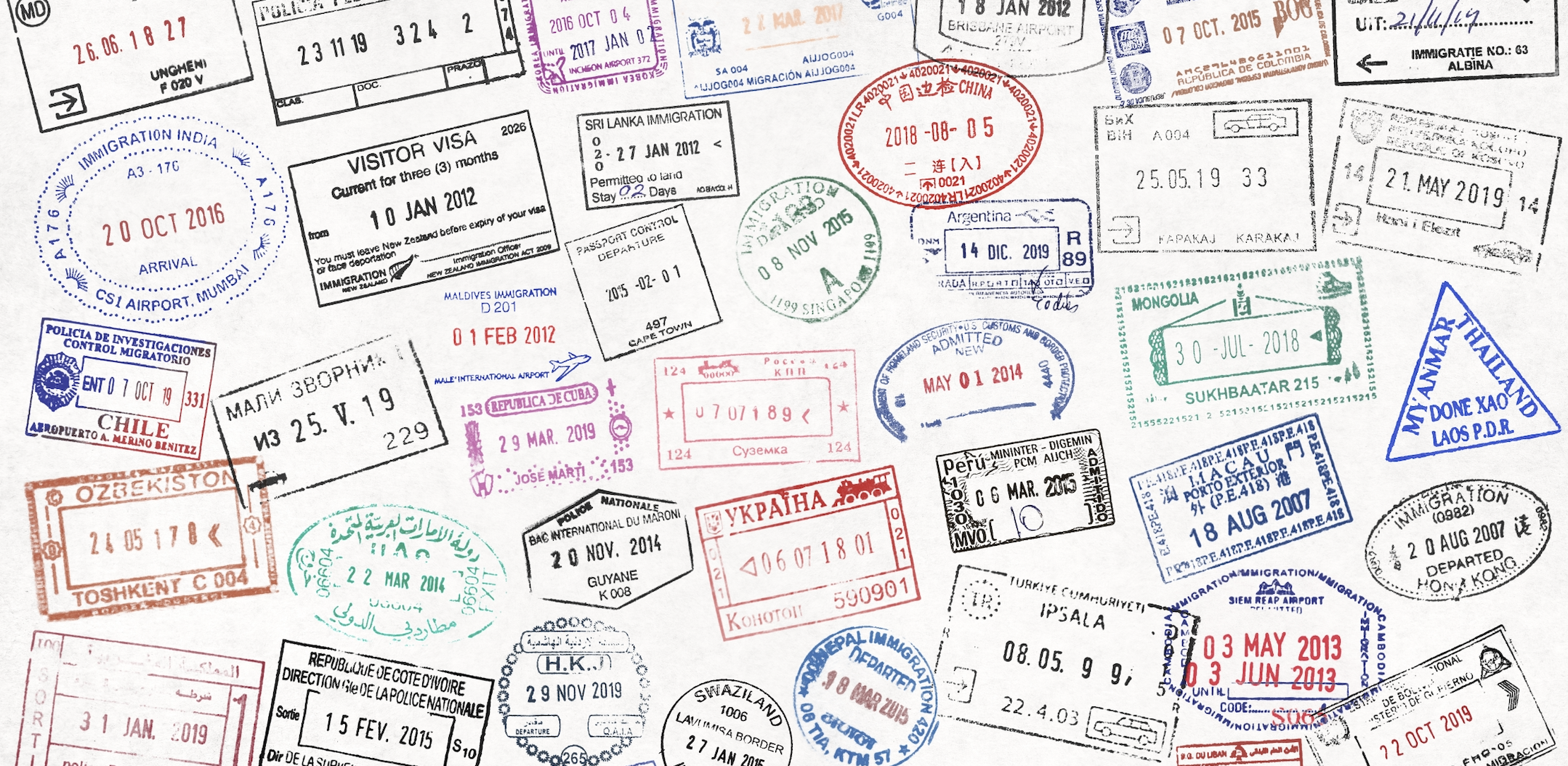
The most emotionally overwhelming realization of what being a Canadian is for me, of how blessed we are as a people, is how we are envied. The number of times I’ve met someone — a child in Palestine, a young mother in Nicaragua, or the airport customs official in Greece, who, as he stamped my passport, waving me on, said, “I hope you never forget how lucky you are.”
Veteran political strategist and Policy Contributing Writer Robin V. Sears lived and worked in Tokyo as Ontario’s senior diplomat and later as a management consultant in Hong Kong.