
Canada’s Last-Mover Advantage in Trump’s Tariff War
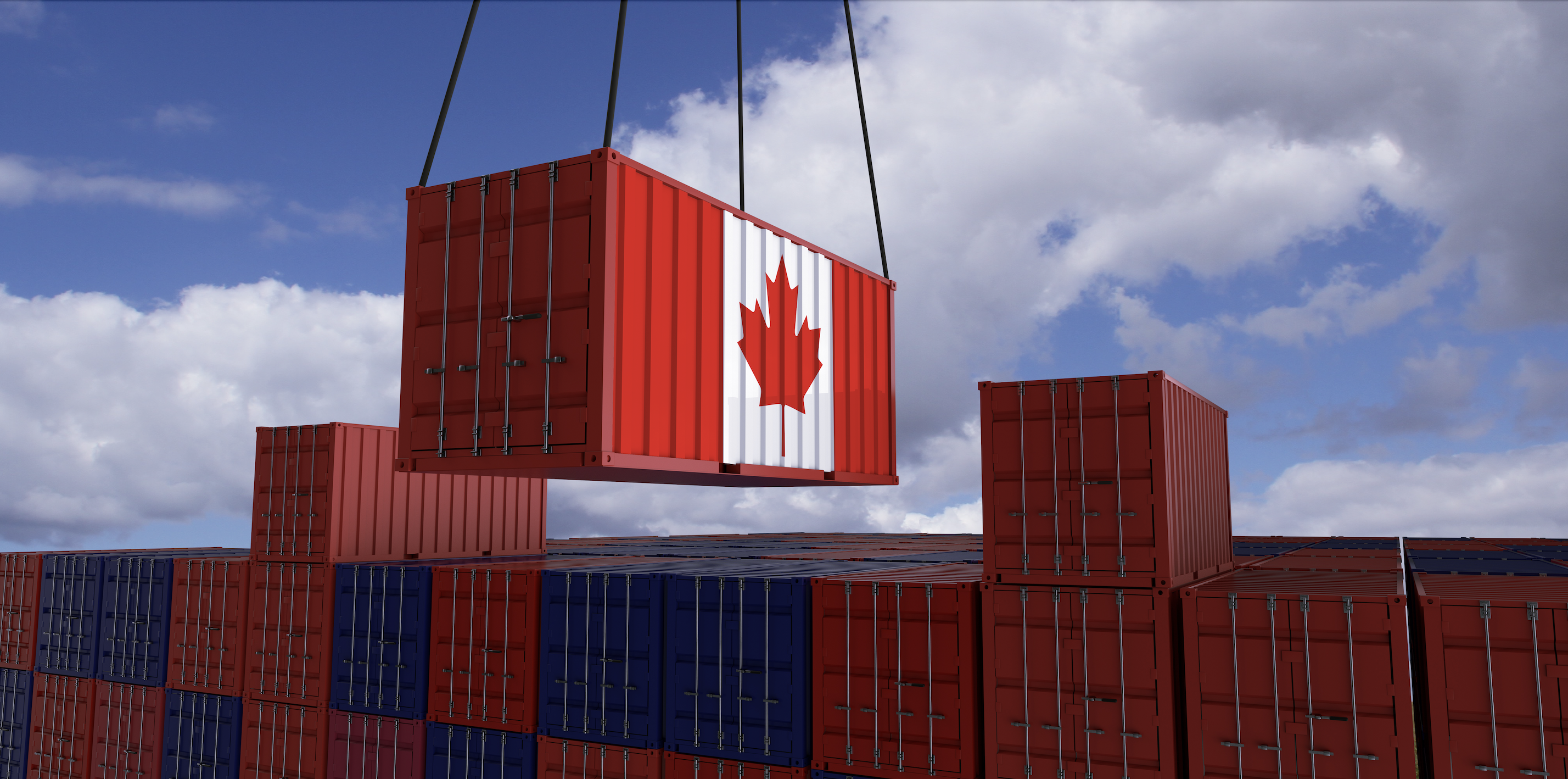 Shutterstock
By Fen Osler Hampson
July 11, 2025
On August 1st, unless a breakthrough is achieved at the negotiating table, Canadian exporters could face a punishing new reality: a 35% tariff on goods entering the United States. This threat, the latest salvo from President Trump, is sending shockwaves through Canadian boardrooms and Ottawa. Yet, as with so much in the Trump era, crucial details remain shrouded in a fog of uncertainty.
Are these tariffs a blanket measure, or will they target only non-CUSMA (Canada-United States-Mexico Agreement) compliant goods? Reports from the Wall Street Journal and Politico, citing unnamed White House sources, suggest even U.S. officials are still debating the scope and implementation.
What is clear, however, is the shifting mood among Canadian officials. Gone is the hope that zero tariffs—on CUSMA or non-CUSMA goods—will be restored. Instead, there is a growing resignation to the reality that a tariffed world is the new normal under the Trump administration. The critical question now is not whether tariffs will exist, but at what level they will ultimately settle.
Conventional wisdom suggests a general tariff rate of around 10%, though sector-specific rates could be higher or lower depending on the outcome of the U.S.’s bilateral negotiations with other trading partners. This uncertainty is compounded by the Trump administration’s willingness to use tariffs as both a bargaining chip and a blunt economic instrument.
To understand the rationale behind these tariffs, it’s not enough to parse the President’s social media posts. Instead, one must look to the intellectual architecture underpinning the policy—most notably, the work of Stephen Miran, Chairman of Trump’s Council of Economic Advisers. In his Hudson Bay Capital paper published last year, Miran lays out a stark diagnosis: the U.S. fiscal situation is unsustainable and the strong dollar is fueling a voracious appetite for foreign goods. With a value-added tax (VAT) off the table for political reasons—which is what other countries, like Canada, use to generate revenues and curb consumption—tariffs are a second-best solution.
Though it is still early days, it looks like Trump’s tariffs are achieving their intended effect. The U.S. dollar, once buoyed by global demand, has tumbled against major currencies, easing some of the competitive pressure on American manufacturers. Consumer spending is down. Unemployment levels in the US are still at a historic low, 4%. Most notably, tariffs are generating significant revenues as compared to previous years: U.S. Customs and Border Protection has already collected $108.75 billion this year compared to a total of $88.07 billion in FY 2024.
Canada’s best move is to keep its head down, play it smart, and let others go first. By doing so, we can secure the best possible terms in a world where zero tariffs are a relic of the past.
So, where does this leave Canada? For decades, Canada has relied on privileged access to the U.S. market, secured through a series of trade agreements. But in a tariffed world, the rules have changed. The challenge now is to navigate this new landscape with strategic patience and clear-eyed pragmatism.
In business and trade negotiations, a first mover advantage refers to the benefits gained by being the first to enter a new market or set the terms of a deal. First movers can shape the rules, establish brand recognition, and lock in favorable positions before competitors react. However, this approach also carries risks, as early entrants may face unforeseen challenges or make costly mistakes.
By contrast, a last mover advantage means waiting to see how others fare before making your move. Last movers can learn from the successes and missteps of those who went first, allowing them to negotiate better terms or avoid pitfalls.
In the context of a tariff war, this means observing the tariff rates the U.S. applies to its other trading partners—the EU, Japan, China—then negotiate for lower rates or more favorable sector-specific terms for Canadian goods.
Above all, Canada should resist the urge to jump first. Instead, by waiting to see the general and sector-specific rates others get, Canada can negotiate for tariffs that are lower than those imposed on its competitors. This approach, the “last mover advantage,” could allow Canadian exporters to become relatively more competitive in the U.S. market, even as overall access becomes more restricted.
Consider, for example, sectors like intermediate goods (autos/autoparts, chemicals, plastics, rubber products) lumber, or agri-food, where Canada has historically lost market share to lower-cost producers in Europe, Latin America and Asia. If, for the sake of argument, the U.S. ultimately settles on 30-35% tariffs on Chinese goods or somewhat lower reciprocal tariffs on the EU, say 15%, but agrees to only a 5-10% tariff on Canadian products, Canadian firms could reclaim lost ground and potentially expand their footprint in the world’s largest consumer market.
This is not a call for complacency. The risks are real, and for some sectors, the adjustment will be painful. But neither is it a time for panic or rash action. Canada’s best move is to keep its head down, play it smart, and let others go first. By doing so, we can secure the best possible terms in a world where zero tariffs are a relic of the past.
In the end, Canada’s last mover advantage may not restore the golden age of free trade, but it can ensure that Canadian goods remain competitive in a tariffed world. The rules have changed, but with patience and strategic thinking, Canada can still come out ahead.
Policy Contributing Writer Fen Osler Hampson, FRSC, is the Chancellor’s Professor and Professor of International Affairs at Carleton University, and President of the World Refugee & Migration Council. He is co-chair of the Expert Group on Canada-US Relations.