
Conversion Therapy is Banned. Why Does its Harmful Ideology Persist?
 Égale
Égale
Policy’s Emerging Voices section showcases and amplifies policy opinion and analysis from talented PhD students and recent doctoral graduates.
By Al-Amin Ahamed
July 14, 2025
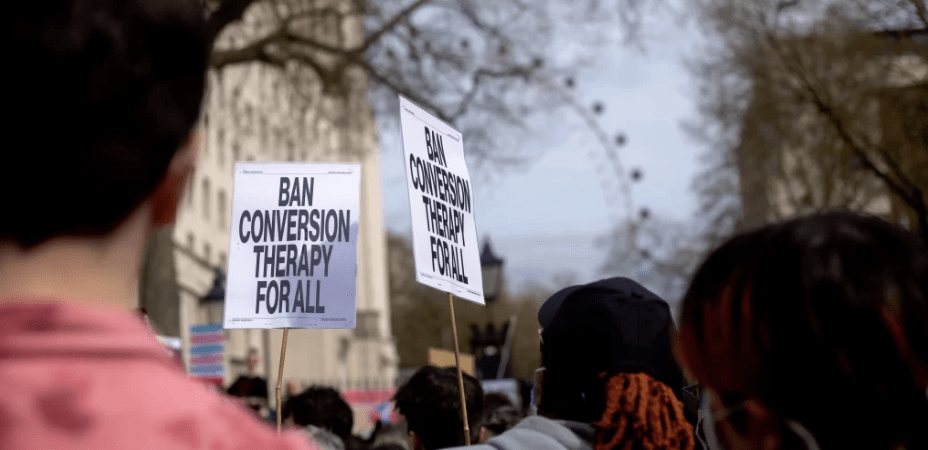
Canada’s federal ban on conversion therapy, which came into effect on January 7, 2022, marked a watershed moment in protecting 2SLGBTQ+ rights. The law criminalizes practices aimed at changing or suppressing someone’s sexual orientation or gender identity — a human rights violation long discredited by major medical and psychological organizations as both ineffective and harmful.
Yet nearly three years on, the underlying ideology that sustained these practices has not disappeared. Instead, it continues to manifest in subtler, less regulated forms, undermining the spirit of the law and threatening the well-being of vulnerable communities.
The Criminal Code now prohibits any effort, by force or coercion, to deny someone’s authentic identity. Survivors, advocacy groups, and policymakers rightly celebrated the legislation, Bill C-4, as historic. Yet to date, there have been no criminal charges or prosecutions under the law. This is not due to a lack of ongoing harm, but because those promoting these practices have adapted their language and methods to avoid legal scrutiny. Terms like “healing trauma,” “unwanted same-sex attraction,” or “good faith teaching” are now often used as euphemisms for efforts that continue to invalidate queer and trans identities.
This trend is not unique to Canada. In the United States, where similar bans exist in several states, research shows that conversion therapy persists under vague therapeutic or spiritual labels. Canadian practitioners have likewise shifted tactics, presenting harmful interventions as neutral or even beneficial support. Without clear enforcement mechanisms or broader legal definitions, the law risks being symbolic rather than substantive.
The damage caused by these covert forms of identity suppression is both profound and well-documented. Research from Stanford Medicine and others has found that survivors of conversion attempts are at significantly higher risk of depression, anxiety, post-traumatic stress disorder, substance abuse, and suicidality. These outcomes are particularly severe for those subjected to both sexual orientation and gender identity-based interventions.
Crucially, the reach of conversion ideology is not limited to fringe groups or outdated religious movements. It disproportionately targets transgender and gender-diverse individuals, as well as racialized and socioeconomically disadvantaged populations—those already facing systemic discrimination. For these communities, the legacy of conversion therapy is not a historical footnote; it is an ongoing crisis.
The goal must not simply be to stop harm, but to create the conditions in which all people, regardless of how they identify, can live with dignity, joy, and freedom.
One of the more insidious modern adaptations of conversion thinking is the moralization of celibacy. Presented by some religious organizations as a virtuous path, celibacy is increasingly weaponized against queer and trans people as the only acceptable option for “living faithfully.” While celibacy can be a meaningful personal choice, its promotion as a compulsory moral standard for 2SLGBTQ+ individuals strips away agency and reinforces the idea that their identities are inherently disordered. This framing, while legally permissible, perpetuates the same psychological harm as more overt conversion practices.
The law’s inability to address these evolving tactics reveals the limitations of legislation without enforcement or broader systemic reform. Frontline professionals—police officers, healthcare providers, social workers—often lack the training to identify subtle forms of conversion ideology. Survivors, in turn, may be reluctant to report their experiences due to fear of re-traumatization or disbelief. Establishing alternative reporting mechanisms through institutions such as the Canadian Human Rights Commission or professional regulatory bodies would create safer, more accessible pathways for accountability.
Equally important is the expansion of affirming mental health care and community support. Organizations like MindMapBC offer a model for comprehensive, identity-affirming services: peer support, trauma-informed counselling, and culturally competent care. These programs do more than heal past wounds—they foster environments in which 2SLGBTQ+ individuals can thrive.
To that end, federal and provincial governments must prioritize funding for affirming care, particularly in underserved regions. Mental health providers should be equipped with specialized training to support diverse identities, and public education initiatives must challenge the myths that still underpin conversion ideology—namely, the false belief that queer and trans identities are illnesses to be treated rather than selfhoods to be embraced.
Finally, existing legal definitions must be revisited and expanded. Any effort, regardless of format or intention, that implicitly seeks to change or suppress someone’s gender identity or sexual orientation must be understood as a form of conversion therapy. This includes so-called “spiritual counselling,” pastoral care, or coaching that encourages conformity to heteronormative or cis-normative standards under the guise of personal development.
Banning conversion therapy was a critical milestone, but it is not an endpoint. The persistence of its underlying ideology, in new forms and familiar spaces, demands sustained attention from policymakers, institutions, and civil society. Protecting 2SLGBTQ+ individuals from identity-based harm requires more than criminal prohibitions. It requires a multi-pronged approach: broader legislation, improved enforcement, accessible affirming care, and a national commitment to dismantle the narratives that pathologize difference.
The goal must not simply be to stop harm, but to create the conditions in which all people, regardless of how they identify, can live with dignity, joy, and freedom. The law set the foundation. Now it’s time to finish the work.
Al-Amin Ahamed (he/they) is a Doctor of Pharmacy from the University of Toronto’s Leslie Dan Faculty of Pharmacy and a recent graduate of the Max Bell School of Public Policy at McGill University, where he was a McCall MacBain Scholar. As an experienced pharmacy professional and a member of the 2SLGBTQ+ community, Al is committed to bridging the intersections of science and policy to advance global health equity through evidence-based policy interventions.