
Development in the Age of Populism: An Accidental Postmortem from the World Bank
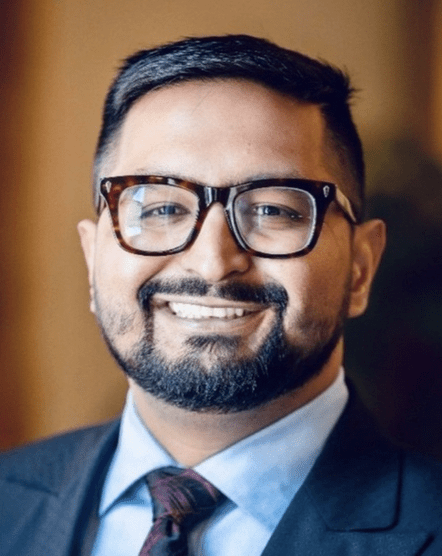
By Anil Wasif
July 23, 2025
It was difficult to put on a suit and tie and sit in meetings in Washington this week for the World Bank’s Annual Bank Conference on Development Economics (ABCDE). I was present and accounted for intellectually, but my emotional focus was elsewhere.
As I walked across the polished marble floors and took my seat in the Preston auditorium Tuesday as a World Bank Government Analytics fellow, the language on stage was of “institutional decay” and “populist anger.” But my mind was thousands of miles away, in Dhaka, amid the terrible aftermath of Monday’s crash of an Air Force jet into the city’s Milestone School and College. The theme of this year’s ABCDE conference, Development in the Age of Populism, was meant to be a high-level academic exercise. Instead, it felt like a live postmortem of the tragedy that has, at this writing, stolen 32 lives.
The dissonance was jarring. One by one, the experts on stage, in their calm and measured tones, unintentionally wrote the coda to the disaster at Milestone, which had flooded my phone with family messages and heartbreaking updates for the previous 24 hours, and was still unfolding on my screen. They were mapping the fault lines of a global political earthquake, and I was watching in real time as dozens of lives were swallowed by one of its chasms.
As Danny Quah, Dean of the Lee Kuan Yew School of Public Policy at University of Singapore, spoke of a world defined by anger, where official narratives of progress mask the painful “lived experience” of the people, I thought of Bangladesh’s reputation as a “development darling.” We read the aggregate numbers—the rising GDP, the booming textile exports—and we build a story of success. But as Quah later noted in the Q&A, that story didn’t account for the lived experience of youth who see their economic conditions disrupted, who fear they are “trapped into patterns of social immobility.”
The hypocrisy is in the violent rupture of the social contract—a state’s machinery of ‘defence’ becoming a direct threat to its own innocent citizens.
The crash of the BAF jet in Dhaka Monday is the ultimate, catastrophic lived experience. It shatters the macroeconomic narrative with a brutal, localized truth: a military jet, a symbol of a successful state, falling from the sky onto its own children—the very generation whose opportunities feel most precarious.
But it was the World Bank’s own Chief Economist, Indermit Gill, who truly laid the system bare. Speaking with an insider’s brutal honesty, he diagnosed a sickness in our global institutions: a “failure to modernize,” a “failure to be honest,” and a descent into hypocrisy, where elites “say one thing and they do another.”
The failure to modernize is not just about flying an aging aircraft; it’s about a calcified institutional mindset that normalizes routine training flights over a megacity. The hypocrisy is in the violent rupture of the social contract—a state’s machinery of “defence” becoming a direct threat to its own innocent citizens. We usually think of this betrayal of the taxpayers who fund a state’s weaponry by its deployment against them in terms of riot police turning on protesters or Trumpian ICE militias rounding up “aliens”. Sometimes, it can hit your children in a fireball.
Gill’s third point, the failure to be honest, is where the blame spreads, becoming a stain that no single administration can wash away. In the case of Bangladesh, this is not the failure of the current government alone, which, per the end of years of autocratic misrule by Sheikh Hasina in 2024 is now led by Nobel laureate Muhammad Yunus. It is the bill coming due for decades of institutional decay fostered by the toxic, cyclical politics of both the Awami League and the Bangladesh Nationalist Party. As University of Chicago economist and President of the Center for Global Development Rachel Glennerster noted Tuesday of partisan groups in another context, they “no longer work together.”
AP video of the BAF jet crash in Dhaka on July 21, 2025/AP
In Bangladesh, this has translated into a zero-sum political culture where each successive government purges and politicizes the nation’s institutions, from the civil service to the military. Competence and integrity become secondary to party loyalty. In such an environment, as Gill joked about the building we were all meeting in, “there’s no independent thinking”— the very kind of critical thought required to raise safety concerns and prevent disasters.
This is not a theoretical problem. Recent Bangladesh history is rife with examples of this decay. Under the Awami League, the country has seen lavish spending on prestige projects—such as the nation’s first satellite, Bangabandhu-1, and massive infrastructure contracts for bridges and power plants—that have been dogged by persistent allegations of inflated costs and funds being funneled to politically connected firms. On the other hand, the BNP’s time in power was characterized by a different, though equally corrosive, style of institutional graft, including cases involving millions in government kickbacks for contracts.
While one government is famously accused by the World Bank of siphoning off millions from mega-projects, the other is remembered for literally unscrewing the fixtures of the state. The style differs, but the result is the same: the hollowing out of public trust and the degradation of the state itself. This creates a public perception of progress, but it’s a progress where a significant portion of the investment is lost to a system of patronage. Based on what we’ve seen so far of Donald Trump’s approach to trade deals, it may be a blueprint for the transformation of American commerce.
How does such rot fester unseen? Glennerster offered an answer. She described how institutions push the public away by making their operations seem “mind-numbingly complicated.” I realized she was describing the very veil of “national security” and “technical protocol” that has likely shielded the BAF’s internal issues from public view for years, under multiple governments. It is a black box by design, an accountability vacuum where jargon is used to deflect legitimate questions. Monday’s crash tore through that shield of complexity.
After I left the conference, I found myself staring at the Washington Monument, its stark, enduring form piercing the sky.
The inevitable backlash that the panel discussed is now underway. The student-led protests now happening in Dhaka are the furious, logical response to an institutional failure. These are the very youth Quah described, whose anger is fueled by a sense that their future is being compromised by a corrupt system. The Milestone School crash is not an isolated event to them; it is the final, undeniable proof that the institutions that should be guaranteeing their future are, in fact, risking their present.
After I left the conference, I found myself staring at the Washington Monument, its stark, enduring form piercing the sky. My mind drifted not to Dhaka at first, but to the crash that happened right here, earlier this year—the mid-air collision over the Potomac. I remembered the discourse that followed: congressional hearings, NTSB investigations, a focused, technical debate about flight corridors and regulatory oversight. It was a tragedy, a failure within the system. The crash at Milestone School was not a failure within a system; it was the failure of a system.
Standing there, looking at that silent obelisk, I knew that trust is not something that can be rebuilt in a conference hall or with a commission of inquiry that papers over decades of political failure. It is not a monument to be admired from a distance. It must be earned back in the streets, with radical transparency, meaningful accountability, and a complete break from the corrosive political cycle that put that plane on its fatal course.
Only then can we walk our talk of a new and better democracy. Justice, for the lives so needlessly, unforgivably lost, demands nothing less.
Policy Columnist Anil Wasif is a senior civil servant in the Ontario government. He serves on the University of Toronto’s Governing Council and the advisory board of McGill’s Max Bell School. Internationally, he serves on the OECD’s Infrastructure Delivery Committee and the World Bank Economic Development Institute’s Community of Practice. He co-owns and manages the Canada-born global non-profit BacharLorai. The views expressed are his own.