
Canada’s Defence Inflection Point Has Arrived. Are We Ready?
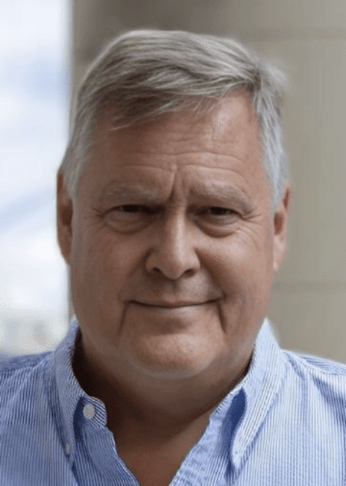
By Peter Jones
August 14, 2025
“Inflection point” is a mathematical term that speaks to the point at which the trajectory of a curve changes direction suddenly and significantly. In general usage, the term was popularized in business to mark the moment where a company needs to fundamentally change its assumptions and strategy in response to a new environment.
In politics, it has been most recently and closely identified with former President Joe Biden, who used it throughout his term to describe our current systemic tensions.
Much of the anxiety felt in Canada and the world today stems from the realization that the United States can no longer be counted on to behave the way it has behaved for the past century, and because of its status as a superpower, that change carries disproportionate impact.
In other words, we are at an inflection point.
For Canada, this is an especially trying moment. It will take time to find our way forward, but we need to begin the journey with a firm sense that we are not marking time, waiting for the old US to re-emerge. As the saying goes “Hope is not a strategy.” In all areas, we need to start thinking more for ourselves and asking what it is we really want.
On defence, for example, the bedrock assumption that the US would be front and centre in defending our shared concept of what is right is no more. It is now quite imaginable that attacks on what we value will have to be met by coalitions of nations without the US at their head. Indeed, as we watch what could be an attempt to militarize internal security within US cities, it is conceivable that challenges to what we value could come from the United States.
This realization has profound consequences for the kind of military we need to build with all of the new money the government is determined to spend.
The foundation of our defence planning since 1945 has been the assumption that interoperability with the US military is the critical imperative. Equipment was purchased to support this, and our military trained for it. This has inevitably created a legacy and a mindset in the organizational culture of our defence and security establishment.
Senior members of our Armed Forces have spent their entire careers under the assumption that their primary job was to field forces that could operate seamlessly with those of the US when called upon to do so.
This mindset will not change easily. Today, the voice of Canada’s senior military leadership, as expressed by retired generals and admirals, is virtually united in the view that we must “stay the course” and purchase the latest American kit. Anything less would result in a Canadian military incapable of fulfilling its basic task; to operate alongside the US in a coalition.
For Canada, this is an especially trying moment. It will take time to find our way forward, but we need to begin the journey with a firm sense that we are not marking time, waiting for the old US to re-emerge.
But the inflection point means that the time has come to ask what this seamless interoperability is actually for. When it was inconceivable that we would not be fighting alongside the US, it made sense. But if we now live in a context in which this is no longer automatically the case, is seamless interoperability so vital or even wise? And who do we need to be able to co-operate with in future?
The short answer is those countries and entities who still believe in the same things we do. The list is not long: Britain; Australia; New Zealand; the EU (both as an institution and with member countries); Japan; South Korea. There may be others who will join it, but that is about it today. None of these comes close to the US militarily. Economically, they could if they could agree to act together. And militarily, perhaps coalitions of them could make a difference.
But they have started realizing that the US cannot be relied upon and are going to have to think about defence in new ways. Equipment purchases and personnel training have to prioritize relationships beyond the US. Consortiums of nations will have to come together to develop sophisticated weapons, rather than relying on the US to do so, and make them available.
For Canada, this will be particularly challenging. Geography dictates that some degree of interoperability with the US will always be necessary – the defence of North America will always require us to work together on some level. But we must learn when interoperability with the US is essential and when it is essential that we prioritize new partnerships.
It is thus a question of managing a complex new reality that will feature degrees of interoperability with various countries — and groups of countries — for different purposes, and mothballing the assumption that, if we can operate seamlessly with the US across the full spectrum of military capability, everything else will take care of itself or just isn’t important.
All of this will be difficult for the Canadian military. Conditioned to see interoperability with the US as an enormous strategic advantage of our location, many will insist that purchasing equipment from others and training to operate with them at the same level we do with the US is a second-best objective. When asked for an opinion, the military will almost always argue that the sticking with the US is the safe and smart play.
Political leadership will be required to force a shift in mind-set and to make sure it happens over time. It can start with high-profile equipment purchases which deliberately seek to lessen our dependence on the US, but that is only a start. Much deeper relationships with other allies must be forged and the government must insist on this. It will be a multi-decade project.
The same holds true across many other fields beyond defence: economics; diplomacy; security; scientific cooperation; the environment, the list goes on. Canada is going to have to learn to occupy a different space in the world, because the space we carved out based on the advantages of being a partner to our North American neighbour is one can no longer count on.
Peter Jones is a Professor in the Graduate School of Public and International Affairs at the University of Ottawa. He is also Executive Director of The Ottawa Dialogue, a University-based organization that runs Track 1.5 and Track Two diplomatic dialogues around the world.