
Parliament Returns to Face the Tests of a Grown-Up Country
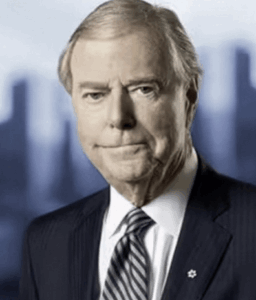
By Don Newman
September 12, 2025
Now is the time we’ll find out whether Canadians are grown-ups, and Canada is a grown-up country.
Parliament returns on September 13th for its fall sitting, which feels like the real launch of the session that began with the throne speech from King Charles in May, with Prime Minister Mark Carney now facing Opposition Leader Pierre Poilievre in the House.
A budget will be brought down in October, and how Canadians react will go a long way to determining if the country has what it takes to first survive and then thrive as an independent, reliable partner in the community of nations.
This time of testing has been brought on by the return to power in the United States of President Donald Trump, whose tariff and trade belligerence, threats to allies and coddling up to a Russian president who plays him like an off-tune violin have all deepened and accelerated the crisis faced by Canada and all Western democracies.
In reality, Canada has been on a downward slide for years. The election of Pierre Elliott Trudeau in 1968 marked the end of an era of Liberal governments that, while expanding the social safety net, kept a tight grip on spending. Since World War II, they had maintained a Canadian military presence as a member of both the North Atlantic Treaty Organization (NATO) and the North American Aerospace Defense Command (NORAD).
Two years into his first term as prime minister, the first Trudeau cut Canada’s commitment to NATO troops in Europe in half, from 10,000 to five. That set a tone, although in fairness, before he left office for the final time in 1984, his government had approved both the twelve-frigate refurbishment project for the Navy and the purchase of CF-18 fighter jets for the Air Force.
However, as a young man Pierre Trudeau has protested Canadian participation in the Second World War, and that seemed to characterize his approach to the military. During his time in office, the Liberals completed their unification of the armed forces, getting rid of separate Army, Navy and Air Force branches and dressing all military personnel in the same green uniforms. Progressive Conservative Brian Mulroney came to power pledging to undo the unification. In fact, all the Tories did was return the original uniforms to each branch but didn’t change the organizational structure.
When Carney was elected in April, most believed it was to handle the American president and his punishing tariffs. But he said at the time it would take a whole new approach to rebuilding Canada’s economy and international posture to accomplish that.
The general decline of the military and Canada’s role in the world continued without a lot of people noticing until a sharp bump occurred during the government of Conservative Stephen Harper. Each decade, Canada had won election as a temporary member of the United Nations Security Council. But in 2010, with Harper in power, Canada lost a Security Council vote. And when the Liberals under Justin Trudeau tried again in 2020, the result was the same. A mainstay at the UN since its founding at the end of the Second World War, Canada has neglected its status as an important player.
Canada’s economic performance is similarly lagging. The country’s per-capita Gross Domestic Product (GDP) has been sliding down the world economic tables since 2014. Canadians particularly like to compare themselves with Americans. The GDP comparisons aren’t pretty. In 2000, Canada’s GDP per capita was about 80%of the United States. By 2022, it had dropped to 72%. That means Americans are working harder and making more money, and the Trump tariffs may yet exacerbate that gap.
When Carney was elected in April, most believed it was to handle the American president and his punishing tariffs. But he said at the time it would take a whole new approach to rebuilding Canada’s economy and international posture to accomplish that. And now, six months into office and with a new sitting of Parliament, he is setting out to accomplish that.
Despite the unveiling this week of the first five “nation-building” projects the government will fast-track to completion, and an upcoming budget that will set the fiscal and economic tone for the government, what Canadians are setting out on is not a short journey.
None of this will take effect overnight. The first major projects aren’t expected to break ground for more than a year, new military equipment will take years to acquire and Canadians will have to agree to stay a course that could prove tough and unfamiliar.
In other words, it will be a test of whether we are grown-ups living in a grown-up country.
Policy Columnist Don Newman is an Officer of the Order of Canada, and a lifetime member and a past president of the Canadian Parliamentary Press Gallery.