Letter from Washington: How Trump’s Escalation with Venezuela Could Undermine America’s Goals in Latin America
Shutterstock
By The Scowcroft Group
October 8, 2025
Since taking office in January, President Donald Trump has rewritten both the substance of U.S. foreign policy and the process by which it is conducted.
America’s position as a reliable ally has been shaken and countries are adopting an increasingly transactional approach that emphasizes direct ties to the president. As countries move to diversify relations and invest in building up domestic economic and defense capabilities as a hedge to U.S. risk, rivals like China are seeking to fill the void left by Washington.
This is accelerating the shift to a multipolar – and potentially more unstable – international framework.
The appointment of Secretary of State Marco Rubio had suggested the U.S. would (finally) elevate Latin America in its foreign policy priority list. After all, America’s “near abroad” is key to objectives such as countering narcotics, reducing illegal immigration, weakening China’s international influence, and bolstering the resilience of critical minerals supply chains.
But amid tensions with China, the Ukraine war, conflicts in the Middle East (both Iran and Gaza), and the imposition of US tariffs (as much a revenue-generator/coercion instrument as sanctions), the Trump Administration’s attention to Latin America has been largely targeted at specific countries and issue areas. It has been more transactional and confrontational, with the US adopting the position that “they need us much more than we need them”.
The exception is Argentina, led by Trump ally Javier Milei, which has received significant support. Latin America also presents the clearest example yet of Washington’s conflation of trade issues with political and other objectives (e.g., punitive tariffs against Brazil for putting “Trump of the Tropics” Bolsonaro on trial).
Trump’s “America First” rhetoric, mass deportations of immigrants, and attempts to infringe on national sovereignty (e.g., Panama Canal threats) have increased anxiety and uncertainty in Latin America. While upcoming elections in the Americas may offer an opportunity to reset ties with the U.S. if conservative or populist leaders win, tension will persist in the security, immigration, and trade spheres.
The increasingly militarized approach to cartels and deployment of US military vessels off Venezuela suggests Rubio and Miller’s hardline approach is prevailing.
Given the size of the economic relationship with the US, trade, nearshoring opportunities, and the upcoming USMCA review, will undoubtedly remain a priority for the region; however, the trend towards diversification (e.g., EU-Mercosur trade deal) and enhancing intra-regional trade will likely continue.
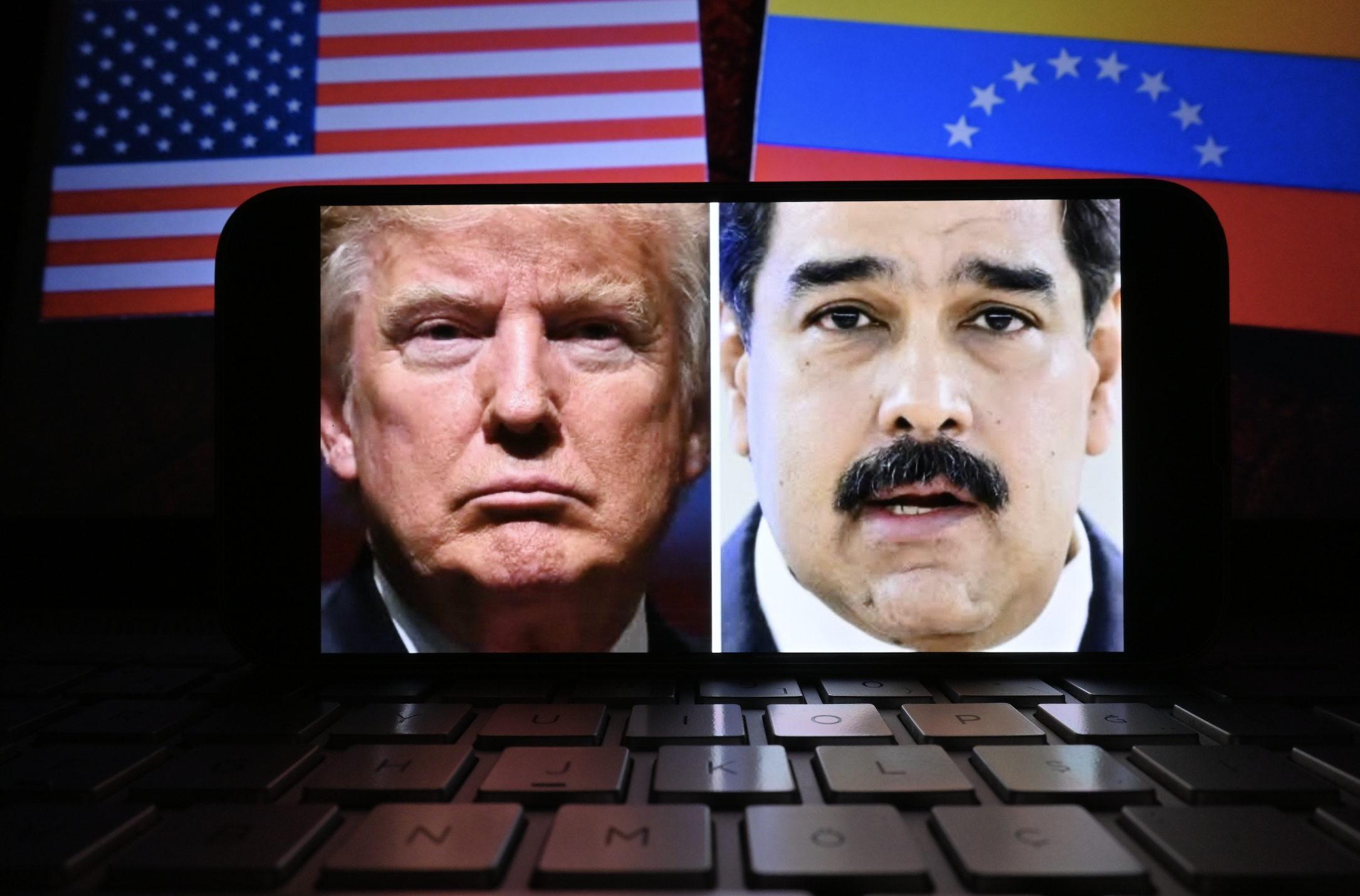
Venezuela presents the starkest example of tensions in the U.S.-Latin America relationship. There are two camps in the administration attempting to influence Trump on Venezuela: 1) hardliners including Secretary of State/National Security Advisor Rubio and Deputy Chief of Staff/Homeland Security Council (HSC) chief Stephen Miller; and 2) those who favor a transactional relationship, including business leaders — notably energy company CEOs — and Special Envoy Richard Grenell.
The increasingly militarized approach to cartels and deployment of US military vessels off Venezuela suggests Rubio and Miller’s hardline approach is prevailing. (Note that Grenell was recently instructed not to continue diplomatic engagement with Caracas.) Recent strikes on cartel boats follow months of building pressure via more U.S. sanctions (and threatened secondary tariffs), designation of cartels as foreign terrorist organizations, the doubling of the bounty on Maduro’s head to $50 million, and allegations (contradicted by former U.S. intelligence officers) that Maduro and regime officers lead the terrorist-designated Cartel of the Suns.
Reports suggesting the Department of Defense is considering plans to strike drug cartel members and installations inside Venezuela, along with Trump’s notice to Congress last month that the U.S. is engaged in an armed conflict with drug cartels (later downplayed by the White House), opens the prospect of a U.S.-Venezuela conflict and a potential attempt at regime change.
It is unclear how the escalation may evolve. To some in the administration, Venezuela is an enticing target politically: it has the largest proven oil reserves in the world — approximately 18-20% of the global total — military capabilities far inferior to the U.S., and is easy to demonize based on its economic and human rights record of the past decade.
Trump’s Venezuela policy has often been determined by events at home or his desire for a “win” following foreign policy failures elsewhere. But the mere suggestion of U.S. strikes against Venezuela is worrying and, if they occur, will elicit strong condemnation from Caracas’ allies (notably China, Russia, Iran, and Cuba), and from U.S. regional partners, European capitals, and legal experts who contradict the administration’s self-defense casus belli.
Certainly, drug and anti-crime cooperation would be jeopardized, and American efforts to limit China’s involvement and influence in the region would likely be undermined.
The Scowcroft Group is a Washington, D.C.-based international business advisory firm founded by the late Brent Scowcroft, former National Security Advisor to Presidents George H.W. Bush and Gerald Ford. Its principals generously provide Policy’s regular Letter from Washington.