
Letter from Washington: From ‘Indispensable Nation’ to Scorpions in a Bottle
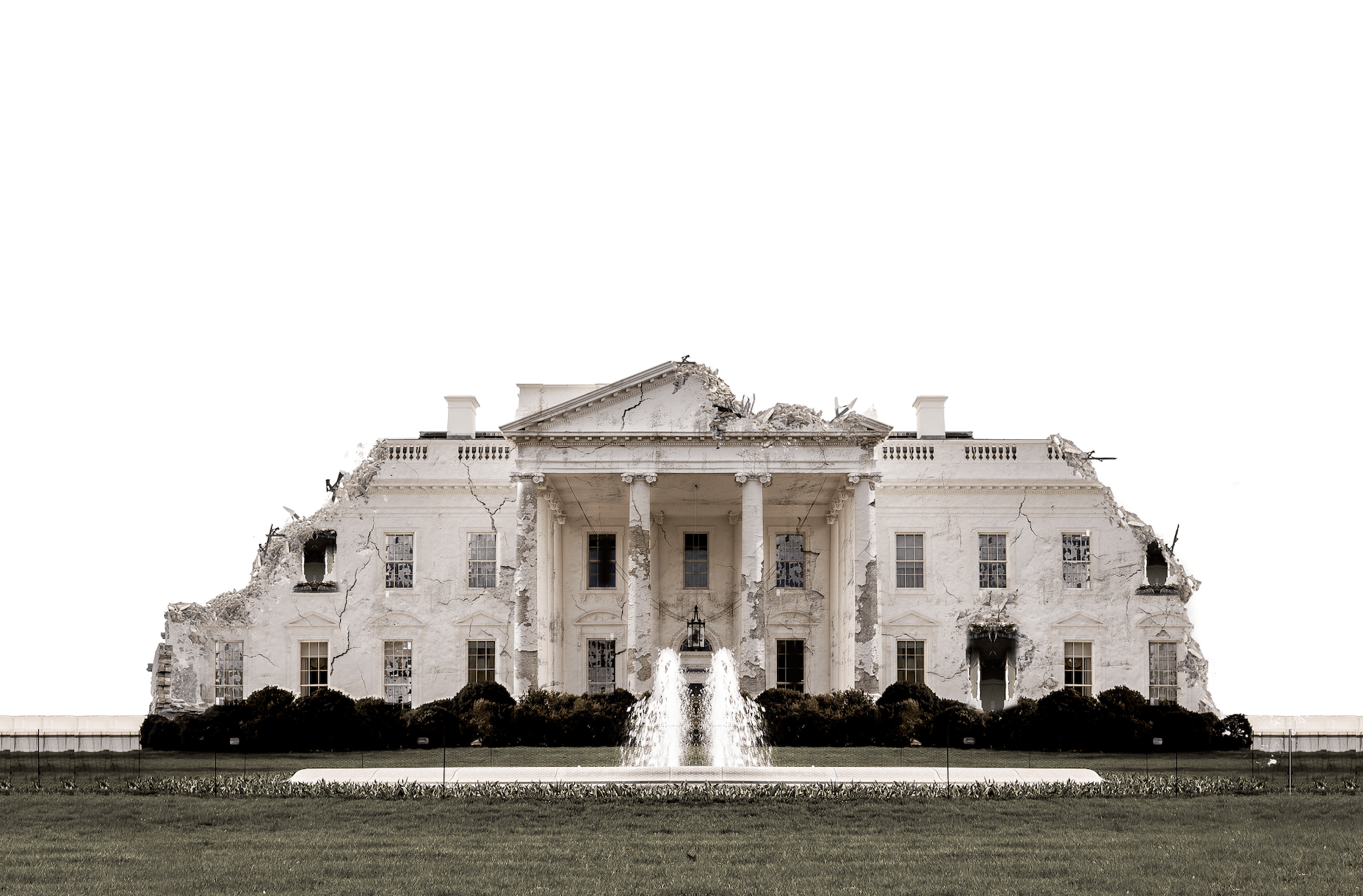 Shutterstock
By The Scowcroft Group
October 15, 2025
Donald Trump’s Gaza ceasefire and hostage deal carries all the optics of a branding reset for a president whose second-term trademark so far has been one of doubling down on belligerence, not peace. What substantive impact this will have on events at home and abroad remains an open question.
The 20-point deal between Israel and Hamas signed in Sharm el-Sheikh, which picked up the outline of President Joe Biden’s January agreement that the parties would not implement, is a welcome break in the cycle of Mideast violence. Its value will be tested by time and the unpredictability of the regional actors.
While its peacemaking currency is belied by Trump’s autocratic gamesmanship and militarization of U.S. cities at home, the deal could provide Trump with an inflection point from which to pivot from being a source of chaos to a stabilizing influence in global affairs. At this writing, there is no evidence that the U.S. will return to such a role and little reason to believe Gaza has predictive value for managing the inevitable next crisis.
In the early days of the Trump administration, we identified three systemic risks of Trump 2.0 that marked a qualitative shift in policy from Trump’s first term. These were: 1) the risk of US debt repudiation if Congress has not acted, 2) the risk of manipulation of federal data, and 3) the risk to rule of law if Trump repudiates Federal Court rulings.
The lack of confidence in Trump and his senior ranks is now a settled fact in the conduct of global policy. The U.S. is neither believed nor trusted.
The debt repudiation risk has morphed into a government shutdown that reveals a great deal about the depth of US dysfunction and polarization. All these dangers compound what we had described as diminished capacity of governance: from drastic reduction in public health research and disease prevention to unprecedented cuts in the federal workforce that are undermining basic program functions.
The US reaction to an international crisis that is neither self-initiated (e.g., tariff escalation) nor optional (e.g., Russia-Ukraine, Gaza, Iran peace efforts) has been previewed by the confused and much diminished response to domestic natural disasters. The cuts to early warning capabilities of the National Weather Service and politicized and diminished reactions of FEMA presage what will happen when an unexpected security, health, or natural disaster confronts a curtailed intelligence early warning system and a dearth of international expertise across issues.
Several important features of Trump’s operating style that carry extraordinary risks for crisis management have emerged in the past eight months:
1) Officials Without International Stature. There is a stunning and near-universal lack of personal history, experience, or professional connections among top Trump appointees in the three domains where we have spent our professional careers: economic and energy policy, national security and defense, and intelligence. With the exception of former Senate Foreign Relations Chair Rubio and – to a lesser extent – Trump 1.0 veteran and current CIA head Ratcliffe, no cabinet official and few subcabinet choices have any significant experience or network in international relations and little prior government experience.
People are policy, and the fact that the top tier of Trump officials lacks a reservoir of shared experience, cooperation, and trust with allies and adversaries powerfully undermines their position in trade talks, security conversations, and intelligence tradecraft. The shared experiences of American and foreign experts were the connective tissue that allowed the US to weather and play a coordinating role in the financial crises of ’97 and ’08, after 9/11, and in realms as diverse as monetary policy coordination and antiterrorism. Nothing builds confidence more than shared experience in solving problems, whether that is a collision between American and Chinese military aircraft or coordination in releasing Strategic Petroleum Reserve (SPR). No one at senior levels in Trump 2.0 enjoys that goodwill.
2) No Process, Only Personalities. In an ironic reversal of the famous Henry Kissinger quote, “Who do I call when I want to speak to Europe?”, foreign officials have repeatedly registered their frustration about who they should speak with in the American system and whether they can trust what they are told when they do. This uncertainty is compounded by Trump’s preference for “special advisors” for the most crucial policy decisions. As a consequence, even Secretary of State/NSC Director Rubio is often left unaware of key policy actions within his responsibility. The preference for special advisors undermines executive agencies and embassies, weakening trust at high working levels.
Adding to this confusion, Trump has repeatedly made clear he is the sole (and reliably mercurial) decider on key issues, meaning even the special advisors cannot entirely be trusted to represent US policy. For example, recall Trump’s acquiescence to (and eventual coordination with) Israeli strikes on Iran just days before Special Envoy Witkoff was preparing to return to talks.
3) Course Correction Is Not Possible. This lack of confidence in American policymakers is not solvable within Trump’s governance style, for two reasons that pose a particular and growing risk to crisis management:
First, Trump delights in fostering competition and uncertainty within his team – a product of both his business behavior and reality-show persona. This “scorpions in a bottle” model has decayed into threats and physical contests, but the day-to-day result is uncertainty and lack of coordination. Cabinet and deputies’ committee meetings, as well as NSC gatherings, virtually never occur – except for theatrical purposes. The president has stopped relying on the CIA’s President’s Daily Brief, preferring to canvass a small group of confidants. If there are one or more shocks to the system, this Fight Club style among principals means habits of resilience and cooperation simply do not exist in a system where distrust is endemic and all choices are made at the top.
Second and most important to crisis management, no decision matters until Trump has his say and any of his decisions can have a short shelf life. From disposition of the TikTok matter to Mideast peace or Ukraine, the need for Trump’s approval – and his willingness to change direction – invites exploitation by adversaries and reduces trust and the instinct to cooperate among America’s closest allies. Those countries observe Trump’s contest of wills with the Fed, his inconsistent industrial policies, and his indifference to ground truths in international relations and conclude (as one senior allied officials told us) “Nothing anyone other than Trump says matters and what he says can change without notice.”
The lack of confidence in Trump and his senior ranks is now a settled fact in the conduct of global policy. The U.S. is neither believed nor trusted. American policy and political leadership have moved from the ultimate source of ballast and stability in the global system — Madeleine Albright’s “indispensable nation” — to the largest single source of risk.
The cost of that transformation won’t be fully metabolized by markets until an unpredictable event shatters the remaining illusion of U.S. credibility. We cannot recall any two-year period in the past half-century when an emergency of some sort didn’t intrude on policy expectations. And in a context of pre-existing chaos, every crisis becomes a polycrisis.
The Scowcroft Group is a Washington, D.C.-based international business advisory firm founded by the late Brent Scowcroft, former National Security Advisor to Presidents George H.W. Bush and Gerald Ford. Its principals generously provide Policy’s regular Letter from Washington.