
‘The Index’: A Zibaldone of Fiction, Politics, and History
Author of Canadian political thrillers, Counsel Public Affairs Senior VP, and Policy Contributing Writer John Delacourt has launched a new Substack. It’s called ‘The Index’, and Policy Books will be gladly sharing it with our readers.

December 7, 2025
Here is a serviceable definition of an index, as it is defined in the publishing trade: “An index (pl.: usually indexes, more rarely indices) is a list of words or phrases (’headings’) and associated pointers (’locators’) to where useful material relating to that heading can be found in a document or collection of documents … in a traditional back-of-the-book index, the headings will include names of people, places, events, and concepts selected as being relevant and of interest to a possible reader of the book.”
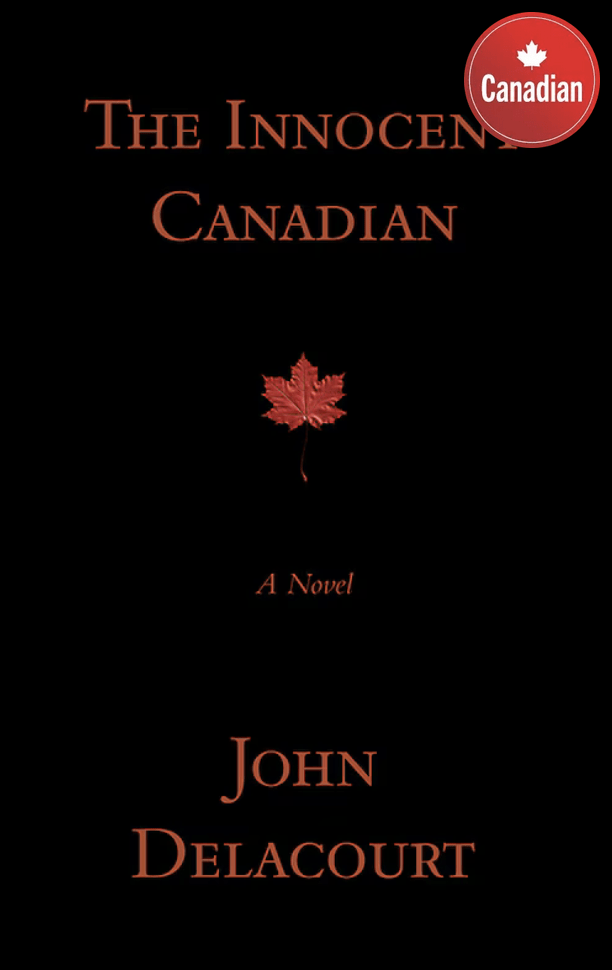
There is an actual book in question that much of what you’ll find here will be focused on initially; it’s my next novel, out next year, and it’s called The Innocent Canadian. Here’s the publisher’s copy for it, found on the Indigo website:
“The Innocent Canadian is a literary spy thriller and murder mystery inspired by a hidden chapter of Canadian literary history. At its heart is the decades-long romance between Canadian diplomat Charles Ritchie and Anglo-Irish novelist Elizabeth Bowen, which began in wartime London when Ritchie was stationed at Canada House and Bowen worked for Britain’s Ministry of Information.
During that same period, Bowen wrote The Heat of the Day—a haunting and original spy novel. But could her inspiration have been drawn from real-life entanglements too complex or dangerous to name?
Picking up where history and fiction blur, The Innocent Canadian imagines a world of covert alliances, Nazi sympathizers, and “America First” conspirators, reclaiming a forgotten thread of World War II intrigue to tell a distinctly Canadian story of romance, loyalty, and quiet heroism—one with striking resonance for our times.”
Like any work of historical fiction, there was a lot of research involved in this particular novel. There are some characters – Canadian, British and American – who were either inspired by those who actually did work in wartime London, such as the above-mentioned Charles Ritchie and Elizabeth Bowen, whose own stories were so rich and interesting (at least to me) that I thought this platform might be a good way to introduce – or reintroduce – them.
There are other characters and, as the definition states, “events and concepts,” that served as inspiration for the narrative in a less direct way. I should probably add other novels and works of non-fiction to the particular working definition of index.
It could be argued that a novel like The Innocent Canadian should stand alone, without any contextualizing or salient clues to the stories behind the story. Like a backstage crew, the sources of inspiration should be dressed all in black, scurrying between the flats on stage if they’re seen at all. I’ve always preferred a kind of Pompidou approach where there’s no cageyness about sources or particular approaches. There’s an unabashed exposure of all the pipes and struts.
One of my favourite efforts at such exposure is Rachel Kushner’s here, written for the Paris Review after she published The Flamethrowers – still one of my favourite novels. If you too like that sort of thing, you’ll probably like this sort of thing.
The inspiration for the term index itself relates to my first exposure to book publishing. And it also relates to how that world intersects with Ottawa’s political culture, the world I’ve been a part of for more than two decades. Let me explain.
In the summer of 1993, I was heading into my thesis work at the University of Toronto, living in a small room on St. George Street, doing some teaching to stay afloat. That spring, I had just completed a draft of my second play, after having my first produced in Toronto in 1992 (I wrote about that particular experience here).
Owing to my own category error regarding where my interests lay, and coming off a promising meeting with the dramaturg at Canadian Stage, I was emboldened to bang out a strong second draft of this second play over the summer.
My sister was completing her first book on the Meech Lake Accord and the subsequent referendum campaign. As she was heading into the final edits and still working her day job at the Globe and Mail, she was running out of time before the deadline of her final draft, and she didn’t have an index completed for it. So, she talked to her publisher and she managed to get this particular grad student the gig, which kept me in grocery money for a couple of months.
The book itself was as absorbing as I hoped it would be. It had all the stories and the characters she’d speak of when our family came together on holiday weekends. I had yet to meet many of the names I was ascribing individual pages to but if I had, say, met John Turner at an event, a series of numbers would have floated like a cartoon thought bubble above him.
It was painstaking work. At one point I had asked Susan why it was so necessary, and she said that Doug Gibson, the publisher at McLelland and Stewart, was insistent; it was essential that any work of political history have a well populated index here in Canada.
Well reader, to this day, go to any book launch of a political memoir in Ottawa and you’ll realize these events are testament to Gibson’s shrewd, Scottish business sense. The author will stand behind a cocktail table as a line of attendees gathers to get their copies signed.
Look over the shoulder of that senator in line ahead of you and he’s probably scanning the index. If he finds his name, it’s money well spent, and the book is placed proudly and prominently on the shelves in his Hill office. If not, a signed copy will show up on Ebay soon enough.
At the time, I had no idea creating that index would be such a seminal experience for me. I had yet to go through the sad comedy of that second play’s development period, yet to course-correct and turn to fiction, yet to move to Ottawa soon after the occasion of another book’s launch with the realization that I didn’t just want to read and note the pages of those written about, I wanted to dive head first into that milieu – or melee.
Like a reporter embedded in a conflict zone, I’d found the world I’d wanted to work in, to understand from the ground up. And I would be taking notes, not numbers.
Here you’ll find such notes – not just of Canadian political history both recent and not so-recent, but of the craft and grind of fiction writing as well. It’s fiction that’s a little different from the products of the MFA industrial complex, however: I write distinctly Canadian political thrillers – not exactly a thriving segment of our cultural economy.
The Italian word zibaldone, to describe this particular Substack, is not chosen in homage to Leopardi’s work (though it deserves to be more widely read – a page from its index is what you can squint and see as this Substack’s profile “pic”).
I’ve chosen it for what that word can capture better than any English equivalent: a particular kind of notebook, miscellany, “hodgepodge” that brings the notes gathered for writing, the reviews and commentary occasionally written for both here and elsewhere all in one place.
For those who follow Canadian politics and who voraciously read history and fiction; for those looking for something different than extended rants on hot takes gleaned from the scrolls of doom, you might like this sort of thing.
Policy Contributing Writer John Delacourt is Senior Vice President of Counsel Public Affairs in Ottawa and author of the novels Ocular Proof, Black Irises, Butterfly, Provenance, and The Black State. His new novel, The Innocent Canadian, will be published in April, 2026, by Now or Never.