
Policy Q&A: Sen. Peter Boehm on Year One of Trump II
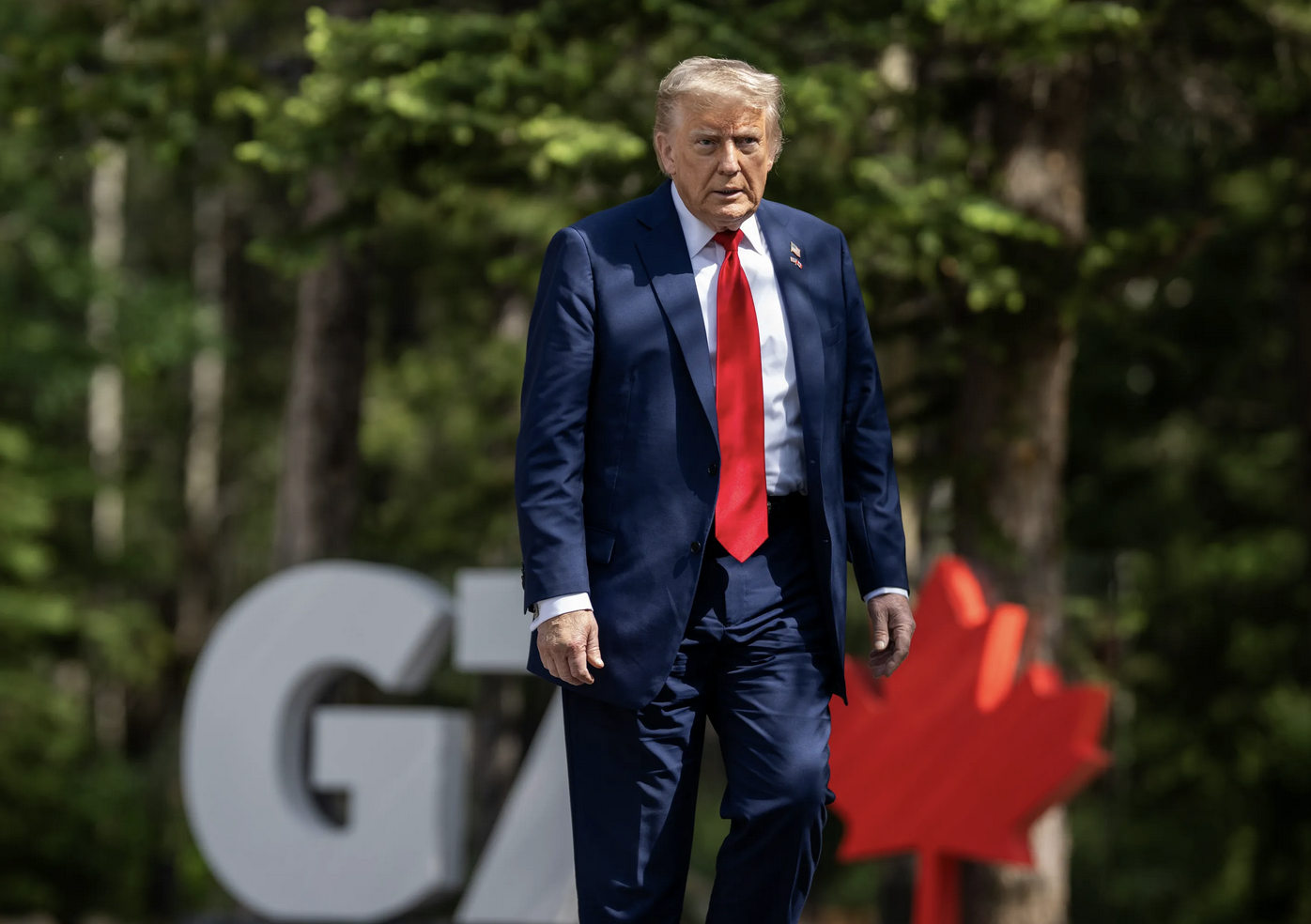 Donald Trump at the June Kananaskis G7, which he departed early/WH image
As chair of the Standing Senate Committee on Foreign Affairs and International Trade, Policy Contributing Writer Peter M. Boehm has held regular email Q&As with Policy Editor Lisa Van Dusen for the past five years. This is their 2025 Auld Lang Syne edition.
Lisa Van Dusen: Senator Boehm, that was quite a year. Between the trade war, Donald Trump’s renewed undermining of multilateralism, and the geopolitical implications of American degradation — I think Trump’s recent National Security Strategy may have summed it up best as a capstone to 2025. How do you see Trump II, Year One?
Sen. Peter Boehm: In foreign policy terms, the past year represented unprecedented chaos. The Trump administration has spurned the international rules-based order that the Americans themselves created (with the help of staunch allies like us) at the end of World War II. No one is a soothsayer but unease with the institutionalized international status quo was on display in the first Trump administration: US withdrawal from the Paris climate change treaty, hostile questioning of the purpose of United Nations institutions, and, more pertinent for us, a refusal to accept relatively benign language on the importance of the rules-based order in the communique issued at the end of the G7 Summit in Charlevoix in 2018.
Doubling down has occurred in the second Trump administration.
Over the past year, we have seen that there are no guardrails curbing or countering the wishes of the president; experienced professional advisers have been replaced by acolytes, and the once impressive policy power of the State Department and its foreign service is significantly diminished.
There have been severe budgetary cuts in American support for international institutions (the UN and its specialized agencies) and an increased ambivalence towards informal groupings. Regarding the latter, Trump’s abrupt early departure from the Kananaskis G7 summit and his no-show at the G20 summit in South Africa underscore the point.
His pre-emptive disinvite of South Africa to next year’s G20 summit in the United States — on the pretext of mistreatment of white South Africans, ostensibly based on social media assessments — highlights how ambivalence can cross into contempt for established international processes and customs.
The new National Security Strategy (NSS) is a case in point. In my experience, U.S. administrations issued carefully crafted NSS strategies that reflected inter-agency consultation. True, they read as if written by a committee (check any Canadian national security document and you will see the same), but objectives are usually clearly stated and caveats used if appropriate.
The new NSS is sloppily drafted and Manichean in tone with the predominant threat assessed as coming not from autocratic competitors but from within established liberal democracies (aka allies), particularly in Europe. In effect, it signals a global retreat on the part of the United States.
George Kennan and the other storied American transatlanticists must be turning in their graves. The respected pundit Anne Applebaum refers to the NSS as a “suicide note”, stating that its ideas are tantamount to a retreat for U.S. influence in the world. I agree with her.
LVD: You’ve now served — directly or under — nine prime ministers. How have things changed since Mark Carney arrived?
SPB: I have to be clear. I joined the public service at the bottom of the bureaucratic pile as a junior foreign service officer when Pierre Trudeau was still prime minister. I spent half my career serving abroad, so my direct exposure to political direction from on high was limited until my first time as an ambassador during the government of prime minister Jean Chrétien.
I have known Mark Carney for about 20 years, having first met him in the cabinet antechamber where deputy ministers usually hang out before being called into cabinet to support their ministers on any given agenda item. As a parliamentarian for the past seven years, I no longer receive classified briefings or materials. I am therefore not an insider in the traditional sense. So, what has changed?
First, politics. In the past few years, the combination of the digital revolution, the COVID pandemic and change in the U.S., including the advent of Donald Trump and his style of politics, all had an impact on how our government works.
With Mr. Carney, the urgency is greater — which may reflect both the exigencies of this moment and his background in terms of organizational culture — as is the need for the public service to respond in a more agile and creative manner with both policy options and operational execution. I think we are seeing the knock-on effects of the pandemic in terms of how the public service works, regardless of whether operationally we are dealing with a three- or five-day “in office” work week.
There hasn’t been such pressure regarding realignment of function (in response to changes in the management of the U.S. bilateral relationship) since 9/11, and budget cutting/human resources since the Deficit Reduction Action Plan (DRAP) under Prime Minister Stephen Harper, and the programme review of Prime Minister Jean Chrétien.
Add to this the almost ritualistic and sequential nature of minority governments: short policy attention span and everything needing to be done through a narrowly focused domestic political lens that does not allow much scope for broader “good to have” policy flourishes.
Everything is immediate, requiring quick reaction whether through the 24/7 mainstream news cycle or social media hysteria. Given the circumstances, Mr. Carney has chosen to govern as if the Parliamentary calculus is no object, with new ideas, promising policy pivots and big projects.
This was the approach behind his electoral success and is the bigger change. It is now up to the public service to be agile in implementing the policies set out in the Speech from the Throne and the budget, and for the government to get passage through both Houses of Parliament. That is becoming less of a challenge as MPs continue to cross the floor.
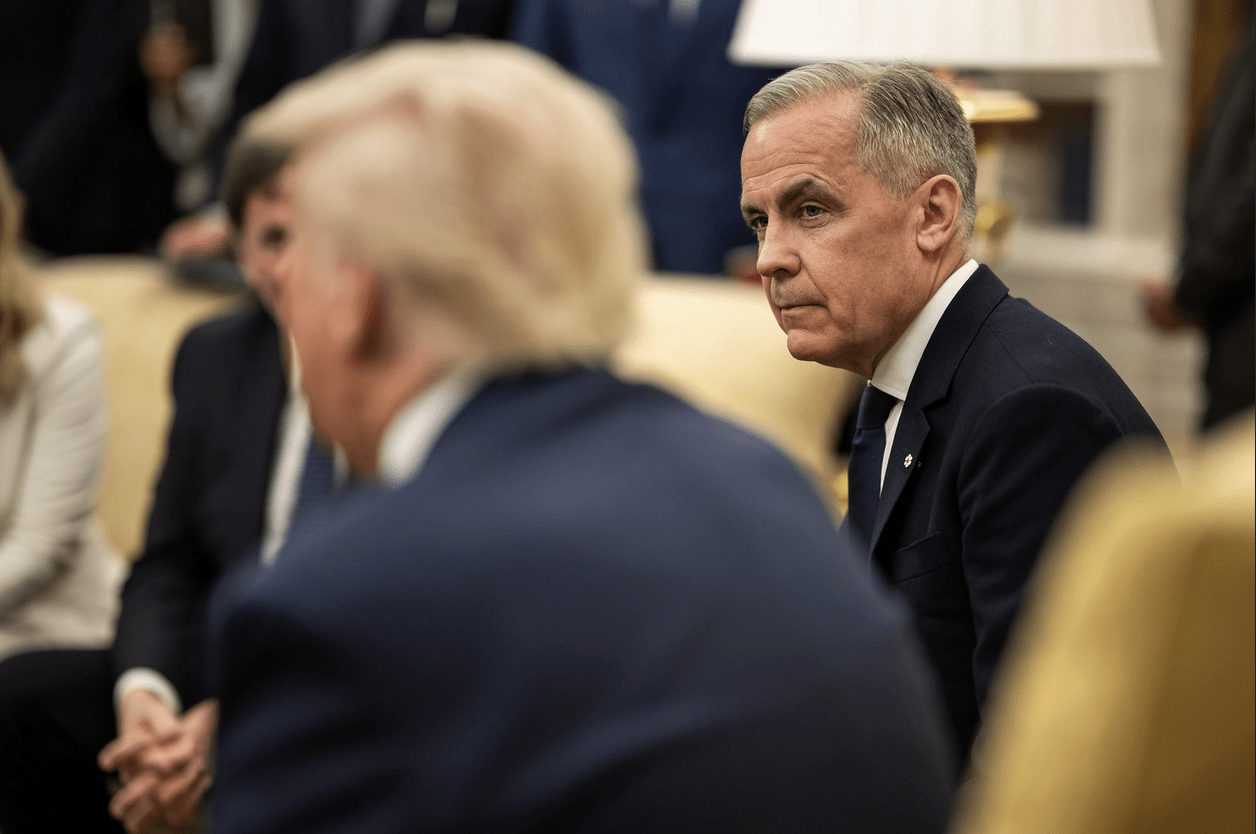 ‘As Trump enters the second year of his mandate, it will be interesting to see how a seeming U.S. retreat from global power manifests itself’, says Sen. Peter Boehm/WH image
LVD: It struck me as I was typing your Senate committee title in our intro that foreign affairs and international trade now feel almost like one large Venn overlap, especially amid late-2025 taglines like “the end of development”. Is that just the Trump effect forcing them into a single, relentless crisis narrative or is it an organic evolution?
SPB: I think it is both. There has been a symbiotic relationship between foreign policy and trade since time immemorial (think Peloponnesian War in ancient Greece). The American Smoot-Hawley tariffs of 1930 accentuated the effects of the Great Depression and contributed to the origins of the World War II.
Trade blockades can serve as a precursor to armed conflict, which is why we should be watching the situation between the U.S. and Venezuela carefully. The negotiation of the General Agreement on Tariffs and Trade (GATT) which led to the establishment of the World Trade Organization (WTO), were all worthy attempts to bring order and rules to international trade, and by extension international affairs.
The WTO has had its stresses over the last years, spanning several U.S. administrations, with respect to the functioning of its appellate body. This, and the prevalence of an increasing number of regional trade agreements, has resulted in some erosion of the WTO’s authority and function.
To bring these thoughts down to my quotidian reality, since our last election and with President Trump’s decision to weaponize tariffs, our Senate Standing Committee on Foreign Affairs and International Trade has devoted many of its meetings to trade issues, particularly those associated with the United States (steel, aluminum, softwood lumber and automotive sectors) and more generally, the future of the Canada/US/Mexico Trade Agreement (CUSMA).
In terms of witnesses, we have heard from ministers, ambassadors, trade experts, sectoral trade associations and senior officials from both Mexico and Canada. This has coincided with the consultative period in all three countries and will continue into the mandated CUSMA review period that begins in July 2026.
The pressure from stakeholders in all three countries to maintain the basics of CUSMA is increasing, and I was heartened to learn during the course of a recent visit to Mexico City that Mexico’s wish for deepening our trade and investment relationship is profound.
International development falls under our committee’s mandate as well, and in a sense, is part of the Venn diagram you suggest. The Trump administration’s decision to axe USAID during the euphoric early moments of Elon Musk’s DOGE was a significant mistake (my February piece for Policy on this issue).
In 2025, there was a decline of some $31.5 billion in international humanitarian aid from donor countries, the majority of which was from the U.S. through USAID. Cuts in the budgets of several European countries also factored into this and there will be adjustments from Canada too, but not necessarily on the humanitarian aid side.
The impact of these cuts is vast and disturbing. For me, it is vexing to see that “beggar thy neighbour” approaches in trade are also permeating attitudes towards international development and relief. For more perspective on the changing nexus between international trade and official development assistance, readers can see our recent committee report on Africa.
LVD: There’s a dichotomy that defines Trump’s relations with the rest of the world — notably formerly unshakable democratic US allies, including Canada — that even as he’s actively degrading American power, he bullies counterparts as though his power is absolute. I know this seems like a rhetorical question but it’s not…why do people fall for it?
SPB: I am not sure everyone does, and I think approaches are changing. Earlier this year, I had the unenviable task of following Jean Chrétien onto a podium at a pre-Kananaskis summit event in Calgary. The former prime minister was asked for his advice as to how to respond to the bullying tactics. After a literal nod to his patented “Shawinigan handshake” gesture, he advised to be polite, to listen and to be firm. After that, continue to be firm.
Donald Trump has stopped mentioning Canada as the 51st state. That doesn’t mean that he won’t do so again. He may refer to “lines on a map” once more. Well, those lines are all treaty-based, historic, generally logical and that normally that counts for something.
Gerrymandered electoral districts in the US are also lines on a map. As Trump enters the second year of his mandate, it will be interesting to see how a seeming U.S. retreat from global power manifests itself. How can a retreat be reconciled with a newly found imperial urge?
Vice-president JD Vance gave everyone a policy cold shower this past year at the Munich Security Conference (my Policy piece on that from February); the administration forbade U.S. government or military officials from participating in our own Halifax International Security Forum just last month. Both events have been key to US interests over the past years, providing an opportunity for the Americans to exercise influence and suasion with both allies and adversaries.
This approach is alarming in that allies, according to both the NSS and Truth Social, seem to have become adversaries. Is the U.S. really going to retreat into a spheres-of-influence view of the world? America? The “indispensable power”? Why? We liberal democracies aren’t a threat to U.S. hegemony. We are not “free riders”, our defence spending has increased, and we have a history of stepping up when asked (often even if we aren’t).
We uphold the work of global institutions. We have cultivated democracy, fostered open societies, and developed governments that respect human rights and the rule of law. We have opened our gates to those fleeing persecution and those wanting a better life. Choosing this road has cost us blood and treasure; but it has also made us the success that we are. And it has helped the United States.
As a result, countries like Canada are forging alliances of convenience and thematic purpose with countries other than the preeminent power. To be sure, our friendship and partnership with the US will continue to exist and perhaps thrive. But it will be different.
Senator Peter M Boehm is a former ambassador and deputy minister. Among his various assignments, he has served as minister at the Canadian Embassy in Washington, in Ottawa as Assistant Deputy Minister for North America, and as Canada’s Sherpa for six G7 Summits.
Policy Editor and Publisher Lisa Van Dusen has served as Washington bureau chief for Sun Media, Washington Columnist for the Ottawa Citizen, international writer for Peter Jennings at ABC News, and as an editor at AP National in New York and UPI in Washington.