
On Grand Strategy, Peak Annexation and Trump’s Bilateral Disorder
By Drew Fagan
January 21, 2026
The 2018 book On Grand Strategy by historian John Lewis Gaddis is based on one of Yale University’s most esteemed courses.
Taught by Gaddis for more than two decades, the Yale Jackson School of Global Affairs course offers a select group of students a window into the forces and thinking that shaped geopolitics from the Greeks and the Romans to Lincoln and Franklin D. Roosevelt.
The book deals with Canada only once. But the references to affairs of state in the 1890s, when annexation was in the air amid growing U.S. protectionism and imperialism, has relevance today – courtesy of President Donald Trump.
What was the best way for Canada, “with its long, indefensible southern border” to deal with its stronger neighbour at the end of the 19th century? Canadian foreign policy was not yet its own, so this was primarily a matter for the British government.
To Lord Salisbury — British foreign minister and later prime minister — the trick with Washington was to distinguish between predation (what strong countries do to weak ones) and baiting (what adolescents do to parents). Putting up with the latter, he hoped, would avoid the former.
From his lips to God’s ears. Prime Minister Mark Carney might as well have been taking notes, given how often he’s bitten his lip when with Mr. Trump.
This pre-modern era of U.S. history is Mr. Trump’s favourite, or so he has said. America was evolving from an innovative but isolated democracy into a world power. Its GDP was just then surpassing Britain’s, as its population had three decades earlier. Furthermore, the United States was about to change from republic to empire by seizing Cuba, Puerto Rico and the Philippines from Spain. (The population of the U.S. territories suddenly outnumbered the mainland’s.)
What did Lord Salisbury do in the face of a waxing United States? Faced also with growing pressures from Germany, he turned tail. A pointed reassertion of the Monroe Doctrine by Washington — that the United States would tolerate no outside powers in the Western hemisphere — was enough to convince London to give up some of its last holdings in Latin America and to resolve a border dispute between Alaska and Canada in Washington’s favour — thus, the Alaska panhandle.
So, where does this leave Canada today? Mr. Trump, unlike most political leaders, says what he thinks. It’s apparent that he means it when he asserts that he’ll buy Greenland — annexation for a price. Have his repeated comments over the past year about the takeover of Canada been predation or baiting? Possibly a mix of both. Some Trump administration officials say they still can’t understand why Canadians reacted so negatively to Mr. Trump’s offer for Canada to join the United States as a state (or perhaps states). Greenland would be a U.S. colony in all but name, as the Philippines and Cuba were and Puerto Rico remains — a territory without Congressional representation but whose residents are U.S. citizens.
More broadly, the first year of Mr. Trump’s second term has amounted to an extraordinary exercise in frustration and disbelief for Ottawa, as a series of time-tested precepts of Canada-U.S. relations have been cast aside:
- That Canada and the United States can disagree on global issues and still maintain a steady bilateral relationship. The 1965 Auto Pact, which was the fulcrum for the 1989 Canada-US Free Trade Agreement, was signed just as Canada, including prime minister Lester Pearson, criticized U.S. conduct in Vietnam. President Lyndon Johnson was outraged but it would never have occurred to him to hamper the auto pact. The free trade agreement too was signed amid bilateral disagreements over acid rain and apartheid in South Africa, but the thought of triangulating the issues would have been anathema to Brian Mulroney and Ronald Reagan, publicly or privately. Mr. Trump takes another approach. Everything is fodder for dominance, such that Canada’s support for Greenland’s territorial integrity could damage trade talks further. This adds to the complexity of agreeing to an extension of the Canada-United States-Mexico-Agreement (CUSMA), which is scheduled for review in mid-2026.
- That the United States generally cares more about continental security and Canada cares more about continental trade in what was always – until now – a symbiotic if asymmetrical relationship. The degree of emphasis between security and trade changed over time as the relationship deepened, beginning just before World War II. What didn’t change until Mr. Trump is that each country got what it wanted, or needed, to the extent possible. And, indeed, Mr. Trump behaves as though Canada can’t be trusted on either security or trade. As recently as the 2025 G7 summit in Alberta, Mr. Carney offered a new bargain involving more from Canada on security and defence for something like the status quo ante on trade before Mr. Trump’s global tariff offensive last spring. Mr. Trump rejected it. Good faith bargaining doesn’t now seem possible. He wants what he wants on security and trade.
- That the White House, regardless of occupant or party, is a better friend to Canada than Congress. Former Canadian ambassador Allan Gotlieb pioneered our diplomats’ intensive lobbying of Capitol Hill — a strategy significantly and permanently boosted via both proximity and social draw by the opening of the showplace Canadian Embassy across from the Capitol shortly after Gotlieb left his post in 1989. But Gotlieb wasn’t naïve. He knew that only the White House had the power to get Congress to act, and then only sometimes.
Who was the last president before Mr. Trump who could fairly be deemed an adversary of Canada; who didn’t wish Canada well? Several presidents after Confederation and the U.S. Civil War hoped that Canada would fall into the hands of the United States.
The most menacing, arguably, was Benjamin Harrison, who held power at the height of annexation sentiment in the early 1890s. He mostly kept his tongue, but his secretary of state, James Blaine, could be blunt: “The fact is we do not want any intercourse with Canada except through the medium of a tariff, and she will find she has a hard row to hoe, and will ultimately, I believe, seek admission to the Union.”
Does Mr. Trump think the same? What if his hard bargain — permanent tariffs on Canadian shipments he doesn’t want (say, cars) and an open border on shipments he does (say, oil) — is a Trojan horse? What if it’s an interim step weakening Canada such that it later finds itself suing for peace — as in the best trade arrangement it can get but with some form of political domination attached?
Again, the early 1890s have relevance today. Canada, or what would become Canada, was coveted by the United States for almost 150 years — from Benjamin Franklin’s efforts just before the 1776 Declaration of Independence to the 1911 Canadian election, including and most obviously during the War of 1812. But annexation came closest in the early 1890s.
The situation then was dire; more difficult than now. Canada had been stagnating on and off for the previous 25 years, since the United States had revoked a free trade agreement — the Reciprocity Treaty of 1854. Canada was hemorrhaging people. About 20 per cent of native-born Canadians lived in the United States, lured by economic opportunity. Many transatlantic immigrants to Canada treated it as a stop-over on their way south.
Canada had just emerged from the 1891 election, which was fought on relations with the United States. Sir John A. Macdonald had won his last battle on the emotional vow: “A British subject I was born. A British subject I will die.” But the Liberal Party under new leader Wilfrid Laurier, with its platform of closer economic ties, had come close to victory. Macdonald himself had spoken privately with Mr. Blaine about a possible revival of reciprocity, though nothing came of it (and wouldn’t until 1989).
This time around, annexationist perspectives are hard to find in Canada, possibly because the idea of being bound to the United States has never been less appealing.
Macdonald’s Conservatives linked the Liberals effectively with continentalist forces run principally from Toronto and New York. The U.S. side included formidable political and business figures, including Andrew Carnegie, who may then have been the world’s richest man. It advocated political amalgamation. Political union had significant voter support in border areas like Windsor and where Macdonald’s National Policy of high tariffs hurt, such as among Western farmers who wanted to send their crops south but had to send them at higher cost to central Canada. Laurier certainly never bit on political union, but some senior Liberals appear to have advocated it privately, and former Liberal leader Edward Blake thought it inevitable.
And then, the sentiment was gone. A financial crash in 1893 pushed the United States into a brief but severe recession. Canadian jealousy of U.S. dynamism and prosperity dissipated as the accelerated settlement of the West under Laurier, who took power in 1896, gave the country wings. Mr. Carney promises something similar in the form of a stronger Canadian economic union and perhaps, based on his speech in Davos on January 20th, a larger role on a world stage with a job opening for rational leadership.
This time around, annexationist perspectives are hard to find in Canada, possibly because the idea of being bound to the United States has never been less appealing. Nor does there seem to be anything beyond Mr. Trump’s rhetoric to suggest a U.S. effort to that end. It’s hard to find an issue on which Americans agree but the idea of annexing Greenland seems to be one. So is the idea of annexing Canada. They are solutions in search of a problem. They are 19th century ideas in a 21st century world.
And Trump is a 19th century person in a 21st century world. He has all the subtlety of Andrew Jackson, who earned the nickname Old Hickory by winning the last battle of the War of 1812 at New Orleans, and all the bellicosity of Theodore Roosevelt, who fought in the conquest of Cuba in 1898 and championed as president the bloody suppression of a rebellion in the Philippines after its conquest in the same year.
As for Canada’s present predicament, the study of grand strategy offers no easy solutions. In his Davos speech, Mr. Carney paraphrased Thucydides’ quotation that “the strong do what they can and the weak suffer what they must.” The quote, with good reason, is rapidly becoming as well-worn in Canada as Wayne Gretzky’s thought that you skate to where the puck is going, not to where it is – which sums up Mr. Carney’s strategy well enough.
The History of the Peloponnesian War by Thucydides is an account of the wars between Athens, Sparta and their allies between 431 and 404 BCE. It also is an account, Mr. Gaddis notes, of “the Athenians’ descent from an extraordinary to an ordinary culture.”
In 416, the Athenians sent an army to Melos, a neutral island that had been a Spartan colony. The Melians were told to submit because, as the famous quotation suggests, this was their destiny. They responded that the Athenians once were admired for their fairness and that an act contradicting this would be “for the world to meditate upon.” The Athenians said they’d take that chance and that submission was for the Melians’ own good. Why? They wouldn’t be destroyed. The Melians refused to submit, and the Athenians killed the men, sold the women and children as slaves, and recolonized the island.
Per the great strategist Samuel Langhorne Clemens: “History doesn’t repeat itself, but it often rhymes”.
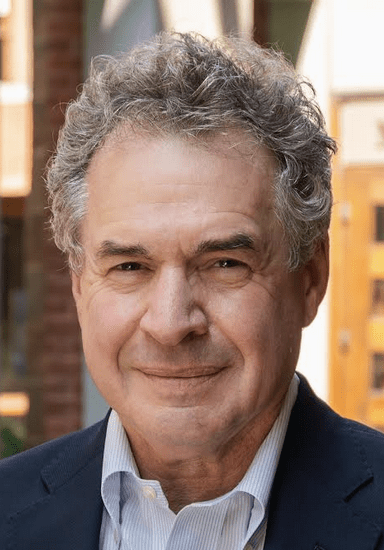
Drew Fagan is a professor at the University of Toronto and a visiting professor at Yale University, where he is teaching a graduate degree course at the Jackson School on policymaking in Canada and the United States. He is a member of the Expert Group on Canada-U.S. Relations.