
The Carney Speech: Declaring Strategic Autonomy Without Leverage is an Invitation to Pressure
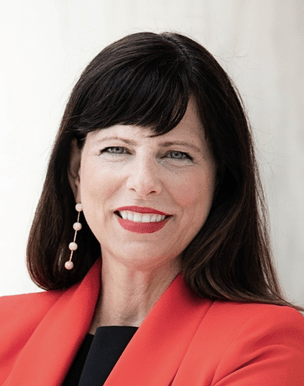
By Louise Blais
January 22, 2026
When leaders gathered in Davos this year, two speeches stole the show.
Prime Minister Mark Carney spoke candidly about a world in which economic interdependence has become a tool of coercion rather than cooperation. President Donald Trump, less eloquently but by contrast, embraced that reality outright, presenting tariffs and leverage as instruments of national strength. In doing so, he effectively called Canada’s bluff.
Canada articulated a vision of strategic autonomy and middle-power collaboration as a counterweight to superpower pressure. None of what the prime minister said was entirely new, but he put it in stark, definitive terms. Part of the reason the speech resonated so strongly is that it was clearly anti-Trump, without ever mentioning his name. That rhetorical contrast gave the moment drama, while also raising the stakes for Canada.
“The Carney doctrine,” as it is now being labelled, implies hard choices, sustained commitment, political sacrifice, major investment, and years to execute.
The challenge is timing. In today’s leverage-based international system, credibility is measured less by intent than by capacity. Among advanced economies, influence accrues to those who can sustain industrial and innovation output, deploy credible security assets, and absorb economic volatility. Statements of shared values still matter, but only when they are backed by the ability to say no without inflicting debilitating harm on oneself. Canada is not there yet, not by a long shot.
A country that speaks as if it is strategically self-reliant when it clearly is not risks becoming managed rather than influential.
Our vulnerability lies precisely in the gap between ambition and capability. We speak of trade diversification even as private-sector supply chains remain structurally regional. We assert Arctic sovereignty while our physical presence and capabilities lag our rhetoric, for now. We commit to collective defence, yet spending and procurement continue to fall short of our stated objectives. We promote supply-chain resilience but struggle to move major infrastructure projects from approval to execution. And we still have not meaningfully dismantled our own self-inflicted internal economic barriers.
None of this makes Canada irredeemably weak. But it does make us readable, and therefore testable.
This is why the Davos speeches matter. For Canada, the risk is not confrontation, it is marginalization. A country that speaks as if it is strategically self-reliant when it clearly is not risks becoming managed rather than influential. Allies with less exposure than Canada will hedge. Great powers will squeeze.
Avoiding this outcome requires coherence between our ambitions and our actual position. If Canadians want room to manoeuvre, we must invest deliberately in the assets that generate leverage, credible defence capabilities, reliable energy and infrastructure, higher productivity, industrial capacity in critical sectors, and genuine trade diversification that fully recognizes the central and enduring role of our largest customer, the United States.
Strategic autonomy ultimately requires a strong balance sheet. We are not there yet. And Donald Trump knows it.
The choice facing Canada, therefore, is not, at least not yet, between superpower alignment and independence. It is about leveraging access to the world’s largest market and most powerful military while we strengthen ourselves from within.
In the near term, that means moving with intent and resolve, but avoiding binary choices that unnecessarily put Canada in harm’s way. This year’s real priorities are not rhetorical. They are domestic execution and getting the CUSMA review across the finish line.
Because in today’s transactional world, the middle-power countries that fare best are the ones that play with all the cards in the deck. Canada should be one of them.
Policy contributing writer Louise Blais served as Canada’s ambassador to the United Nations and as consul general in Atlanta. She is now diplomat in residence at l’Université Laval.