
The Arctic Appetites of Donald Trump: Could Canada be Next?
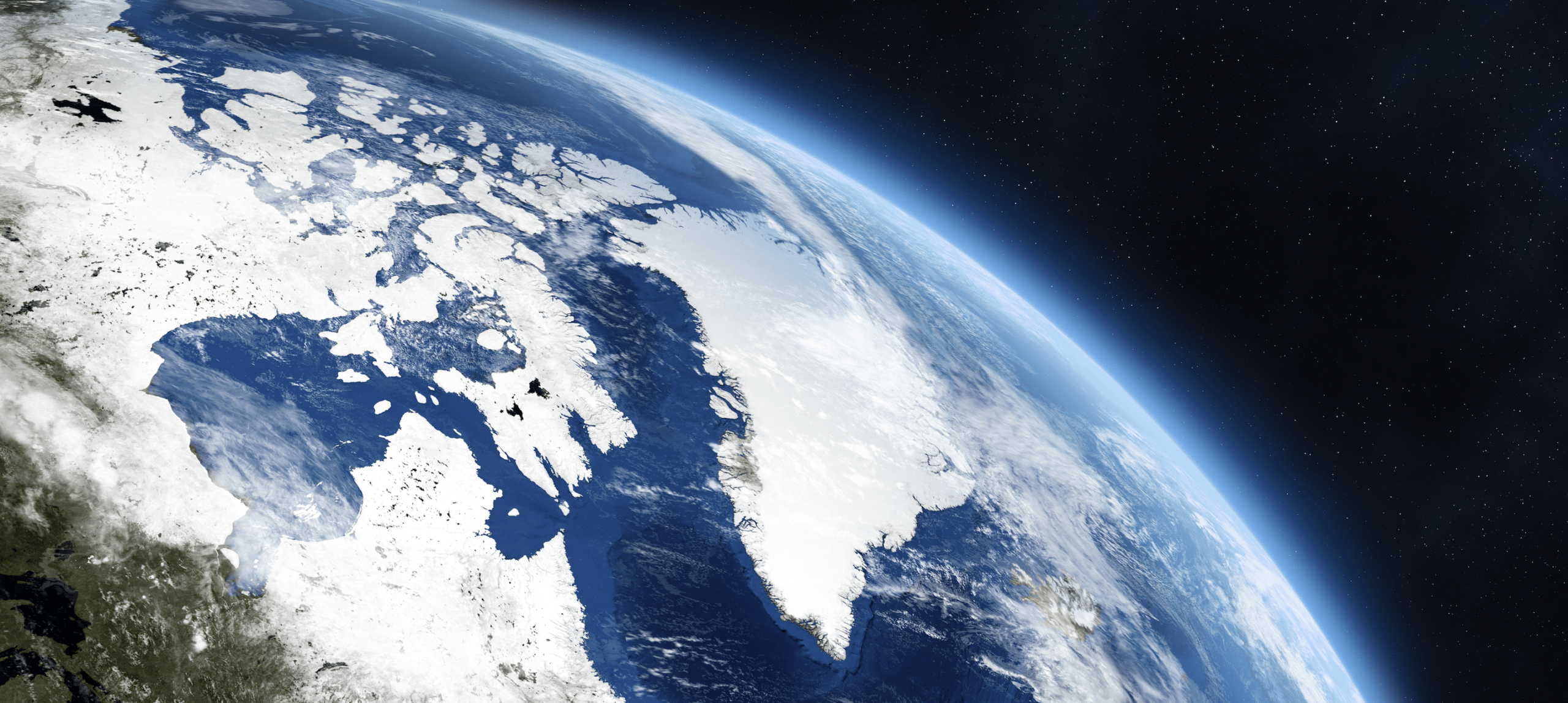 Shutterstock
By Vincent Rigby and Lawrence L. Herman
January 29, 2026
President Trump’s threat to annex Greenland appears to have passed, at least for now, but this episode raises serious concerns about U.S. ambitions in the broader Arctic region, especially in the context of a new National Security Strategy that calls for a “Trumped-up” version of the Monroe Doctrine.
Could the President cast his eye on Canadian Arctic territory or waters next?
The U.S. could pursue a number of military options in the region, such as the deployment of ground troops to Canadian arctic islands as a demonstration of strength. The most tempting path, however, might be for Trump to send the U.S. Navy or Coast Guard into the waters of the Northwest Passage without Canadian consent.
The U.S. has never accepted Canada’s position that the passage is internal waters, instead claiming that it is an international strait subject to unimpeded rights of transit by American vessels.
While such a move would not be a simple feat during the ice-covered season (excluding submarines), it cannot be discounted. Canada should be concerned about the vulnerability of these waters (and the airspace above them) to some kind of American incursion, as well as other parts of the Canadian Arctic that might be a target of for America’s ongoing expansionist aggression.
Tensions with the United States over the status of the Northwest Passage boiled over in the latter half of the 20th century with the construction of ships capable of transiting partially or even largely ice-covered Arctic waters.
The dispute came into sharp focus in 1969 when a U.S.-registered tanker, the SS Manhattan, transited the Passage from west to east without Canadian consent – although the ship did require assistance from Canadian icebreakers. Neither country retreated from their long-stated positions. A diplomatic stand-off ensued.
As a partial response to American claims, the Canadian government passed the Arctic Waters Pollution Prevention Act in 1970 establishing Canadian jurisdiction over waters out to 100 nautical miles from the coastline, issuing groundbreaking vessel compliance standards that would be enforced through Canadian regulations.
These developments coincided with a series of United Nations conferences on the law of the sea aiming to codify international law around matters of coastal state jurisdiction, including transit through straits used for international navigation. The last and most important of these conferences, the Third Law of the Sea Conference (UNCLOS III), resulted in the seminal LOS Convention of 1982, which Canada – but not the U.S. – has ratified.
The Northwest Passage dispute lay largely dormant while UNCLOS III marched to conclusion. In 1985, however, after a U.S. Coast Guard vessel, the Polar Sea, sailed through the waters again without Canadian consent, the Mulroney government took a major step by promulgating straight baselines around the entire archipelago, formalizing the position that all these waters, including the Northwest Passage, were internal.
The U.S. protested, reiterating its claim that the passage was an international strait and open to transit for all vessels, including warships and submarines, as well as overflight by military aircraft.
In 1988, the Mulroney and Reagan governments signed the Arctic Cooperation Agreement that addressed development, security, and environmental protection in the region. Under the agreement, the U.S. would seek Canadian consent for Coast Guard and naval vessel transit of the passage and Canada would give its assent, but “without prejudice” to their respective positions on the legal status of the waters.
While the dispute lay dormant for decades, it resurfaced during the first Trump administration, when former Secretary of State Mike Pompeo stated in May 2019 at the Arctic Council that Canada’s claim over the Northwest Passage was “illegitimate”, reiterating the U.S. position that it is an international waterway.
The U.S. has criticized us before, often justifiably, for talking a good game in the Arctic but not following through. We can no longer afford to proceed at a leisurely pace.
With Greenland now perhaps off the international front burner, several questions remain. Will Trump look to the Northwest Passage as a next “key strategic location” (words from the National Security Strategy) for the U.S. in the Western Hemisphere? Will he cite Russian and Chinese designs on the region as a pretext to dominate the waters militarily and undermine Canadian sovereignty? Could the passage be a jumping-off point for further incursions into the waters and islands of the Canadian Arctic Archipelago, following through on Trump’s threat to claim Canada as part of the U.S. and exploit its natural resources?
Given Trump’s inherent unpredictably, it is impossible to answer these questions with certainty. But Canada must prepare for all scenarios and respond accordingly.
As a first step, the Canadian government needs to reinforce the passage as internal Canadian waters and not just wait until another crisis with the U.S. erupts. The Royal Canadian Navy should begin more regular transits of the passage, whether by Arctic Offshore Patrol Vessels (AOPS) or Canadian Coast Guard ships, to demonstrate Canadian presence. Transits of the AOPS have been intermittent at best in recent years.
In addition, while the government has committed to increase its Arctic military capacities and capabilities as part of the 2024 Defence Update (Our North Strong and Free) and other recent announcements, this needs to happen on an expedited basis. Canada must show the U.S. that it is serious about protecting its territorial sovereignty in the region.
This includes purchasing new submarines, tactical helicopters and early warning aircraft as quickly as possible, deploying Arctic-capable drones, making a final decision on the F-35, meeting deadlines for the construction of new polar icebreakers (the first is scheduled to be delivered in 2030), placing maritime sensors on the Arctic Offshore Patrol Vessels, building satellite ground stations, establishing Arctic operational support hubs, and constructing dual-use infrastructure, including ports.
The U.S. has criticized us before, often justifiably, for talking a good game in the Arctic but not following through. We can no longer afford to proceed at a leisurely pace.
At the same time, the government needs to meet broader NATO defence spending targets to dispel Trump’s ongoing contention that we are defence freeloaders, including in the Arctic. The Carney government has promised to spend an additional $81 billion on defence over the next five years and meet the 5% NATO spending target by 2035.
This cannot be an empty promise – the government needs to set out a clear path to its delivery to show Trump that we are taking our defence commitments seriously.
As well, Canada must continue to work with NATO allies in ensuring that its Arctic sovereignty is respected. Middle power cooperation was at the heart of the recent speech by Prime Minister Carney at Davos — the need to form coalitions of the willing and stand up to Great Power bullying on specific issues.
Reports that NATO will step up its Arctic presence as part of a potential Greenland agreement is excellent news in this respect. Canada should lead those efforts. While most European countries share the U.S. position that the Northwest Passage is an international strait, they will not want to see the U.S. dominate or militarize it.
Notwithstanding all of the above, Canada must still look for ways to work with the U.S. in the Arctic. This may be difficult for Canadians to accept given Trump’s hegemonic policies, but it is a practical hedging strategy given our shared geography and interest in meeting Russian and Chinese threats.
Our relationship, particularly in the defence sphere, will continue to require a delicate balancing act – pushing back where necessary, but working together where possible. If Canada can prove it has the military and other capabilities to operate in the Arctic, the U.S. could be deterred from taking aggressive action in the region while remaining open to working with its northern neighbour.
This means continuing with the modernization of NORAD (including over-the-horizon radar), exploring the possibility of expanding the binational command’s mandate to include joint maritime patrols in Arctic waters and specifically the Northwest Passage, seriously considering participation in the U.S. ballistic missile defence system (Golden Dome), cooperating where possible in the extraction and processing of critical minerals, and continuing to work with Finland and the U.S., at least for now, in the Icebreaker Collaboration Effort.
Canadians can only hope that, if an agreement over Greenland comes to fruition, President Trump will look outside the Arctic for his next venture in the Western Hemisphere. But there is no guarantee.
As Prime Minister Carney stated at Davos, middle powers like Canada can stand up to predatory Great Powers. In the Arctic, he has a chance to prove it.
Lawrence Herman is an international trade lawyer, former Canadian diplomat and current senior fellow, C. D Howe Institute.
Vincent Rigby is the Slater Professor of Practice, Max Bell School of Public Policy, McGill University, and former National Security and Intelligence Advisor to the Prime Minister.