
Memo from Referendlandia
 Wikimedia
By Lisa Van Dusen/The Hill Times
October 31, 2018
As any journalist old enough to have worked during the era of rolling Constitutional crises knows, referendums are Canada’s third national specialty after hockey and export-grade Ryans.
During the 15 years when the country lived through three referendums — the Quebec independence vote of 1980, the national vote on the Charlottetown Constitutional Accord in 1992 and the Quebec independence vote 0f 1995 — a sizable economic subculture of lawyers, academics and pundits fluent in the arcana of Constitutional sturm und drang emerged in both official languages and thrived like tropical ground cover.
In Canada, we know referendums. If they’d asked, we could have helped the Brits with their 2016 Brexit referendum flirtation by first explaining that nobody flirts with a referendum. A referendum is a serious endeavour, fraught with conflicting agendas and tangled with repellent loyalties.
In our two divorce — “Quebexit” — referendums, thousands of constitutional lawyers argued for months over the punctuation in the 1980 referendum question alone. The 1995 vote produced a result — 50.58 against separation to 49.52 in favour — not far off the 2016 Brexit referendum result of 51.89 per cent in favour of Leave to 48.11 per cent for Remain, only in reverse.
That close call generated a fresh cavalcade of billable legal hours in the form of one Supreme Court referral, the federal Clarity Act on the terms and conditions of any future referendum-catalyzed divorce negotiation and a new Quebec law responding with provincial terms and conditions of any future referendum-catalyzed divorce negotiation, Bill 99, or An Act respecting the exercise of the fundamental rights and prerogatives of the Québec people and the Québec State.
Anyone watching the 2016 Brexit referendum from here could tell that it was an amateur affair; a crackpot jamboree of disingenuous novelty buses and scenery-chewers distracting all the eyeball currency away from what was actually happening — a.k.a. a diversionary drama, a political tactic which, you may have noticed, has been conveniently globalized by the anti-globalists. As usual, the truly serious actors in the drama were offstage, corruptly violating campaign spending laws and cyberbuggering the results.
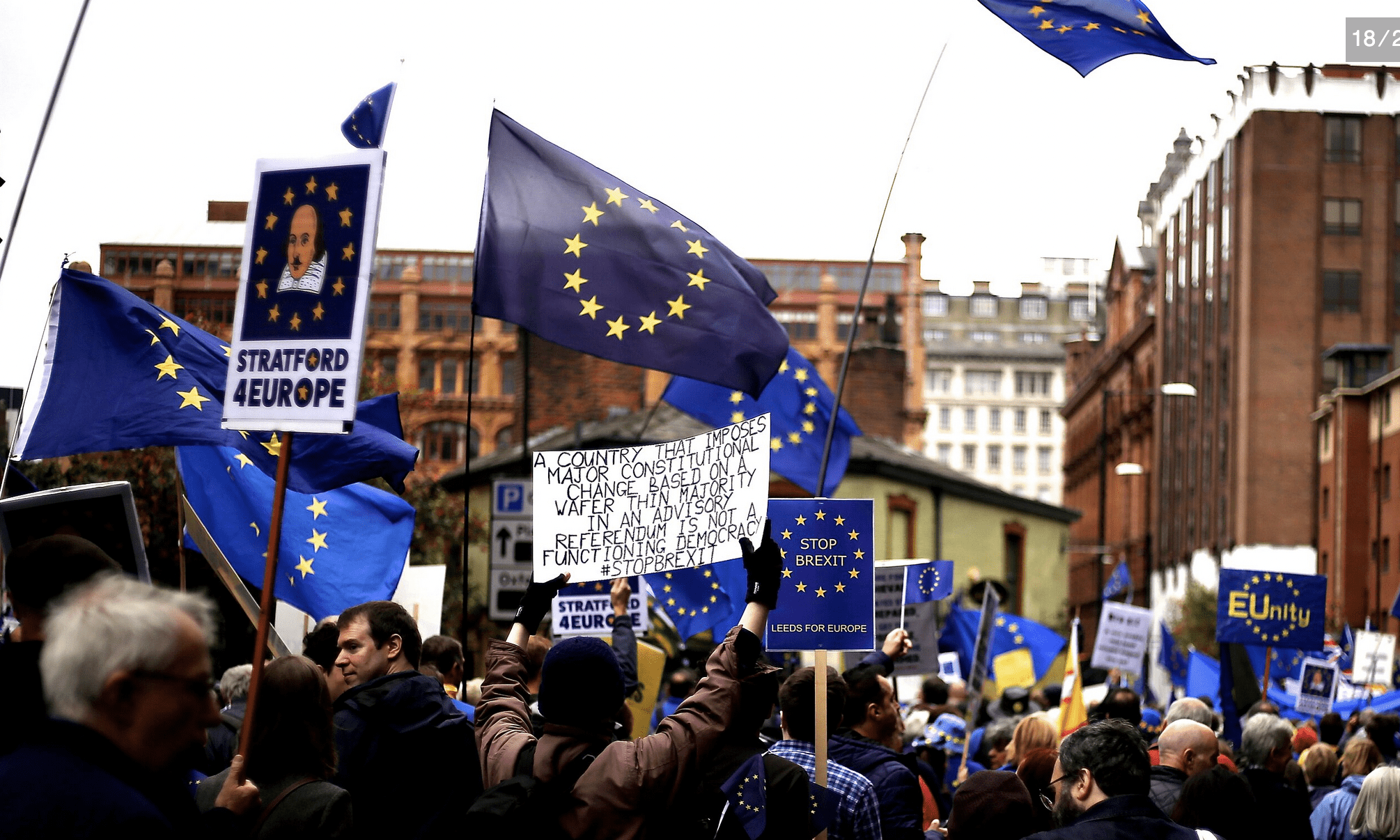
On the sunny third Saturday of October, more than 700,000 people of spectacular demographic and socioeconomic diversity filled the streets of London to demand a second “People’s Vote” (as opposed to a referendum posing as an election, which would make the 2016 exercise look like a symphony of sanity.)
That eminently rational course of action is being marginalized and undermined by the positioning of the current argument as exclusively binary: either a negotiated Brexit or a “no-deal” Brexit, whose disastrous knock-ons are being unfurled in nightmare scenarios unheard of since the Y2K panic.
London Mayor Sadiq Khan last week pronounced this “squeaky bum time” (a term coined by a footie manager, presumably while off his face, describing the fidgety do-or-die moments of a match) for Brexit.
The British people not only had no Clarity Act in 2016, they had no clarity. Time, experience and events — as they inevitably will — have provided that clarity. Now, they have something to vote on. And if they need help, they can always ask Canada.
Lisa Van Dusen has served as Washington bureau chief for Sun Media, Washington Columnist for the Ottawa Citizen, international writer for Peter Jennings at ABC News, and as an editor at AP National in New York and UPI in Washington.