
Rounding Cape Horn: The Real-Life Drama of Politics, History and Geography
 Eva and Juan Peron on the balcony of Casa Rosada, October 1950/AAP
This piece is from our Policy Dispatches series of features that combine political, policy and travel writing.
By Colin Robertson and Maureen Boyd
March 3, 2026
Buenos Aires wears its history loudly. Standing in the Plaza de Mayo before the Casa Rosada, the pink mansion that houses the office of the president of the Argentine Republic, one senses that Argentine politics has always been larger than both life and death.
This is where Eva Perón addressed the throngs from the balcony. It is also where the Madres de la Plaza de Mayo defied detention and death threats in the 1970s to protest daily the “disappearances” of their children by the military junta. Politics here is not performative; it is as dramatic as real life.
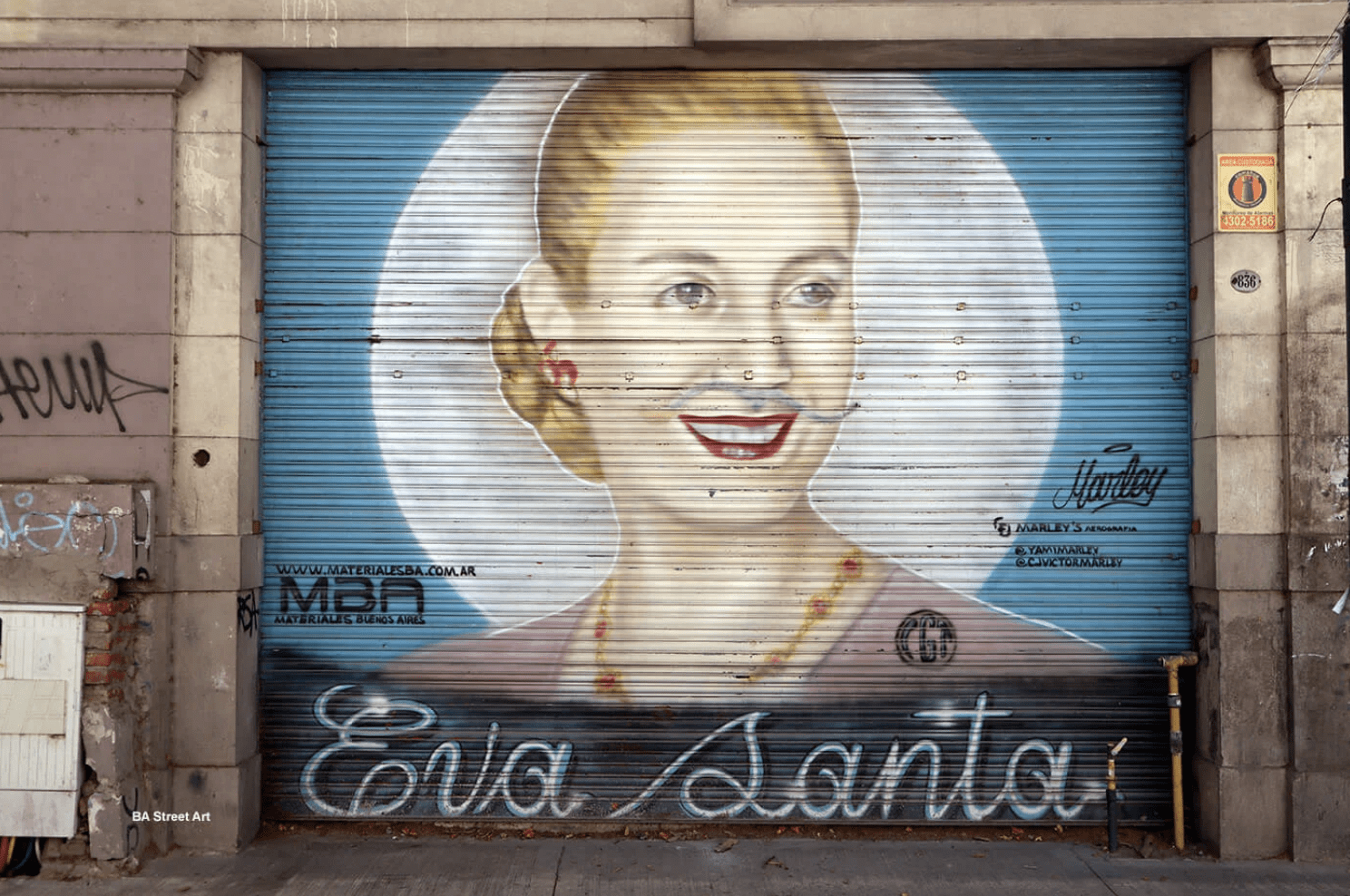 Evita mural in Buenos Aires/BAStreetArt
Evita Perón remains central, not simply as a historical figure, but as political vocabulary. Her message of social justice, mass mobilization, and charismatic authority still animates Peronism, which continues to define electoral coalitions and arguments about the moral role of the state.
Argentina’s oscillation from early 20th-century prosperity rivaling Canada’s, through cycles of inflation and debt, and now to Javier Milei and his chain-saw economics, is inseparable from that populist tradition.
Leaving the capital for the pampas clarifies the economic foundation beneath the theatre.
On an estancia we visited, gauchos demonstrated horsemanship refined over generations. Fertile plains turned Argentina into a grain and beef superpower before the First World War, integrating it into British-led global trade much as the Canadian Prairies were woven into imperial grain networks. The asada — beef slow-grilled over wood embers — is a convivial ritual, accompanied by Mendoza Malbec and conversation that drifts easily from football to affordability.
Football stadiums function as secular cathedrals. Buenos Aires’ Estadio Monumental, with its 85,000 seats, and Montevideo’s 60,000-seat Centenario bind demography to identity in ways Canadians recognize only during Stanley Cup runs.
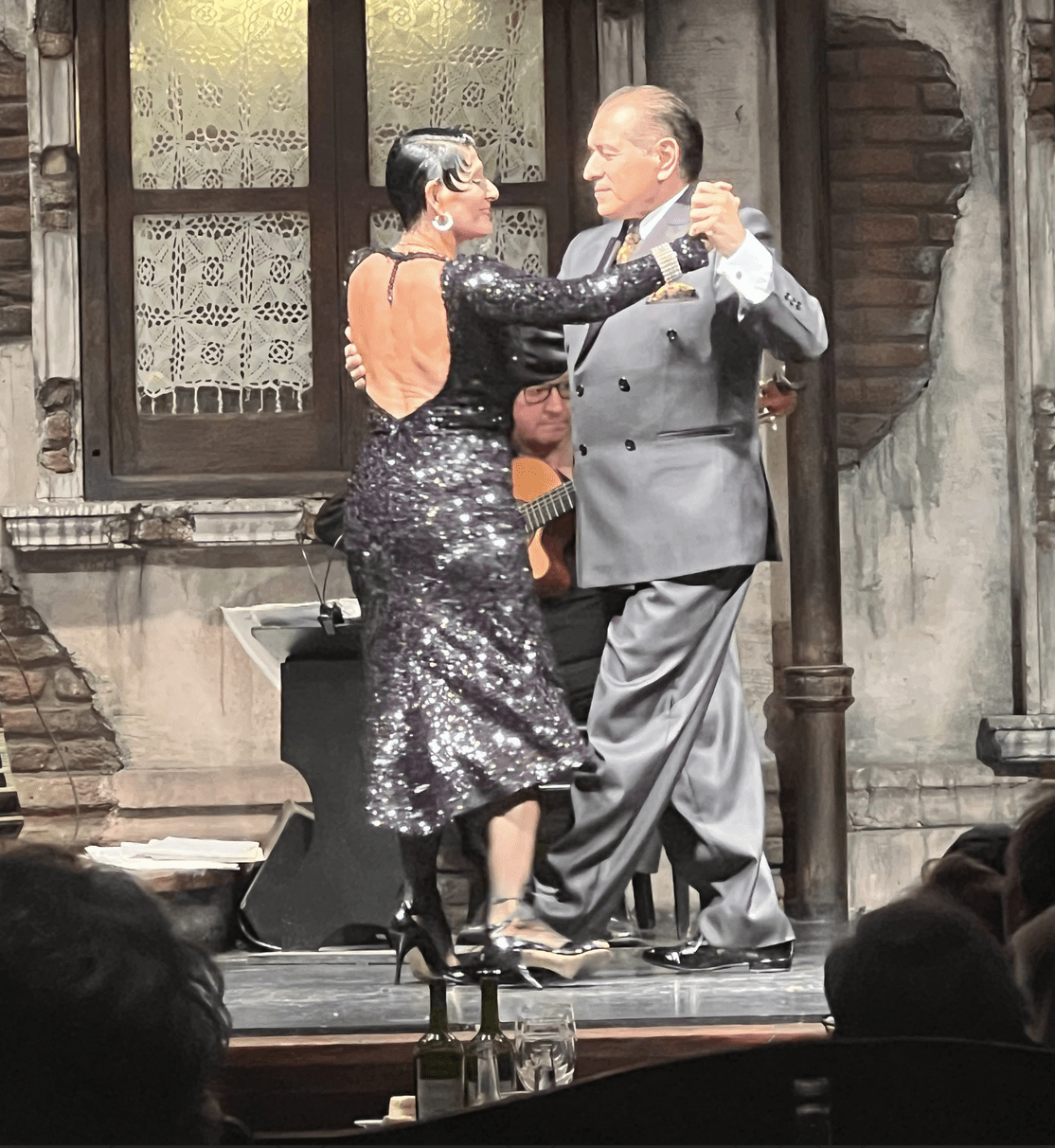
Tango Argentina
Tango in a small Buenos Aires nightclub completes the portrait. Disciplined improvisation, nostalgic yet precise, it mirrors Argentine political culture: expressive, intense, and punctuated by drama.
Argentina covers 2.8 million square kilometres, roughly the combined size of Ontario and Quebec, with about 90% of its 46 million people living in cities. The population is predominantly of European descent, largely Italian and Spanish, layered upon Indigenous and mestizo foundations. Climate change now compounds longstanding vulnerabilities. Drought linked to climate variability has already reduced soy and wheat yields, while glacial retreat in the Andes threatens long-term water security.
From Buenos Aires, we boarded the cruise ship Viking Jupiter for a 17-day voyage around Cape Horn to Santiago.
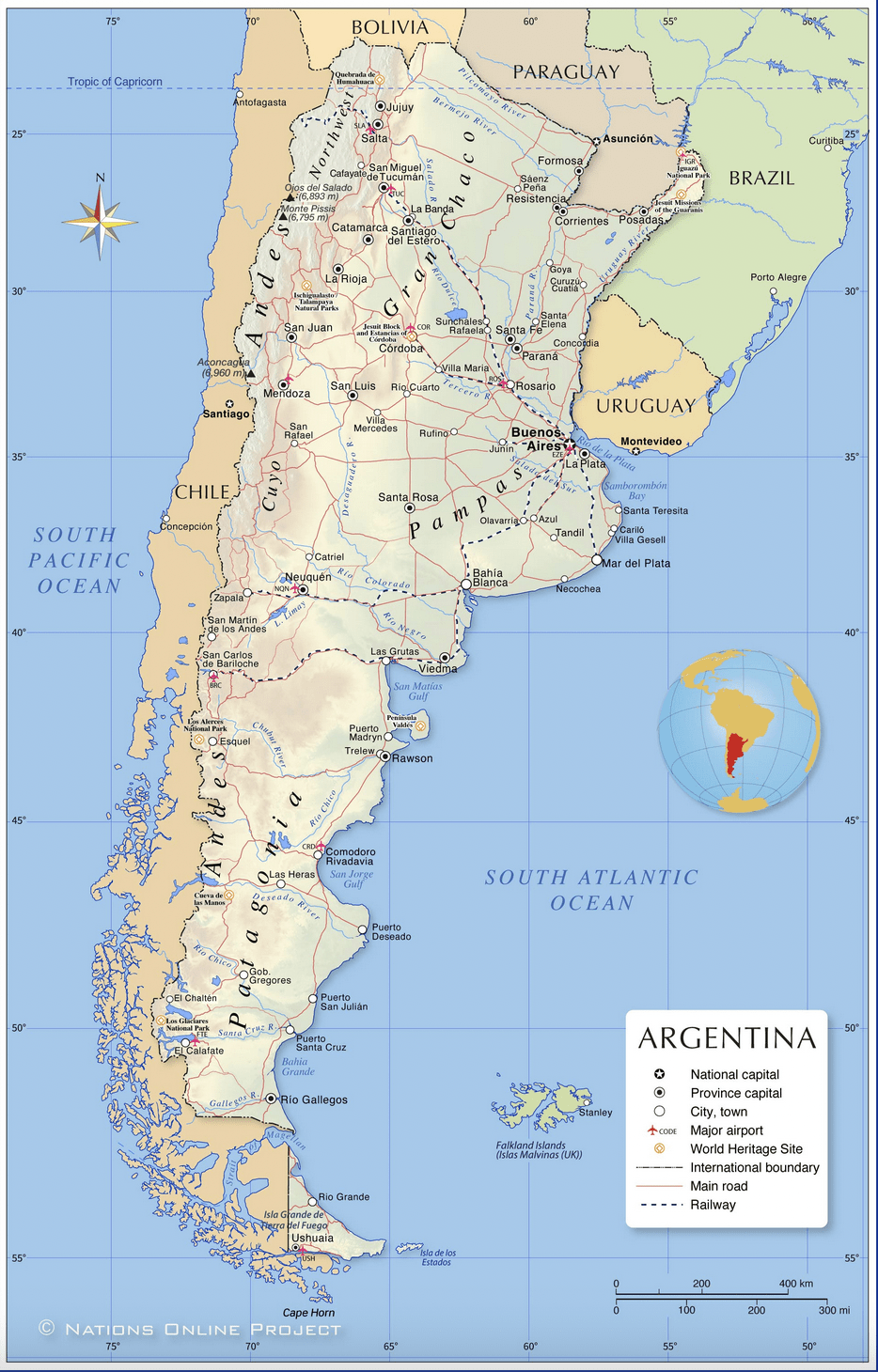
Crossing the vast Río de la Plata, among the widest river estuaries in the world and more inland sea than river, reinforces geography’s centrality. It links the Paraná and Uruguay river systems to the Atlantic, funneling grain, beef, and soy through ports that serve as the commercial lifeline of both Argentina and Uruguay.
Its strategic importance is longstanding. In December 1939, the Battle of the River Plate unfolded just offshore when British cruisers engaged the German pocket battleship Admiral Graf Spee. Damaged, the vessel retreated to Montevideo and was later scuttled, a reminder that even distant waters can become theatres of global conflict.
Montevideo offers a revealing contrast to Buenos Aires. Uruguay’s capital is compact and understated. The country’s 176,000 square kilometres make it smaller than Saskatchewan, while its population of 3.4 million mirrors Alberta’s Calgary–Edmonton corridor. With a population of predominantly European descent, with a significant Afro-Uruguayan minority, Uruguay’s scale shapes its temperament: pragmatic, institutional, and consensus-driven.
The Ciudad Vieja and Independence Square tell a story of nation-building without excess. Uruguay built one of the region’s earliest welfare states and maintains durable democratic institutions. Its economy hinges on beef, soy, forestry and, increasingly, technology services.
We toured the Carnival Museum, with its costumes and instruments from the 40-day festival, including murga, Uruguay’s satirical musical theatre tradition. It is politics by other means: rhythmic, communal, pointed, but rarely destabilizing.
We sampled Tannat, Uruguay’s signature grape, as bold as Argentina’s Malbec but more compact, much like the country itself. Mate, the shared herbal infusion sipped through a metal bombilla from a hollowed gourd, binds daily life across Uruguay, Argentina, and southern Brazil. It is not simply a drink but a social ritual.
Our stop in Puerto Madryn introduced Patagonia, a territory three times the size of Italy, a vast, scrub-covered plain bordered by the Andes and Chilean ice fields to the west and Argentina’s Atlantic coast to the east. Largely ignored by Spanish colonizers, Patagonia entered the literary imagination through Bruce Chatwin’s In Patagonia and Paul Theroux’s The Old Patagonian Express. It remains a last frontier, sparsely settled and psychologically distant, in ways Canadians recognize from our North.
At Punta Loma, sea lions sprawled indifferently. At Punta Tombo, one of the world’s largest Magellanic penguin colonies stretched toward the horizon. Patagonia’s scale is deceptive: Argentina’s Santa Cruz province alone is larger than Manitoba but holds fewer than 400,000 residents. The region underscores the persistent tension between resource wealth and ecological stewardship.
In Port Stanley, capital of the Falkland Islands, history feels immediate. Memorials recall the 1982 Falklands War, when Argentina’s junta invaded to assert sovereignty. Britain dispatched a naval task force 12,000 kilometres from home. After 74 days of intense sea and land combat, nearly 900 lives were lost and British control restored.
The war reshaped Argentine politics, hastened the fall of the regime, and remains an ongoing sovereignty dispute. For Falkland islanders, the British connection is paramount and fiercely defended. For Argentina, the Malvinas remain unfinished business. The South Atlantic is both ecological sanctuary and geopolitical crossroads.
Back at sea, days along the South Atlantic restore perspective. Weather systems dominate the horizon, quickly revealing who is susceptible to seasickness and reminding us that weather and the sea still hold sway.
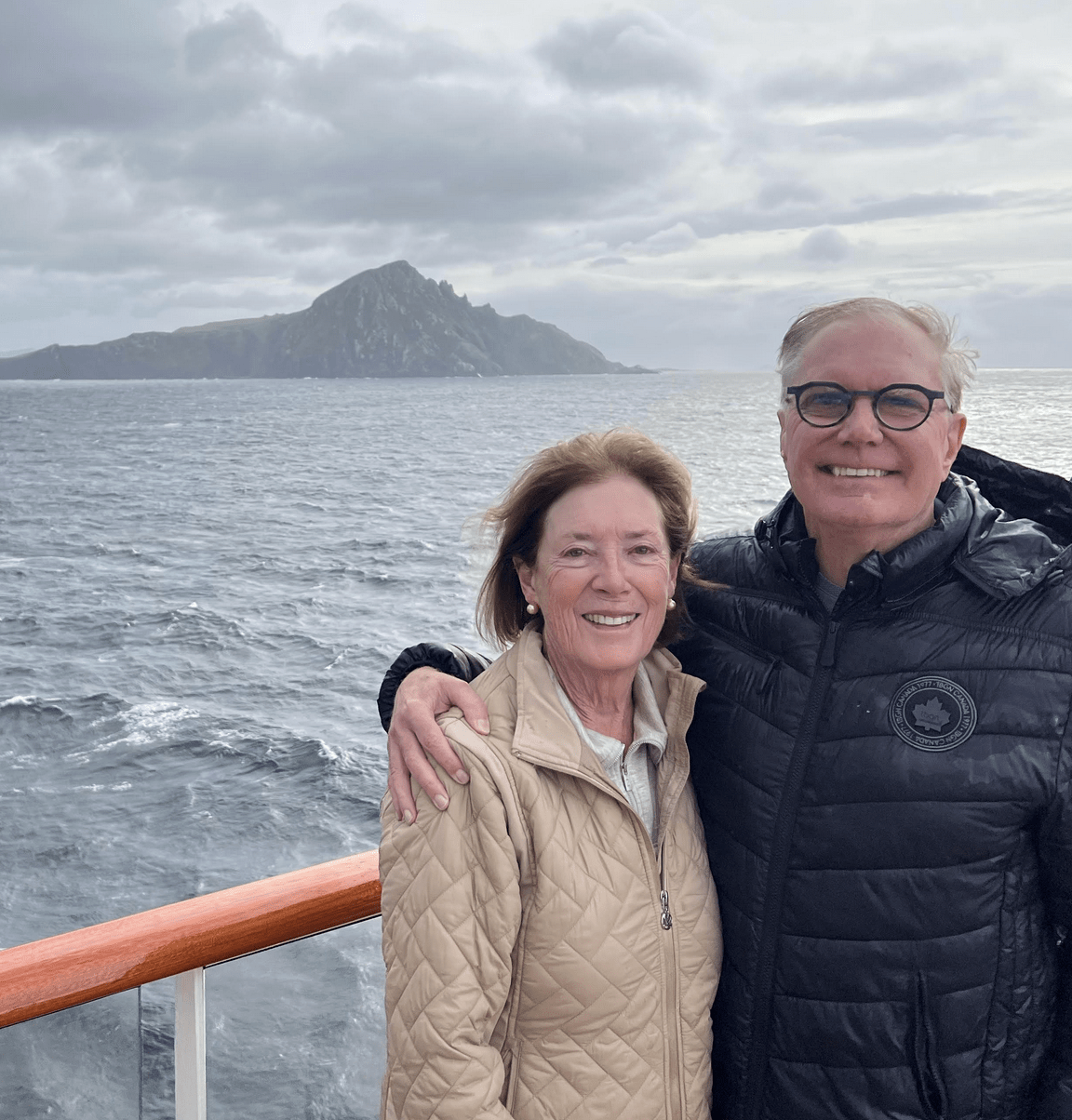
The authors, rounding Cape Horn.
Traversing Cape Horn, where the Atlantic and Pacific meet, one understands why it was once a rite of passage. Before powered engines and accurate charts softened constraint, this was the hinge of oceans and empires. Endurance required adaptation, prudence, and respect for limits. For Canadians attentive to Arctic shipping routes, Cape Horn — named not for its shape but for the city of Hoorn in the Netherlands by the Dutchmen who first rounded it in 1616 — offers a southern analogue: some geographic realities remain non-negotiable.
Ushuaia, branding itself the world’s southernmost city, is both frontier and gateway. Tierra del Fuego National Park reveals ecosystems shaped by wind, cold, and human intervention, including invasive beavers introduced from Canada decades ago. The End of the World Train, built by prisoners to serve the former prison and grow the colony, illustrates how states historically asserted sovereignty at the margins.
Across the Strait of Magellan lies Chile’s southernmost city, the port of Punta Arenas, whose rise and decline mirror shifting trade routes. Geography creates opportunity but with risk.
Before the Panama Canal opened in 1914, ships bound between the Atlantic and Pacific rounded Cape Horn or transited the Strait of Magellan. Punta Arenas thrived because of this chokepoint. The canal shifted trade northward, diminishing but not erasing southern strategic relevance. Today, Argentine grain, Chilean copper, Brazilian soy, and Uruguayan beef still traverse these waters. When drought lowers the Paraná River, shipping slows. Geography still disciplines commerce.
Chile stretches 4,300 kilometres north to south but averages only 177 kilometres in width. Its 19 million people cluster along a narrow strip between Andes and the Pacific. Climate change intensifies drought in central regions, threatens Andean glaciers, and warms southern fjords. The Southern Patagonian Ice Field — the world’s third-largest freshwater reserve outside Antarctica and Greenland — is visibly retreating.
Off the coasts of Argentina and Chile lie some of the world’s most contested fishing grounds. Hundreds of distant-water vessels, many flagged to China, operate along the edges of 200-nautical-mile exclusive economic zones. Illegal and unregulated fishing costs hundreds of millions annually. UNCLOS provides legal architecture but weak enforcement. Law without capacity remains an aspiration.
Our penultimate stop was Valparaíso, once South America’s principal Pacific port before the Panama Canal. Perched on steep hills above a natural harbour, it prospered in the nineteenth century as ships rounded Cape Horn. Today it remains Chile’s naval headquarters and a UNESCO World Heritage site. A visit to the Fonck Museum — with its archaeological collections and Easter Island moai, underscored Chile’s Polynesian, Indigenous, and European threads: a Pacific nation as much as a South American one.
A short drive from Santiago, we visited the Concha y Toro winery in the Central Valley and enjoyed the popular Casillero del Diablo, including Carménère, a French grape believed to be extinct that thrived in Chile’s climate.
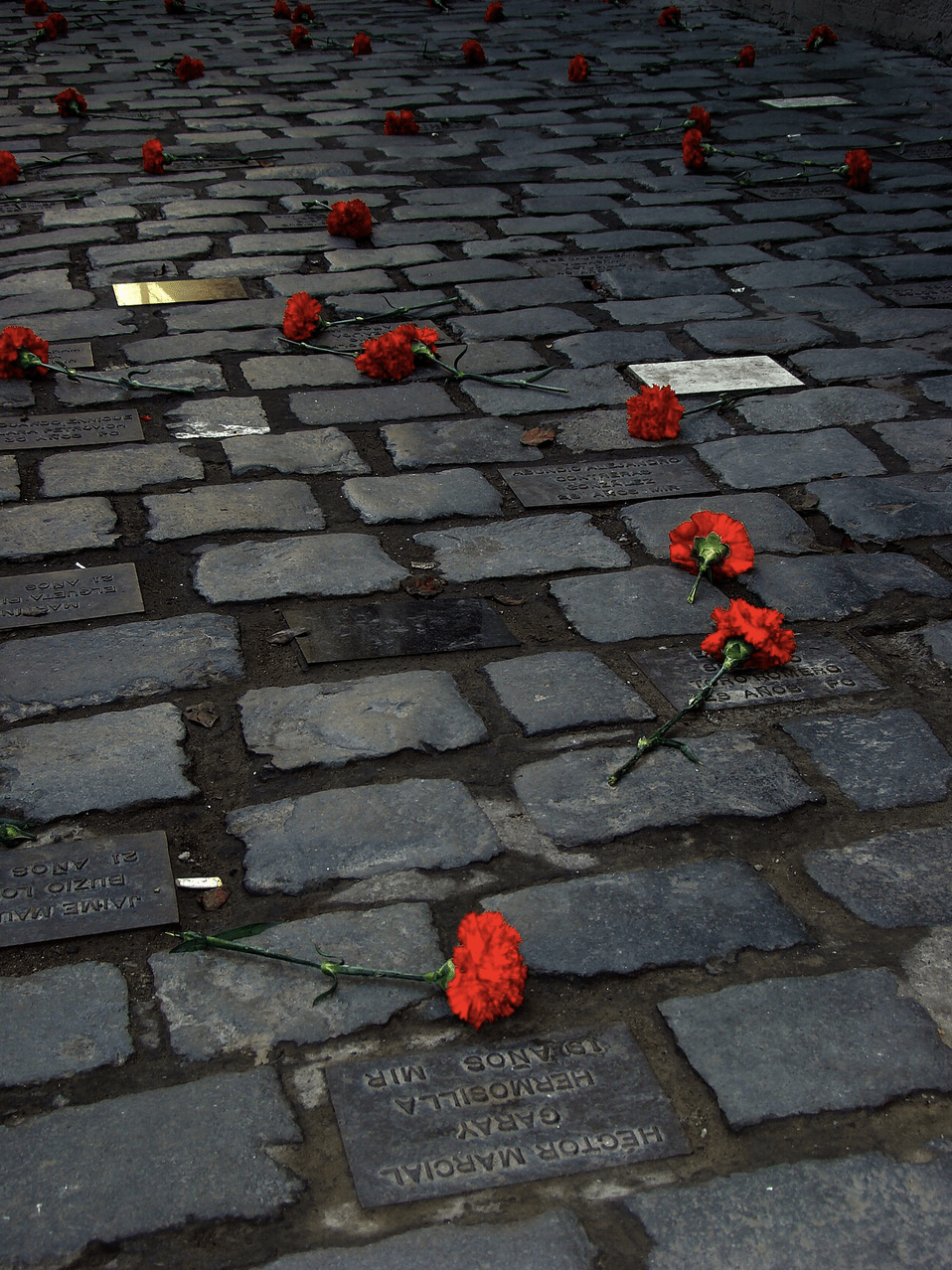
A monument to the dead and disappeared/Pepoideas
Santiago, our final stop, is a tidy city of seven million, blending colonial, neoclassical, art deco, and seismic-resistant modernism. Walking near La Moneda, where Salvador Allende died during the 1973 coup, the weight of history remains visible, etched literally into cobblestones bearing the names of the tortured and disappeared under Augusto Pinochet.
Politics in Latin America plays on a different scale than in Canada. At the margins of the world system, the Southern Cone has learned what middle powers must remember: geography precedes and survives policy and climate now rewrites geography. Maritime law exposes limits. Commodity wealth brings exposure as well as prosperity.
For Canadians, the resonance is unmistakable. Shaped by oceans, climate extremes, and trade routes vulnerable to geopolitical and environmental change, we, too, live with constraint. Around Cape Horn, that lesson is not abstract. It is elemental.
“Latin America is very fond of the word ‘hope’,” wrote the Chilean poet, politician, and diplomat Pablo Neruda; “We like to be called the ‘continent of hope’.” As North America suddenly faces the sort of drama once presumed to be South American, we, too, should never lose hope.
Policy Contributing Writer Colin Robertson, a former career diplomat, is a fellow and host of the Global Exchange podcast with the Canadian Global Affairs Institute in Ottawa. Maureen Boyd, CM is chair emeritus of the Parliamentary Center and a CGAI Fellow.