
Mark Carney and Canada’s Quest for Hard Power
March 23, 2026
This piece is adapted from remarks delivered to The Alphen Group on March 23rd.
Mark Carney is trying to do something Canada has long avoided: rebuild hard power in a serious, sustained way that includes a purpose-driven Defence Industrial Strategy and a plan to defend, build and transform the North.
His pledge to hit NATO’s 2% target this year—and drive toward 5% of GDP by 2035—is not just a spending commitment. It is a strategic reset, the most significant since the early Cold War.
In addition to better pay and benefits for the Canadian Armed Forces, big ticket items include a dozen submarines (South Korea’s Hanwha Ocean or Germany’s ThyssenKrupp Marine Systems), 88 fighter jets (F-35 or Swedish Gripen), Over-the-Horizon Radar (Australia) and fifteen made-in-Canada destroyers.
The logic is straightforward. In an era of renewed great-power rivalry, economic prosperity depends on security—and security depends on credible military capability. As Mr. Carney has argued, values without power are just words.
For decades, Canada could afford to think otherwise. Geography, alliances and American protection allowed Ottawa to underinvest in defence without immediate consequence. That era is over. Russia’s war in Ukraine, instability in the Indo-Pacific and doubts about long-term U.S. leadership have exposed the risks of complacency.
Mr. Carney’s answer is what he calls “values-based realism”: a foreign policy that marries liberal principles with hard power. But the ambition runs headlong into an uncomfortable reality—Canada starts from a position of weakness.
The Canadian Armed Forces are professional and respected but stretched thin. Personnel shortages are acute because of recruitment and retention problems. Equipment is aging. Readiness is uneven. Years of underinvestment have created a gap that cannot be closed quickly, no matter how much money is promised.
Mr. Carney understands this. That is why his defence push is tied to a broader Defence Industrial Strategy. The goal is not just to buy more equipment, but to rebuild domestic capacity to produce it. Sovereignty in the 21st century means control over supply chains, technologies and critical infrastructure—not just territory.
There are early moves in this direction, including investments in Canadian firms in space and communications and the creation of a Defence Investment Agency. The broader ambition is to reduce reliance on foreign suppliers, particularly the United States, which has historically captured the lion’s share of Canadian defence procurement.
But here, too, reality intrudes. Canada’s industrial base is limited. Its procurement system struggles to deliver. Without a steady pipeline of projects, private investment will hesitate. The risk is that the rhetoric of “buy Canadian” collides with the practical need for speed, scale and interoperability with allies.
Our shipbuilding strategy is working but it has taken a decade-plus to recreate the necessary expertise and of our three shipyards in Vancouver, Montreal, and Halifax, only the Irving yard in Halifax can be judged truly successful with its near completion of the multi-purpose Harry DeWolf class ice-breakers and as it starts work on the new River-class destroyers.
Nowhere is the gap between ambition and capability more evident than in the Arctic. Climate change is opening the North to shipping, resource development and strategic competition. Canada’s sovereignty is no longer uncontested—it must be demonstrated.
Mr. Carney promised billions for Arctic security and economic development: dual-use infrastructure including airstrips, ports, forward operating bases, and surveillance systems. He has also signalled that Canada should take greater responsibility for defending its own Arctic territory. That is a welcome shift.
But the Arctic is unforgiving. It is vast, remote and expensive. Building infrastructure there takes years. Maintaining it takes decades. Canada’s current capabilities—limited icebreaking, sparse basing, thin surveillance—are not commensurate with the challenge.
Allies matter and Carney’s road trips In support of trade diversification are also about creating closer defence and security relationships: joining the European Union’s Security Action for Europe (SAFE) program (becoming the first non-European country to participate); more joint exercises with Korea, Japan, Australia, Philippines and closer collaboration with the UK, EU Nordic nations; and active involvement in the Ukrainian coalition of the willing.
Carney is leading efforts to establish a Defence, Security and Resilience Bank of “likeminded partners to mobilize and deploy private capital and support collective security” — like the World Bank, but for deterrence. Canada is hosting eighteen nations this week in Montreal to define its governance and operations.
There are other models to follow.
Nordic allies such as Norway and Finland have invested in resilient infrastructure, integrated civil-military planning and strong reserve forces tailored to harsh environments. They treat defence as a whole-of-society effort. Canada has yet to make that leap.
The real danger is not that Mr. Carney aims too high. It is that the system cannot deliver. Procurement delays, labour shortages and fiscal constraints could slow progress. Political attention could drift.
For Canada, this rupture in an alliance that we took for granted creates both pressure and opportunity. Meeting NATO targets strengthens credibility. Building real capability increases leverage.
All of this unfolds within a shifting alliance landscape.
Canada’s defence relationship with the United States remains foundational, particularly through NORAD and its modernization. NORAD provides early warning and continental defence in a way Canada could not replicate on its own.
But Washington is changing. Under the shadow of Donald Trump, the U.S. has taken a transactional, arguably hostile, approach to alliances. It’s not just pressing partners to carry more of the burden but as we witness over Trump’s demand for help in opening the Straits of Hormuz, for subordination if not subservience.
For Canada, this rupture in an alliance that we took for granted creates both pressure and opportunity. Meeting NATO targets strengthens credibility. Building real capability increases leverage.
Still, there are limits. Even at 2% — or 5% —Canada will remain a middle power. The goal is not independence from allies, but greater autonomy within them: the ability to choose, to contribute and to influence.
The real danger is not that Mr. Carney aims too high. It is that the system cannot deliver. Procurement delays, labour shortages and fiscal constraints could slow progress. Political attention could drift. Spending targets could become substitutes for strategy.
And strategy is the missing piece. Mr. Carney has promised both a foreign policy review and a national security strategy. They should knit together his vision around ‘values-based realism’ in a world of ‘variable geometry’.
There has been an absence of long-term strategic thinking by the national government. Many in the defence and foreign policy community were mired in the fiscal and political limitations of the post-Cold War era, which inarguably is now over.
Rarely have the policy debates started from the strategic perspective of asking: Where is Canada’s place in the world? What do we want to do? What do we need to safeguard our sovereignty? What do we need to do to do that?
And what is Canada preparing its military to do? Defend the continent? Assert Arctic sovereignty? Contribute to NATO operations in Europe? Engage in the Indo-Pacific? Peacekeeping? The answer cannot be “all of the above” without clear prioritization.
Respected defence analysts are weighing in. Philippe Lagassé argues the problem is not just funding. It is governance. Canada’s procurement system is slow, risk-averse and chronically delayed.
Announcements are easy; delivery is not. Peter Jones makes a related point: Canada still lacks a coherent strategy that links defence spending to diplomacy, industry and national objectives. Wesley Wark asks how Canada will position its announced, independent Arctic security posture, between NORAD and NATO alliance commitments.
Canada built its post-war international reputation on defending the rules-based order. We took the rules for granted. Trump has ruptured this, seemingly wanting to replace it with transactionalism, the dog-eat-dog world of New York real estate.
It’s a profound divergence to which Canada must respond. Canada requires hard power in order to defend its interests.
Mr. Carney gets this. He deserves credit for recognizing that the era of defence minimalism is over. He is right to link security with prosperity, and sovereignty with capability. He is right to push Canada to do more.
But ambition must be matched by execution. Ships must be built. Aircraft and submarines delivered. Personnel recruited and retained. Infrastructure constructed in the North. Industrial capacity sustained over time.
This is not a short-term project. It is a generational one. It requires something Canada has often lacked: consistency. It also requires constant communication – repeated and reinforced to ensure public understanding and support.
If Mr. Carney can deliver, he will do more than meet NATO targets. He will redefine Canada’s role in the world—from a country that talks about power to one that can exercise it.
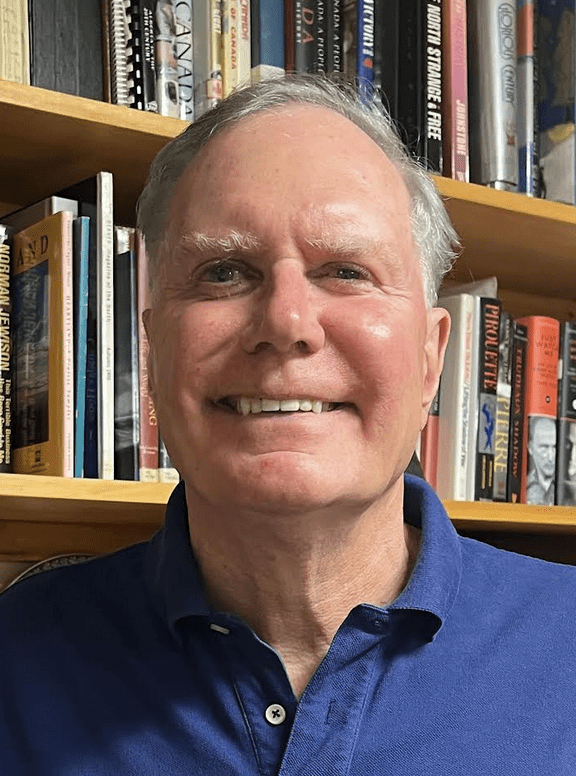
Policy Contributing Writer Colin Robertson, a former career diplomat, is a fellow and host of the Global Exchange podcast with the Canadian Global Affairs Institute in Ottawa.