
Fighting Antisemitism: When the Law Fails to Draw the Line
 Shutterstock
By Richard Marceau and Joseph Neuberger
March 30, 2026
In recent months, a pattern has emerged across Canada’s criminal justice system of outcomes that may appear routine in isolation but which, taken together, raise serious concerns of how police, crown attorneys, and judges interpret and respond to antisemitic and hate-motivated charges.
Last week in Montreal, charges were withdrawn against a woman accused of uttering threats invoking genocidal language during a demonstration, including performing a Nazi salute. The same week in London, the Crown dropped mischief charges for a second time against Tarek Loubani, who vandalized a local MP’s office. There are many other examples.
Although each decision may be legally defensible – prosecutors must consider the burden of proof, free-expression rights, and other justice principles – the collective picture is far more troubling. These outcomes point to a system struggling to keep pace with evolving antisemitic harm and failing to understand how such acts deepen fear and leave communities feeling and being unsafe and abandoned.
As the federal government advances Bill C-9 – legislation designed to equip authorities with stronger tools to hold criminals accountable – it is essential to recognize that the success of these measures hinges on far more robust and consistent enforcement than we have seen to date.
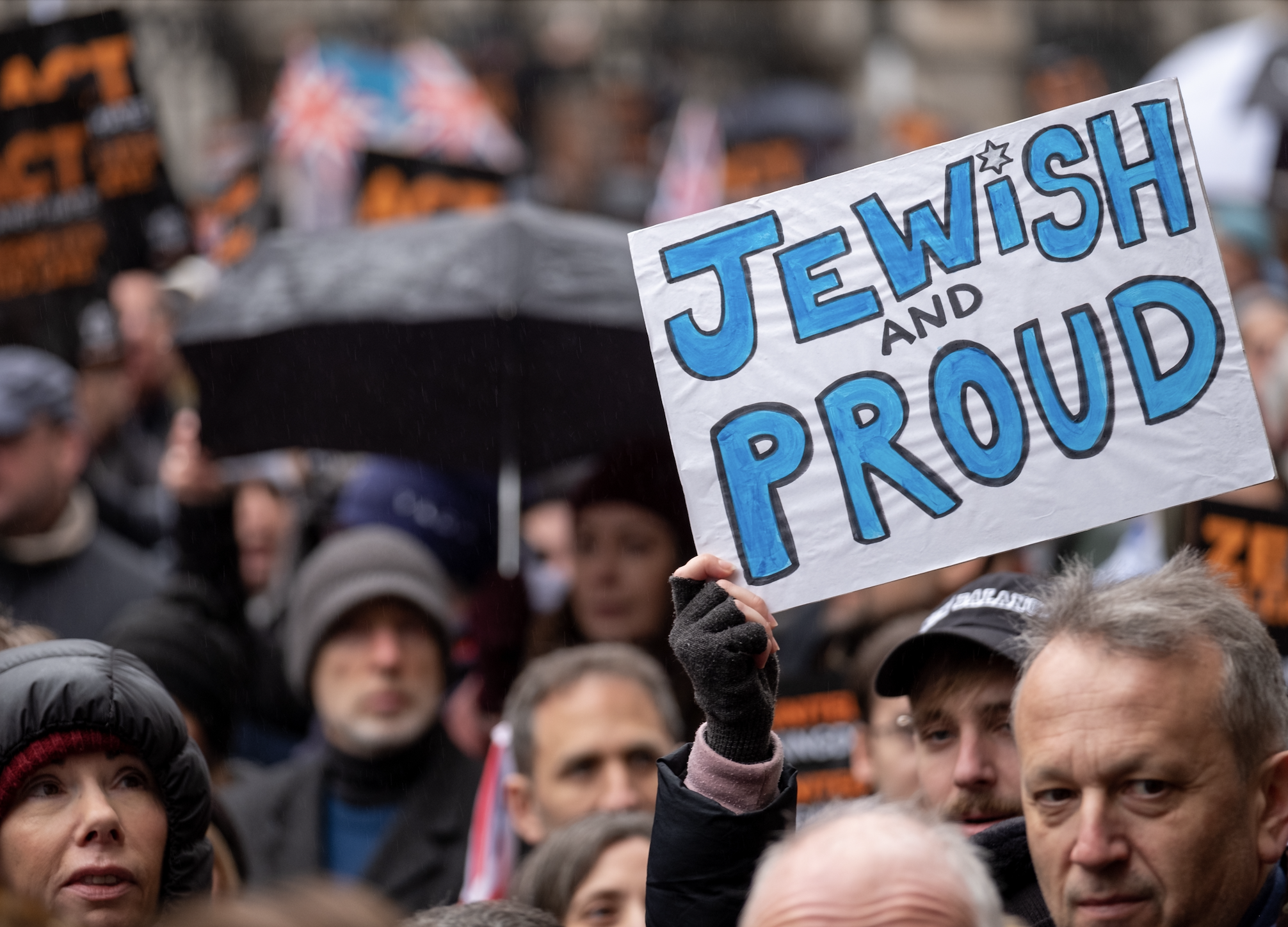
Across the country, protests have increasingly crossed the line from peaceful expression into intimidation of Jewish communities. Demonstrations are no longer confined to political critique; they are often directed at communities themselves, with protests regularly taking place in residential Jewish neighborhoods. The rhetoric used during these events can express hatred that doesn’t always fit neatly into the Criminal Code, but still has a real impact, and this is where the gap lies.
Modern antisemitism does not always manifest in the ways that criminal law is designed to address. It is often embedded in political language, expressed through euphemism, or directed at Jewish communities under the guise of broader geopolitical protest. It can be subtle, contextual, and difficult to categorize, but it is no less real. When hostility and hatred are reframed as activism and intimidation is framed as political speech, this may fall short of criminal thresholds, but the result is the same: fear, exclusion, and harm.
Unfortunately, our institutions seem ill-equipped to recognize this. A growing disconnect persists between how antisemitism is experienced and how it is understood and acted upon within parts of the criminal justice system. When conduct that feels threatening goes unpunished, the legal deterrent is neutralized, and the message becomes one not of restraint but of escalation. The absence of enforcement does not lower tensions – it emboldens those who push the limits.
A growing disconnect persists between how antisemitism is experienced and how it is understood and acted upon within parts of the criminal justice system.
This is not a call to suppress protest. Canadians have a fundamental right to express their views forcefully on international issues. But that right is not without limits. It does not extend to threatening language, targeted harassment, or conduct that undermines the safety and dignity of others.
When those limits are inconsistently understood or applied, the issue is no longer simply legal, it becomes systemic.
So, what needs to change?
First, legal tools alone are not enough if those applying them do not fully understand the forms of harm they are meant to address. There is an urgent need for meaningful, standardized antisemitism training across the justice system, to train police, Crown prosecutors, and judges on how contemporary antisemitism manifests. Without that baseline understanding, even well-intentioned decision-making risks missing the mark.
Second, governments must assess whether current legal frameworks adequately reflect modern protest dynamics. For example, some municipal jurisdictions have begun implementing targeted measures such as buffer zone legislation to protect access to places of worship, schools, and community institutions. These approaches should not be viewed as exceptional, but as part of a broader effort to ensure that public spaces remain safe and accessible for all.
Third, enforcement must be timely and consistent. When protests cross into intimidation or harassment, particularly in proximity to vulnerable community spaces, there must be a clear and predictable response. Inconsistency risks eroding public trust.
Finally, political leadership matters. Clear, principled statements about the boundary between protected expression and unacceptable conduct help set the tone for institutions tasked with enforcement.
None of this undermines freedom of expression. In fact, it protects it.
Because when intimidation replaces debate, when fear replaces participation, and when the law fails to keep pace with reality, it is not only targeted communities who are affected. It is the integrity of the system itself.
Canada must decide whether its legal and institutional frameworks are capable of responding to the scourge of antisemitism — not as it existed decades ago, but as it exists today.
That requires more than acknowledging the problem.
It requires action.
Joseph Neuberger is chair of the Canadian Jewish Law Association and a Criminal defence lawyer.
Richard Marceau, a former Member of Parliament, is senior vice-president, strategic initiatives, and general counsel at the Centre for Israel and Jewish Affairs (CIJA).