
On Being Canadian: The Making of a Canadian Heart, Story by Story
 Susan Bonner hosting The World at Six/CBC image
This piece is part of our Policy series On Being Canadian.
By Susan Bonner
April 8, 2026
The news business has rarely been busier; the subject matter this heavy with consequence, the public interest so high in terms of both consumption and stakes.
Journalists are more crucial now than ever. It’s a big — some would say “hinge” — moment for Canada, and I’ve spent my career chasing moments like this. So, I know; it’s a strange time to be walking away from a senior job in Canadian journalism.
But as Yogi Berra quipped, “When you come to a fork in the road, take it.”
I don’t know yet where this fork will take me — hopefully to a place where I can make a positive contribution — but it has me thinking about just how this country has shaped me.
As a CBC journalist and a lifer with the ‘Mother Corp’ as we call the national broadcaster, I’ve lived and worked all over Canada.
Moving to different places kept me vulnerable; I had so much to learn each time. While I was always warmly welcomed, I was also aware that I was an outsider. We share a country, but not the distinct sensibilities that reside in our regions. I “came from away”, as they say on the East Coast.
In Saskatchewan, they called me a central Canadian, in Alberta I was an “easterner”. My Nova Scotia colleagues teased me with the label of “upper” or “uppity” Canadian. In Montreal, I boasted of my birthright as a Quebecer, but would, of course, forever be une anglaise. It wasn’t personal. It was an immersion in the lesson that who we are and how we think comes from how and where we live.
And I’ve been the walking embodiment — city after city — of how the CBC invests in and builds national expertise and perspective in its journalists. We know that Canadians can share national values but have different needs and priorities. Partisan politics can give voice to that, but it is much deeper than the political Sturm and Drang.
All of that shaped my own story as I learned to understand this country and to tell the stories of its people — from the Saskatchewan potash workers struggling to protect their union jobs, to the fish plant workers in Canso, Nova Scotia whose only industry was wiped out, to a young Quebec political activist named Mario Dumont who launched his own career and a new party over the failure of the Meech Lake Accord.
From the glistening towers of the Calgary oil patch to the mirrored canyon of Bay Street, and in the vibrant streets, cafés and communities of Quebec — it was all a privilege.
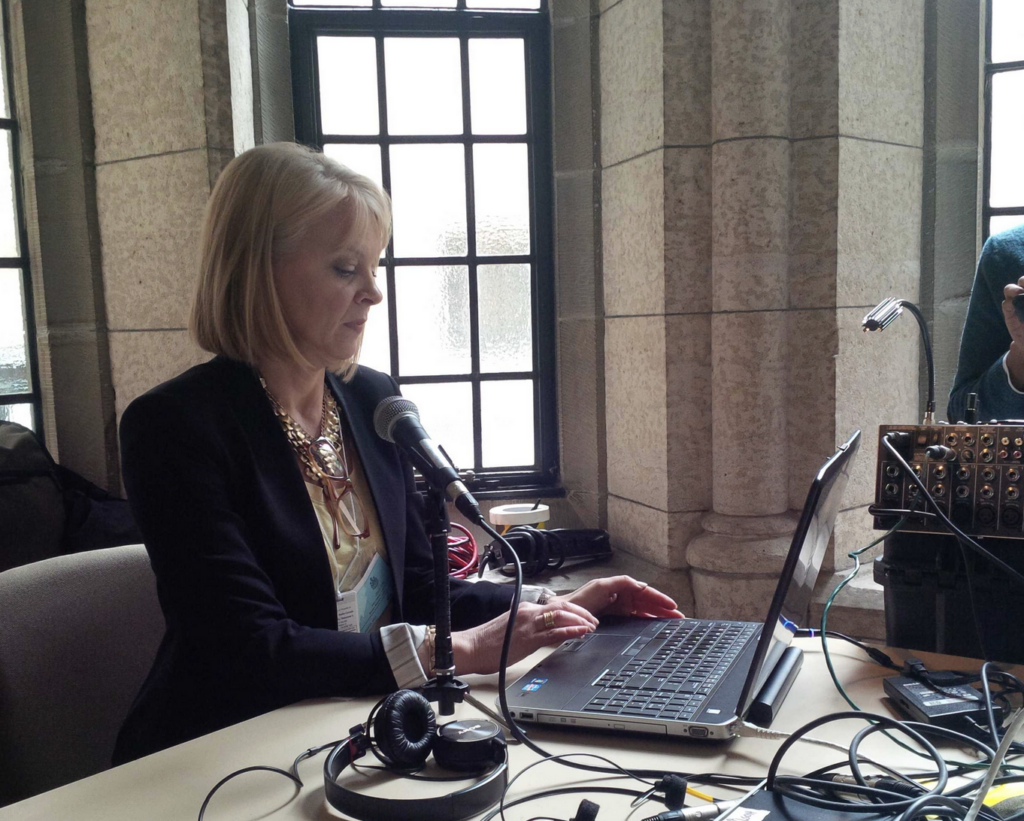 Working on Parliament Hill/CBC image
These stories, sense of place, and perspective came with me to Parliament Hill, where they helped enrich my reporting on the national discourse. That daily conversation about Canada — a Canada strong and free to be itself in all its regions, all its diverging needs, wants, dreams, and wonderful characters: To me, it was on the Hill where, on the best days, the words “true patriot love” made sense.
And then, I went to Washington.
In America, a Canadian is a Canadian. It doesn’t matter which region we come from. It doesn’t matter how conversant we are with American culture and history, or how like Americans we may seem.
We can be genuinely liked and appreciated while still getting the distinct vibe that the locals know we are not one of them.
That paradox will sharpen your sense of Canadian-ness. I watched it happen to my son.
He grew up attending Canada Day events on Parliament Hill. As a toddler he thanked veterans on Remembrance Day ceremonies at the National War Memorial, and he trick-or-treated at 24 Sussex and Rideau Hall.
In DC, he was just another kid whose family had moved to the ‘centre of the universe’ for work. He looked and mostly sounded like every other American kid, but he felt like a Canadian. Life was very good for him in Washington, and being Canadian was his special sauce.
That notion that Canadians walk among Americans undetected because we’re so alike that we “pass” was a running joke with my American friends and colleagues — that we Canadians slide in easily.
Until we don’t.
And that reality check can go beyond a laugh over a Canadian turn of phrase or the pronunciation of “about”.
I can still summon the jolt of fear I felt one day at the White House. It was 2009, and I’d just been posted to cover the Obama administration. I was on the grounds on a foreign-press day pass, still waiting for my full CBC credentials.
I wandered over to where other journalists were gathered outside the press briefing room, cooling their heels for an event. Suddenly, an armed guard barked into his handheld radio: “Foreign national! Foreign national in restricted zone!” I hadn’t realized I needed an escort to join the daily reporters.
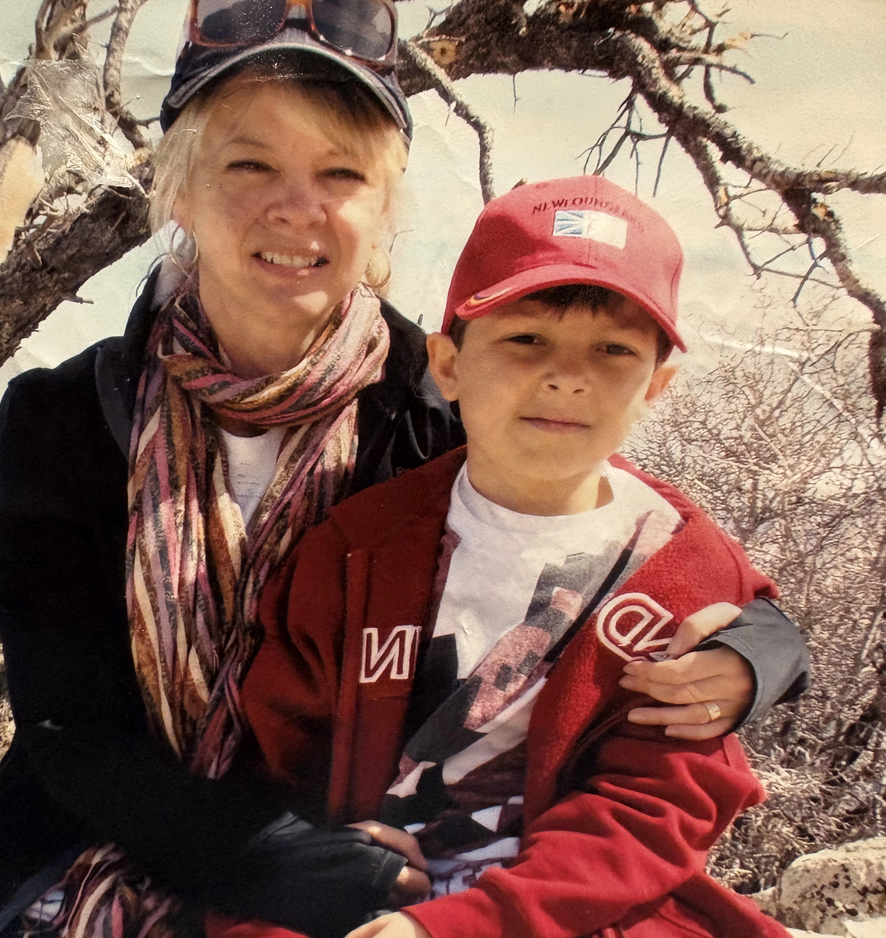
With my son Sam, who always felt Canadian, even at the Grand Canyon
It was a small caution that no matter how comfortable you feel in the U.S., as a non-citizen, you may at some point be reminded that you’re “not in Kansas anymore.” Lately, of course, that caution has become far more serious and the consequences potentially far greater for non-citizens than what I experienced that day.
I just never thought our nationalities should be much of a problem for Canadians and Americans — and that was more than four presidential cycles ago. Now, we’re more distinct than we’ve been in more than 200 years.
Still, I never bought into the theory that a defining aspect of Canadian identity is simply not being American.
The best relationships allow you to keep your identity while choosing to be stronger together. Keep that in mind and all problems can be overcome, I thought. Maybe that’s the “peace order and good government” Canadian in me.
As a journalist — notably in the job I recently left as host of the nightly CBC Radio show Your World Tonight (previously The World at Six) — I’ve heard and felt the fire across this land in response to the U.S. president’s threats.
We are no longer in “best relationship” territory, and on that point at least, it now feels like being Canadian has never felt more Canadian, if that makes sense. Amid the awfulness of it all, being targeted by a belligerent president is an identity enhancer.
But I loved every minute of my time in the United States.
I could easily have stayed longer but was happy to repatriate and raise a Canadian teenager who has emerged as a young man proud to travel the world with his Canadian-flag patch on his backpack and this home in his heart.
That’s where being Canadian lives for me too: deep in my heart.
It’s embedded under all the places I’ve been, through all the stories I’ve gathered, on the front lines of this country and beyond.
The daily rhythm may change, but the heartbeat goes on.
Susan Bonner worked as a reporter and news anchor for CBC News for four decades.