
Beyond the Carney Quote: How a Strong Canada Serves America’s Interests
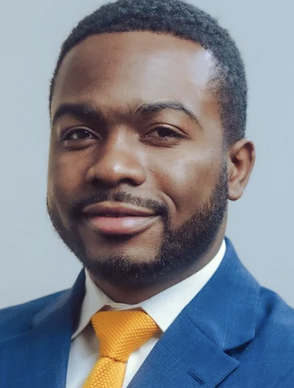
By Esnold Jure
June 5, 2026
When Prime Minister Mark Carney said in his speech to the Economic Club of New York on May 28th that “Canada Strong will help make America great again” it prompted a deluge of speculation about what he meant: Was it MAGA dog whistle? Was it an olive branch to Donald Trump ahead of intensified CUSMA negotiations?
With the dust now settling, the reality is that perhaps Mr. Carney meant exactly what he said: that, whoever is leading America, it will be in a much better position, geostrategically, next to a strong, resilient Canada.
For Canada, per the newly revised conventional wisdom that Mr. Carney’s Davos speech reconciles with his Economic Club speech in the Venn overlap of Canada’s ability to walk and its ability to chew gum simultaneously, this means increasing production and developing capabilities the U.S. lacks, to become a more indispensable ally.
To many, including leaders of U.S. allies, Donald Trump’s 2016 election was a fluke. Joe Biden’s 2020 electoral victory somewhat confirmed that view. Yet, with his resounding 2024 victory, Mr. Trump’s political appeal tells a different story: an American society reckoning with itself.
For the past two years, the geopolitical risk analysis firm Eurasia Group has ranked U.S. political instability as the number two (2025) and number one (2026) risk to global stability.
While on the surface it may appear that Mr. Trump is on a personal journey to remake both the U.S. and the global order in his image, the reality is that there is a domestic appetite for it.
The Republican Party now largely espouses the Trump doctrine that the world has taken advantage of the U.S. through free trade and globalization, and vows to undo that system. And so far, the president has been largely unimpeded. The Republican-led Congress, wary of retribution, has deferred to the White House on most issues. The Supreme Court has also been largely permissive with the executive.
And although there are still traditional voices, most of the leadership roster is closer to Mr. Trump than to the Reaganite school of thought. Donald Trump is only an anomaly in the sense that his personal character has added a layer of unpredictability to that change, making it harder to divine.
Though a Democrat-led Washington would likely shift from the indiscriminate and coercive nature of dealing with allies, it’s not guaranteed that the U.S. will significantly change its current trade posture. In fact, President Biden not only maintained but also increased tariffs imposed on China by the first Trump administration. He implemented trade policies designed to reshore manufacturing to the U.S.
Beyond partisan lines, issues such as foreign aid, overseas entanglements, and military assistance to allies have become political liabilities for an electorate that wants politicians to focus on domestic issues such as affordability and healthcare, and other socioeconomic challenges.
Even if a post-Trump America is likely to be more predictable, it is also likely to remain inward-looking, socially and politically polarized, and more protectionist.
Consequently, Canada’s best bet is not to hope for the return of the status quo ante, but to find ways to complement U.S. strengths where it matters the most: energy to win the AI race, critical minerals to shield its defence industry, and Arctic security at a time of increased geopolitical competition, all while retaining strategic autonomy.
Powering the AI Race: Canada as a U.S. Energy Ally
The U.S. is determined to win the AI race, and while it is ahead in compute capacity, its fiercest competitor — China —leads in manufacturing and in deploying AI-enabling energy infrastructure at massive scale and low cost to meet AI demands, putting U.S. leadership at risk.
Despite federal-provincial coordination and regulatory hurdles, Canada has the potential to provide the energy security the U.S. needs to maintain its advantage or eventually win that race. AI-driven energy demand is rising worldwide. In the U.S., it is projected to double over the next four years, with data centres’ consumption expected to triple current production.
Canada is a global leader in both conventional and renewable energy, including as the third-largest exporter of electricity, and the U.S.’s largest energy supplier—27% of U.S. imports from Canada.
The Government of Canada has recently unveiled a plan to double its energy capacity. Canada would strengthen its strategic position by building capacity to supply the U.S. with energy to bridge its electricity gap.
A Critical Minerals Powerhouse
The post-Liberation Day tariffs showdown between the U.S. and China illustrated how the U.S. and its allies’ national and economic security are vulnerable to Beijing’s near-monopolistic control of the critical minerals sector. Despite efforts to reduce this reliance, Washington faces many constraints.
Meanwhile, Canada is a global leader in more than 60 minerals and metals and holds the world’s largest deposits of high-grade uranium—a key defence asset. The country also possesses all of the NATO-identified minerals essential for defence manufacturing, with active production in ten, and has the potential to supply up to 14% of global demand for six key rare earth elements.
Canada could re-anchor that supply chain in North America and become a critical-minerals powerhouse for the West. Canada already supplies the U.S. with many of the minerals it lists as critical and is making strides to boost its domestic capacity.
With accelerated production and refining capacity, Canada could not only ensure sovereign capabilities, as stated in the Defence Industrial Strategy, but also play a leading role in helping the U.S. and other allies de-risk their supply chains for critical minerals.
A Stronger Canada in the Arctic
The U.S. remains an Arctic power, and its NATO membership gives it even a greater advantage. However, Russia’s long-term commitment to—and success in—establishing itself as a dominant force in that region, paired with China’s Arctic ambitions, has become a major concern for Washington.
Canada’s 160,000 km Arctic coastline places it at the centre of this new theatre of great-power rivalry. The Carney government has committed over $40 billion to strengthen Canada’s Arctic presence by improving infrastructure, acquiring new surveillance radar, and expanding Canada’s icebreaker fleet.
At a moment when the U.S. is stretched across the globe and beginning to face shortages in critical areas, which may take years to restock, a Canada capable of projecting power in the Arctic offers the U.S. greater flexibility to compete elsewhere.
Beyond security, the Arctic is rapidly emerging as a viable transpolar commercial route. As an export-based economy, Canada would also gain a competitive advantage over time by developing the capacity to defend its interests in the Arctic and building dual-use maritime assets as the region opens to international commerce.
For the first time in its history, the U.S. faces a rival power capable of matching its capabilities across all strategic domains: economic, military, and technological. As Rush Doshi and Kurt Campbell argued in a 2025 New York Times op-ed, the only way the U.S. can outcompete China in manufacturing scale and capacity is by combining American and allied forces. Despite current tensions, geographic, economic, and continental realities mean it is in the U.S.’s interest to collaborate with Canada.
The key is for Canada to be prepared to engage in ways that both bolster its economic and national interests and advance North America’s ability to project soft and hard power.
A Canada that adds strategic value to the U.S., closes its gaps and picks up where the U.S. falls short improves its own position as America seeks to redefine traditional alliances.
Provided Canada takes the necessary steps to enhance its strategic position, this disruptive phase of the Canada-U.S. relationship could catalyze a resilient, strategically indispensable Canada for the post-Trump era.
Esnold Jure is a senior associate with the International Development Group and a former legislative fellow at the U.S. House of Representatives. His research and analysis focus on governance, security, and international affairs. He holds a Master of Public Policy degree from George Washington University.