
The Literary Ghosts of a London Landmark: Canada House, Then and Now
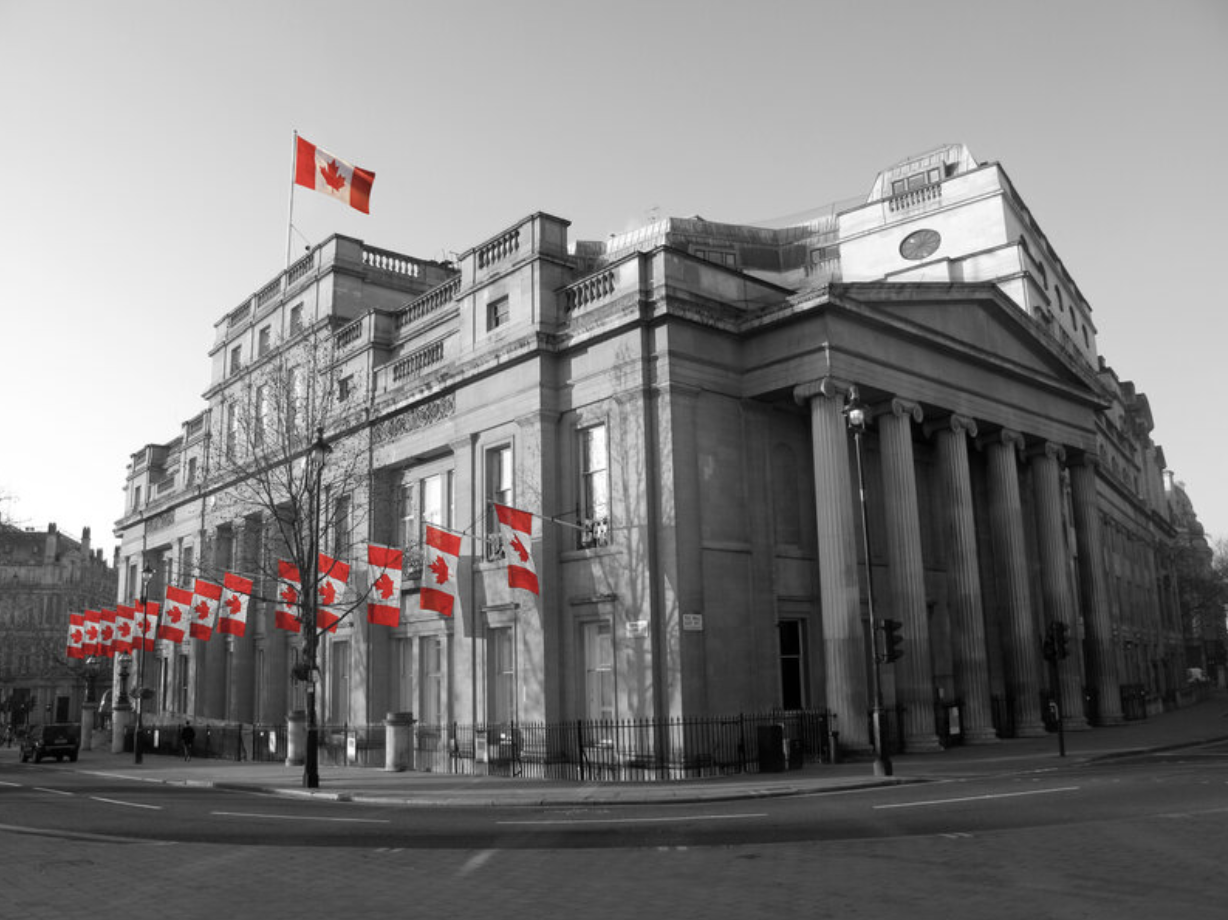
Canada House, Trafalgar Square, London/openhouse.org
July 5, 2026
It may seem counterintuitive — when the attraction of travelling far afield is about getting away from the familiar — to plan a visit to a place called Canada House. But this year, I had my reasons.
For generations of Canadians, discovering Canada House has been a backpacking rite of passage; stumbling upon the maple leaf-adorned cornerstone of London’s iconic Trafalgar Square while feeding the pigeons or, by necessity, scrambling to it to replace a lost or stolen passport.
My first recollection of coming upon any reference to the chancery of the High Commission of Canada in the UK was some years ago, when I finally tracked down author Norman Levine’s travelogue and memoir Canada Made Me, first published in 1958.
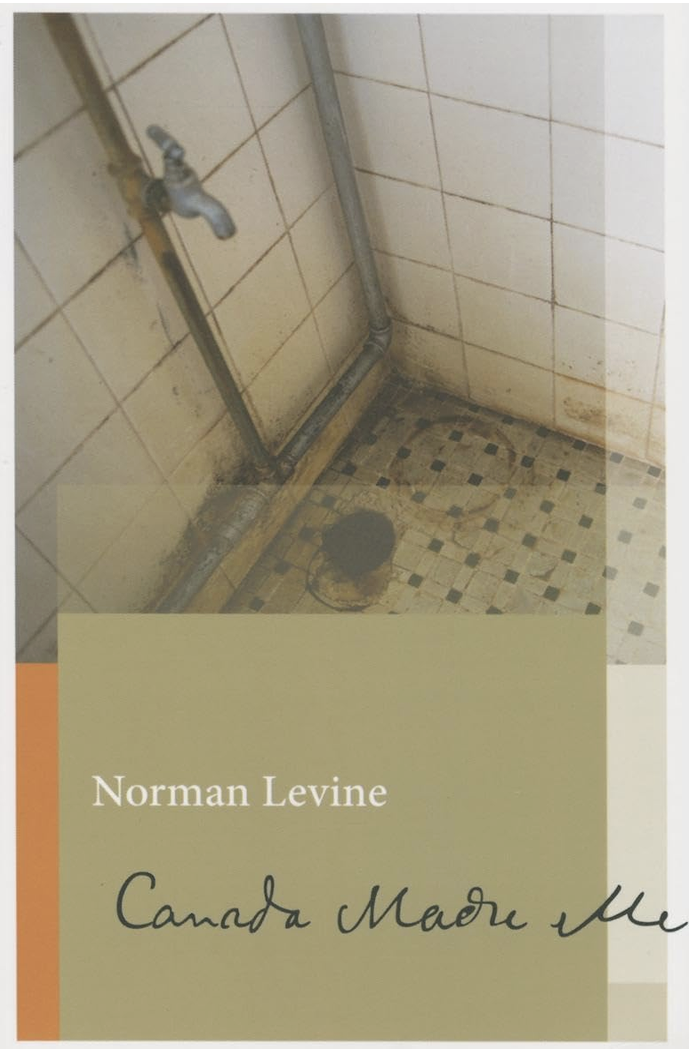
Levine, scandalously unread and all but forgotten now despite being one of our greatest short-story writers, was originally from Ottawa. After the war, he completed his MA at McGill before moving to England to pursue a never-completed PhD at King’s College.
But the writer in him couldn’t shake this country:
“The idea of writing this book on Canada came while I was living in St. Ives, Cornwall. But I did not know how I would go about doing this trip, for one would need both time and money. Instead, I found that whenever I came up to London, I would go into Canada House, look over some of the old newspapers, magazines, listen to the sound of the voices, look at the faces, just sit and watch …”
This notion — of a place in the heart of Trafalgar Square that was so evocative of the whole of Canada to a writer in exile — appealed to the novelist in me.
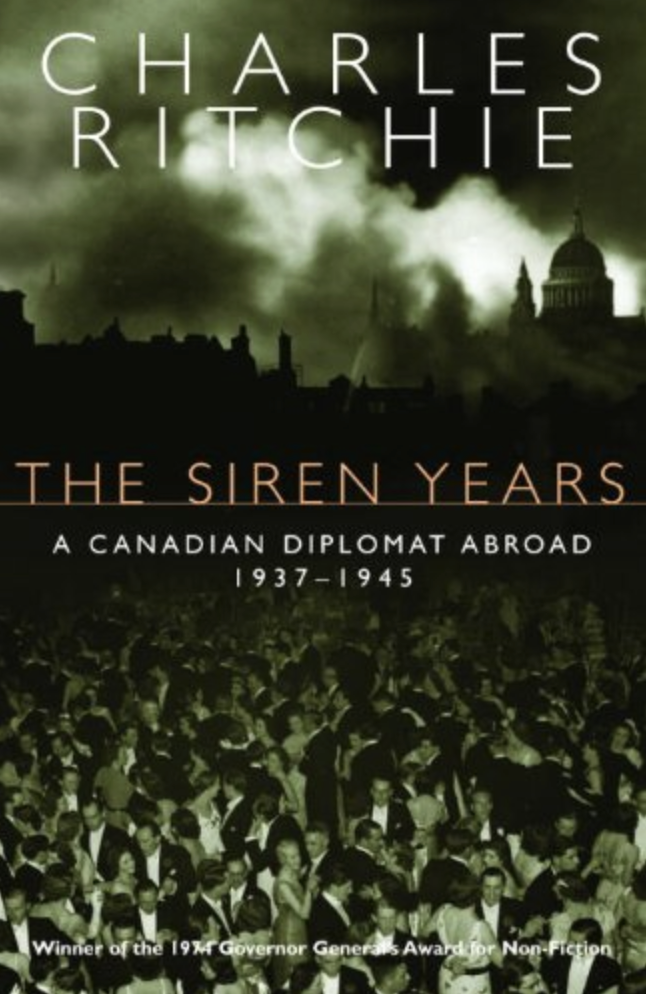
So much so that, when I discovered diplomat Charles Ritchie’s diary of his time at Canada House during the Second World War (compiled in one volume called The Siren Years), resistance was futile.
I needed to know more about the hold this one building had on those stationed there, especially at a moment in time that must have seemed like the original “rupture”: the collapse of the global order and the ensuing sense, as the bombs fell on London, that this was life lived in the eleventh hour.
From the first few pages of The Siren Years, it was clear to me that Ritchie was a born writer. Here he is, writing of spring in London:
“It was hot for the first time this year and everything was in bloom at once — lilacs (white lilacs leaning over the wall at Apsley House), hawthorn everywhere, and chestnut. The grass is long and shaggy — people have trodden paths across what used to be smooth preserved lawns. There are cigarette boxes and papers everywhere, but the trees are in full magnificence and there are lovers on the grass and solitary ladies reading library books in their deck-chairs, and old dirty human bundles of tramps, and everywhere soldiers. I think of last year walking in the parks after Dunkirk when they were full of the remnants of half the armies of Europe with foreign voices and tired strained faces. Again we are on the edge of something momentous. And next spring?”
On the edge of something momentous. That sense of the momentous was also personal, not just political, because Ritchie, then single, was falling in love with the married novelist Elizabeth Bowen. Their 30-year affair, begun after they met at an Oxfordshire christening during the height of the Blitz, is considered one of the great literary love stories of the 20th century.
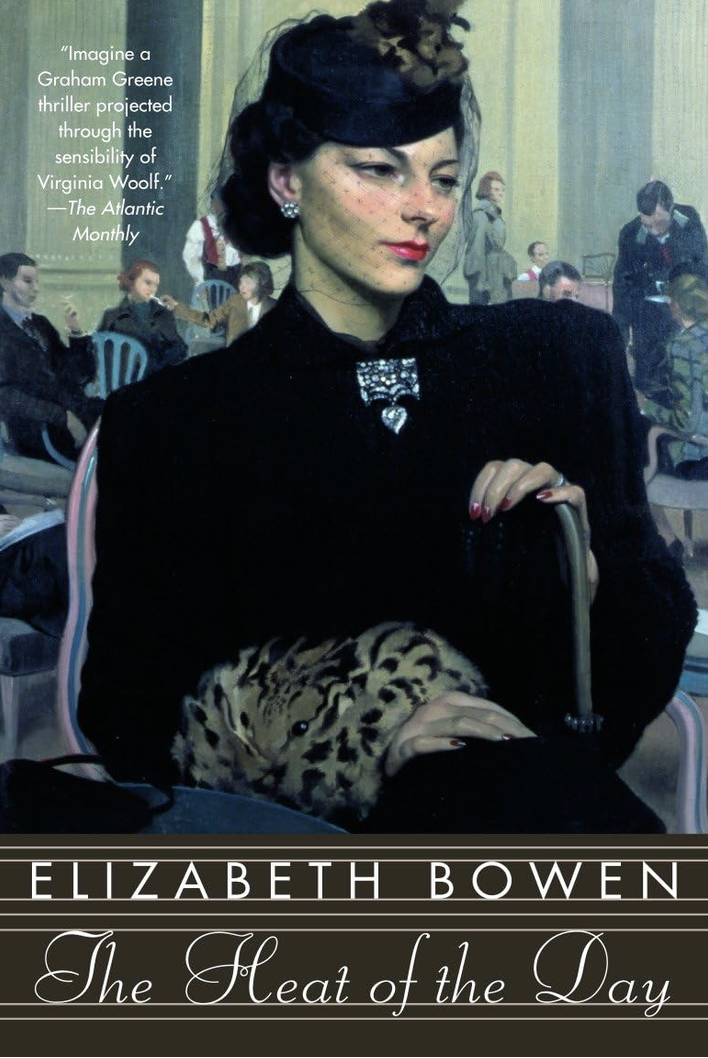
When I turned to Bowen’s novel, The Heat of the Day, which features a character inspired by Ritchie, I began to get that inchoate sense that there might be a compelling story-behind-the-story in the first chapter of the Ritchie-Bowen romance, which unfolded during his Canada House years. It was then that The Innocent Canadian (former senior diplomat Colin Robertson’s Policy review) was born.
These “What if?” musings are rarely without consequence for me. I started drafting a novel in my head — a wartime thriller; historical fiction inspired by the Ritchie-Bowen romance — that I needed to authenticate with a pilgrimage to Canada House.
Getting to London while reading all I could about how Canada House was during The Siren Years, was a kind of secret mission (shared only with my wife, who’s worked in London and needs no encouragement to visit), one that I was fortunate enough to carry out.

My first visit to Canada House as research for The Innocent Canadian was during Ralph Goodale’s time as high commissioner, and it was confirmation of just how much of our history haunts the exquisitely appointed rooms inside the Greek Revival exterior of the landmark.
These were the stairwells and offices where Ritchie and Lester “Mike” Pearson, future prime minister of Canada, served side by side during a war that not only showed the world what England under Winston Churchill was made of but showed England what Canada was made of.
When, more than 20 years later, Pearson sent Ritchie back to Canada House as high commissioner, he must have felt the ghosts of those do-or-die years, and of the early intoxication of his romance with Bowen, which had by then settled into their later lives; still lovers, living mostly apart. The Siren Years was published in 1974, three years after Ritchie left Canada House for the second and last time.
Goodale was gracious enough to let us linger on our tour, and he didn’t seem to mind when I spent a bit of time in the Quebec room with the desk that Pearson worked from when he was there with Ritchie, serving under High Commissioner Vincent Massey.
Touching that desk gave me a vivid sense of the moment “Mike” looked out on Trafalgar Square, only to see a German bomb crash down just metres from the building.
My second visit came this spring, after The Innocent Canadian was published, and it was thanks to our new high commissioner, Bill Blair, and his team that I had the opportunity to put a few copies of it on the Pearson desk with another, serendipitously published book, Michael Pearson’s Private Letters, Public Matters. Michael’s is a great work of Canadian history that features his grandfather’s correspondence, over his years as a diplomat, to his family back home.

With fellow author Michael Pearson in front of his grandfather’s desk at Canada House/Courtesy
Our June 16th “double launch” at Canada House was a thrill for me and doubly poignant for Michael, standing beside the polished walnut surface upon which some of Mike Pearson’s letters home were written.
Many of the people who came to the launch were also expatriate Canadians like Levine, who had wandered the same rooms like a ghost all those years ago.
While it’s never not a mistake to glamourize war to the exclusion of its loss and suffering, it may be that the sense of the looming “momentous” that Ritchie wrote about finds its echo in the particular political moment we’re in now.
While in London, my wife and I would return to our hotel room in Kensington and turn on the news to see reports of a prime minister under siege, facing premature resignation, a casualty of his own, ineffective efforts to lead Britain through a whole new rupture in the world order.
There are still “foreign voices, tired, strained faces,” still “lovers on the grass and solitary ladies reading library books in their deck chairs” under the shade of the lime and sweet chestnut trees in Hyde Park.
And there is still a Canada, embodied in one well-placed house, alive with Canadian stories, their heroes whispering through its rooms.
Policy Contributing Writer John Delacourt is Senior Vice President of Counsel Public Affairs in Ottawa and a veteran Liberal strategist. He is the author of several novels, including The Innocent Canadian.