
On Trump’s Latest Tariff Threat, No Response Would be the Worst Response
July 22, 2026
Donald Trump’s latest trade assault against Canada, threatening new tariffs on a broad range of sectors — including goods previously protected by the CUSMA — has produced a deluge of commentary, including countless prescriptions on how the Carney government should respond to this aggressive move by the White House.
Above all, any federal government action should be weighed within the context of the following propositions, namely: (1) the signature of the United States on trade deals has little value; (2) de facto, the CUSMA is at an end as a so-called free trade agreement; and (3) the future of Canada-US trade will be based on a series of impermanent, shifting arrangements and a version of managed trade, far more restricted in scope than the CUSMA.
Offensive Weaponry
In Trump’s latest attack, section 338 of the 1930 Trade Act, the Depression-era Smoot-Hawley tariff, has been dusted off for the latest salvo against Canada. It can be added to the array of weapons that are already part of the Trump trade arsenal of various sections of multiple acts, such as the 1962 Trade Expansions Act and the 1974 Trade Act.
In digging up Smoot-Hawley, the U.S. team has scoured the bottom of the barrel in scraping-off this never-used provision under the long-discredited 1930 statute to deploy against Canada. In doing so, the U.S. is signalling that the CUSMA is in its last days as a broad-based free trade agreement.
There are experts in the US who are saying that these Smoot-Hawley tariffs won’t survive court challenges and will bite the dust, joining the so-called emergency tariffs under the International Emergency Economic Powers Act (IEEPA) that the U.S. Supreme Court struck down earlier this year. But in the meantime, if they go ahead, there will be total chaos in cross-border trade, with huge commercial uncertainty across many economic sectors, both in Canada and the U.S., contrary to the very underpinnings of the treaty that Trump signed in 2018 and Congress approved in 2020.
Betrayal of CUSMA Objectives
Consider this. Even with a binding treaty containing a declaration in its preamble that the U.S. and its partners have agreed to “strengthen and renew the longstanding friendship between them and their peoples” and “strengthen their close economic relationship”, the first thing Trump did after assuming office in 2025 was to slap Canada with tariffs on steel, aluminum and autos.
And this was done peremptorily, without any attempt to resolve issues through consultations with one of the United States’ closest trading partners. So much for the value of the U.S. signature, not only on this agreement but on the array of other handshake trade deals Trump has concluded this past year.
While there’s been discussion about whether Trump would formally withdraw the U.S. from the CUSMA and whether he has the constitutional right to do so, Trump’s tariff actions speak for themselves. Forget the bold and laudatory words in the CUSMA preamble. They’ve been overtaken by his statements about CUSMA and trade since then, which evidently should have been taken both literally and seriously.
Canada’s Response
The point about free trade agreements is that, like all treaties, they are to be complied with in good faith as required under international law. Here, we have a deal designed to facilitate trade among the three parties and — importantly — containing consultation and dispute settlement procedures for resolving differences, not peremptorily using unilateral tariffs that — to use trade terminology — “nullify and impair” Canada’s rights under the CUSMA.
Under normal WTO trade rules, Canada is allowed to take countermeasures to restore the balance of concessions and obligations that it had negotiated with Trump in the CUSMA exercise. Canada did this by applying its first set of countermeasures in response to Trump’s first set of tariffs last year.
Trump’s order has set August 19 as the date that these new tariffs will take effect after a period of consultations. It is virtually certain that they will. The question then is about how Canada should respond. Will the Carney government apply serious countermeasures, as Ontario Premier Doug Ford has been urging?
Keeping calm and carrying on is one thing. But, as some respected experts have said, concessions and appeasement are self-defeating when dealing with the Trump administration. We’ve seen this earlier with the PM voluntarily ending the digital service tax (DST). It got us nowhere.
Whether one accepts the view that the CUSMA will not survive in its current guise or that the North American free trade era is over, Canada needs to respond in a firm and determined way to this latest attack.
One of the options would be for the federal government to publish – before Trump’s tariffs take effect – the range of U.S. sectors, and even individual items, where Canada is prepared to respond with tariff and other countermeasures. This would show firm, steadfast, steely-eyed willingness to meet Trump’s aggression head-on in the current trade war. The Trudeau government did it in 2018, and it worked.
A strong response like this would better position Canada for the bargaining over what is to emerge from this next, difficult chapter in the bilateral relationship – not anything like the large-scale CUSMA framework, but a much reduced, less stable and much more US-centred trading regime.
It won’t be painless, but no response would be the worst response.
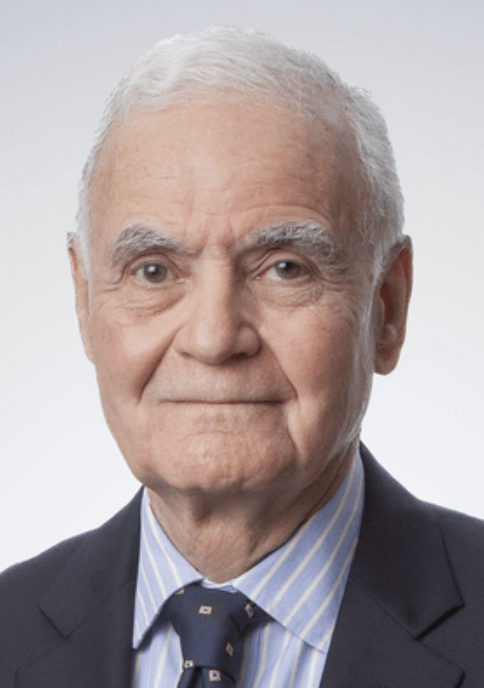
Policy contributor Lawrence Herman is trade counsel with Herman & Associates, a senior fellow at the C.D. Howe Institute in Toronto and a member of the Expert Group on Canada-U.S. Relations. He is a former foreign service officer, having served in Canada’s Permanent Mission to the United Nations and the GATT.