
Canada’s World Cup Window: Where Policy Meets Momentum
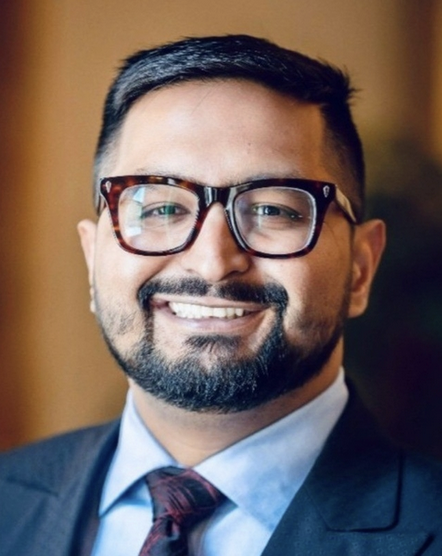
By Anil Wasif
July 26, 2026.
A week after powerhouse Spain beat powerhouse Argentina to win the 2026 World Cup final in New Jersey, of all places, Canadians are still processing our own place in a sport that has suddenly vaulted to the forefront of the national imagination.
As Abacus Data’s David Coletto reported in the days following the final, soccer is now Canada’s second-favourite sport to watch or play, jumping ahead of baseball into the slot right behind hockey.
“In just two months, the share of Canadian adults with at least some interest in soccer rose six points, from 48% in May to 54% following the FIFA World Cup,” writes Coletto in his analysis. “That represents nearly two million additional Canadians and brings the total adult audience interested in soccer to almost 18 million people.”
Attention on that scale is a policy window. It does not stay open.
For a kid born in Bangladesh, the World Cup was the thing you watched and then lost sleep over, flat on your back, staring at the ceiling fan while your favourite team’s match replayed in your mind. The thought of seeing a game was beyond far-fetched. To have your own team playing a World Cup match was a pipe dream — you borrowed a team to cheer for because the country you loved had no place in the thing you loved.
This summer both impossibilities happened at once, and for many they happened in a country they now call home.
Before this summer, Canada had played six World Cup matches and lost every one. This time, in 25 days they collected the country’s first point against Bosnia, the first win, six goals against Qatar, and the first knockout victory, Eustáquio’s 92nd-minute volley against South Africa in Los Angeles.
The run ended in Houston, 3-0 to Morocco, and the players walked to the sea of red shirts and applauded the people who had crossed a border to watch them. The difference between a golden summer and a golden generation is what a federation, a league, and a public do in the 10 years after everyone stops honking. Name the destination now. A quarterfinal secured in 2030. One round deeper in four years.
The success this summer is converting, and, per the Abacus numbers, it is measurable. The final drew a record 6.4 million Canadian viewers, and the Morocco match drew 5.4 million, the largest audience any Canadian men’s match has ever had.
The ledger inside the policy window is real but thinner than the euphoria suggests. Canada’s run earned about US$16 million in prize money, and Canada Soccer CEO Kevin Blue called it no windfall, half to a prize pool shared with the women’s program, half to costs.
The difference between a golden summer and a golden generation is what a federation, a league, and a public do in the 10 years after everyone stops honking.
In April, the Carney government’s federal economic update pledged $660 million over five years to a sport system its own commission called broken, with $110 million for youth participation. And the cornerstone is now a live procurement. Canada Soccer has issued a formal request for proposals for a national training centre, priced at $250 to $300 million, with submissions due July 31 and a site and capital partner chosen this fall.
Canada is the only major soccer nation in the western hemisphere without such a facility. Against it, $9.8 million is secured and FIFA’s legacy contribution remains undetermined. The gap between the drawing and the building is where the quarterfinal will be won or lost, a financing decision that lands this fall, not in 2029.
The second paving stone is cheaper, a system that lets the best teenagers train together. Danilo Veselinovic, the federation’s new 24-year-old technical director, has proposed a national residency for roughly 30 of the country’s best 15-to-17-year-olds, modelled on France’s Clairefontaine, at about $3 million a year. It is still unfunded. It should be the easiest “yes” in Canadian sport.
The country has already run the experiment. Tennis Canada opened a Montreal residency in 2007 with roughly 50 teenagers at a time. It produced Andreescu, Auger-Aliassime, Shapovalov, and Raonic. Own the Podium concentrated $120 million before Vancouver 2010 and produced 14 golds.
All of it is administration — the unglamorous conversion of a moment into a system — and soccer, the most played game in the country, is the only major Canadian sport never to receive it.
The international record says design matters more than spending. Iceland reached a European quarterfinal from a population of 330,000 by making elite coaching education nearly universal, one UEFA A-licensed coach per 1,800 people against England’s one per 45,000. South Africa spent four billion dollars hosting in 2010 and a decade later its football was judged no better off.
The team that won that tournament in Johannesburg was Spain, and the team that won this one at MetLife was Spain. Systems outlast stadiums. And Morocco backed its 2022 semifinal with a 2026 quarterfinal, runs built on an academy opened in 2009 and a diaspora network that found 19 of 26 players abroad. The blueprint is not one miracle summer. It is repeatability.
The road has dates. This week, Canada Soccer announced The Homecoming, its first matches since the tournament, Chile at Toronto’s BMO Field on September 26 and Peru at Montreal’s Stade Saputo on October 3. Qualifying for 2030 begins in the fall of 2027, with no host’s pass this time, into a tournament staged by Spain, Portugal, and Morocco, the champion and the conqueror both waiting at the far end.
Outside Casablanca, a 115,000-seat stadium is already rising with the 2030 final in mind. Securing a quarterfinal there would mean beating a team built the way Canada has not yet built one.
Meanwhile, somewhere out there is a 10-year-old who watched a Canadian team walk toward a wall of red shirts in Texas and understood, without being told, that this is a thing Canadians do now. She will be fourteen in 2030, watching a qualifier the way I, as a kid in Bangladesh, watched borrowed teams. Except the team will be hers.
Policy Columnist Anil Wasif is a public servant in the Ontario government. He serves on the University of Toronto’s Governing Council and the Advisory Board of McGill’s Max Bell School. Internationally, he serves on the OECD’s Infrastructure Delivery Committee and the Board of Trustees at BacharLorai Global. The views expressed are his own.