
Democracy’s Fight is Canada’s Fight
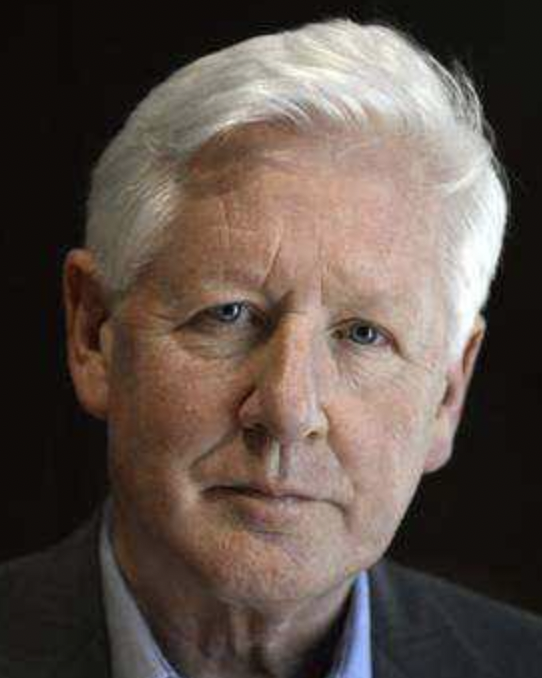
By Bob Rae
July 30, 2026
Losing the United States as a critical leader and ally in the fight for democracy has presented Canadians with a new set of challenges.
The first one is emotional. Ever since the election of Franklin Roosevelt as President of the United States in 1932, the expansion of American culture through radio, film, and television, the postwar decline of the British Empire, and the arrival here in waves of people from around the world, Canadians have forged a connection to the U.S. that transcends politics, military alliances, and economic ties.
For the past century, America has been in our heads, and, yes, in our hearts.
Donald Trump’s election brought to power in the United States someone who, in addition to his other flaws and idiosyncrasies, has shown nothing but contempt for America’s independent neighbour to the North. It’s not that he’s just not that into us. He has demonstrated open hostility. We could take indifference. We can’t take hostility.
Beyond that sense of emotional loss is the reality that we’re not alone in being treated this way. President Trump has demonstrated an ability and willingness to alienate countries, values, and interests that have been foundational to American foreign policy since the Second World War.
The United Nations, NATO, development policy, trade policy, human rights policy: go down the list, the United States under Trump hasn’t just forfeited its global role, it has altered the alchemy of geopolitical power.
When Joe Biden defeated Donald Trump in 2020, the new American delegation at the United Nations made a point of saying “We’re back”. Given the severity of the first rupture, we had to make a point of saying, “Let us see how we can work together”. But even then, it was clear that America was not completely back, and that the rest of us had already developed a healthy scepticism.
Unfortunately, that scepticism did not produce a stronger commitment to fashion the kind of robust response to aggression, backsliding, and prevarication that could, for example, have delivered a knockout blow to the Russians in Ukraine, or mobilized the kind of financial and economic imagination that would have created the momentum for positive global change.
We waited for the Americans to lead, and yet it was clear that the Biden administration and NATO under their leadership was only going to provide some support for Ukraine, “for as long as it takes”, without recognizing that the reason it was taking so long was because there was a deep and shared belief that the purpose of the exercise was to help but not to push for victory.
The autocrats of the world are united as never before, and the United States under Donald Trump has left our team for theirs.
I have been saying this since the Russian invasion of Ukraine. When I do, people ask me, “Are you saying NATO and the U.S. should enter the war directly against Russia?” The answer is no. We should allow Ukraine to defend itself. And self-defence means taking the war to the aggressor. That’s what Article 51 of the Charter sets out.
There was more fear and caution than vision in the Biden White House, and every ally was stuck in the same mode. This was apparent not just in the slowness in moving beyond the dreary consensus among the UK, the U.S., and Germany in response to Ukraine’s plight, but in the weak global response to COVID, the cuts to foreign assistance, and the deep global challenges we continue to face.
The shock of the second Trump term, with all of the corruption, nastiness, and incompetence it has brought with it should now be fully behind us. And while Canadians are feeling more united and galvanized in our response to what Donald Trump is doing to us, it is critically important that in our efforts to reclaim our sovereignty in this ruptured world, we realize that democracy’s struggle goes well beyond our national borders.
We do indeed need to reclaim our sovereignty, and the book I have just finished editing will, I hope, provide some impetus for further action. (Published by Lorimer, with the title Reclaiming Canadian Sovereignty in a Ruptured World, coming September 9th). But in addition to reclaiming our own sovereignty, we need to embrace a broader fight that is happening around the world. We have to answer the question, “Sovereignty for what?” It can’t just be for ourselves.
The autocrats of the world are united as never before, and the United States under Donald Trump has left our team for theirs. On every issue you can name — global inequality, better trading relationships, sexual and reproductive rights, cultural policy, immigration, climate change, nuclear proliferation — go down the list, what President Trump and his team want to do at home and in the world has nothing to do with what most Canadians, and our government, believe in and want to accomplish.
We are afraid to admit this, because we are afraid that if we say it too clearly, we will be punished by the American government—the sort of classic autocratic truth chill that, ironically, only underscores the seriousness of where we are with the former democratic superpower next door.
My call is not for an impulsive response. Rather it is for a response that is measured, as all such policies must be, by a strong sense of the consequences that can follow any decision, but also by a sense that our struggle is part of an all-important global struggle for democracy, the rule of law, and human rights.
Real leadership in fighting for democracy is something we should embrace.
This means assessing what it will take to sustain democratic institutions, just as we did when we embraced the Atlantic Charter in 1942. We are not in the same kind of war now, but nonetheless our values and interests are being threatened as never before.
We never believed our American cousins would be the perpetrators of these threats, but here we are.
Policy Columnist Bob Rae teaches and writes on law and public policy. He is the Visitor of Massey College, a Distinguished Fellow at the Munk School at the University of Toronto, a Senior Fellow at the Forum of Federations, and a Matthews Fellow in public policy at Queen’s University. He served as Ontario’s 21st Premier, interim leader of the Liberal Party of Canada, and Canada’s Ambassador to the United Nations.