
Canada’s Peacekeeping Legacy Should not be Snuffed Out
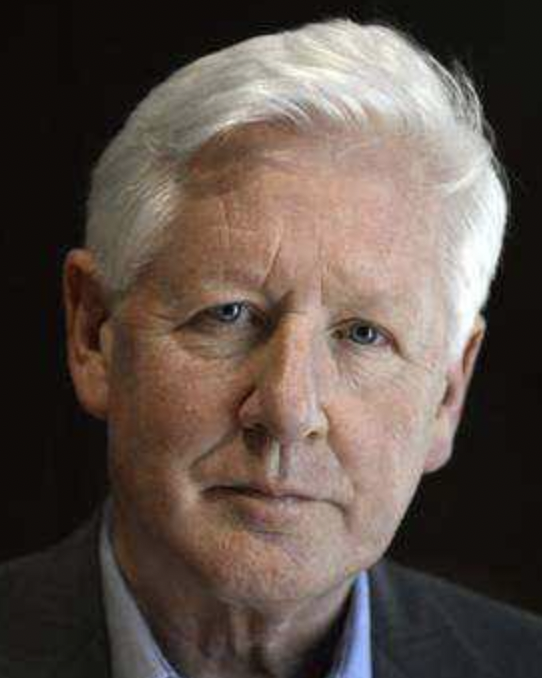
By Bob Rae
August 7, 2026
On July 17th, Canada’s Department of National Defence made an announcement of great consequence so stealthily that journalists didn’t report it until this week.
The DND press release, issued late on a Friday, was headlined Canadian Armed Forces rebalances operations to strengthen global footprint:
“The Canadian Armed Forces (CAF) is rebalancing its global operational commitments to better align resources with evolving defence priorities in an increasingly complex security environment,” it reads. “This includes closing Operations KOBOLD, SNOWGOOSE, SOPRANO, and CROCODILE, and reducing its contribution to Operation CALUMET.”
Those operations represent Canada’s peacekeeping commitments in Kosovo, Cyprus, South Sudan, Democratic Republic of Congo, and Egypt, where Canadian peacekeepers have been deployed in the Sinai since then-Secretary of State for External Affairs Lester Pearson pioneered modern peacekeeping in 1956 to resolve the Suez Crisis.
“Approximately 50-60 CAF members currently assigned to these missions will be progressively reintegrated into higher-priority roles supporting operations at home and abroad,” the release goes on. “These changes will better align CAF resources with current defence priorities, including defending Canada, supporting the Euro-Atlantic region, and contributing to Indo-Pacific stability. This approach focuses personnel and capabilities where they have the greatest impact, while sustaining commitments, maintaining readiness for emerging challenges, and enhancing operational effectiveness with allies and partners.”
The CAF, says the announcement, “will continue to support international peace operations through Operations PRESENCE, CALUMET, and JADE, in coordination with allies and partners including the United Nations, NATO, and the Multinational Force and Observers.”
My first observation was that this was a Government of Canada policy announcement posing as an HR memo; some minor shuffling of personnel, of no importance to anyone else.
Indeed, per the lede of this week’s CBC piece by veteran defence reporter Murray Brewster: “The Department of National Defence calls it ‘rebalancing’ but others believe we are witnessing the death of Canada’s contribution to peacekeeping with the winding down of a series of long-standing overseas missions.”
Many words have been spent in recent years in the debate over whether peacekeeping should remain a core component of Canada’s military mission. The fact that there are strong opinions on both sides — and that any serious, unilateral change on the ground would draw criticism — was so intrinsic to this issue that the tactical approach chosen was, as an attempt by the Department of National Defence to avoid defending it, ironic to say the least.
The opposition within DND to UN peacekeeping commitments is deep seated and thoroughly imbedded in the current military establishment. During my five years at the UN, I had firsthand experience with this institutional aversion.
This ill-conceived announcement must be changed. Given the two-year time frame for the drawdown, it is not too late.
Other NATO allies continue to provide personnel to UN operations. The U.S., of course, does not. And therein lies an important tale.
The Carney government cannot let this stand as the last whimper from country whose only Nobel Peace Prize was awarded for the invention of UN peacekeeping.
Canada’s integration with the Pentagon is about more than people, supplies, and equipment. It is about a mindset. And peacekeeping doesn’t really square with the optics of a United States Department of Defense renamed, by Donald Trump, the Department of War.
It is well known that the assumption on the part of Canadian military leadership at the time was that Canada would join the invasion of Iraq. That assumption was flat wrong. The principle of “interoperability” is not just about equipment. It is about the integration of a way of thinking between the Pentagon and DND that is deeply subordinate.
The function of the July announcement has been years in the making, and its form reflects a complete refusal by DND to consult or discuss the implications of this crucial abandonment of a defining national mission for our international credibility.
At Canada’s permanent mission to the United Nations in New York there is a dedicated group of DND personnel, both military and civilian, who have for decades tried to maintain a credible Canadian presence based discussions on the planning, financing, and operation of major UN missions.
The deputy permanent representative chairs the Special Committee on Peacekeeping Operations, known as the C-34 committee, which is responsible for review and oversight of these missions.
Canada’s standing in international peacekeeping has long hung by a thread — we were only in the game because of history, steady payment of assessments, and willingness to engage. The Trudeau government came forward with the Elsie Initiative for Women in Peace Operations and some additional key personnel.
But on Haiti, any additional strategic help was consistently stymied by the notion that somehow “strategic patience” would be enough to stem the tide of gang violence.
Of course, the thinking and strategy of many UN and other peacekeeping missions need to be reassessed and thought through. But Canada’s credibility in engaging in these discussions has been undercut by this arbitrary and sudden fait accompli.
The Carney government cannot let this stand as the last whimper from country whose only Nobel Peace Prize was awarded for the invention of UN peacekeeping.
The Prime Minister has rightly said that nostalgia is not a strategy. But there is nothing nostalgic in insisting that our strategic thinking must include threats to global security from conflicts, terrorism, corruption, organized crime, displacement, human and drug trafficking, that have such serious consequences for all of us.
These issues have to be part of the wider discussion about defence expenditures and national security strategy, and, in particular, about how to strengthen Canadian sovereignty and the full breadth of our international commitments and engagement.
A summer press release by one government department is a poor excuse for a major shift in policy and should be rescinded.
It will not be lost on anyone that these missions are in Africa and the Middle East. The most intractable conflicts, with the deepest humanitarian consequences, are in this part of the world. For Canada to appear indifferent to them will have reputational consequences.
This does not enhance our global footprint. It diminishes it.
Policy Columnist Bob Rae teaches and writes on law and public policy. He is the Visitor of Massey College, a Distinguished Fellow at the Munk School at the University of Toronto, a Senior Fellow at the Forum of Federations, and a Matthews Fellow in public policy at Queen’s University. He served as Ontario’s 21st Premier, interim leader of the Liberal Party of Canada, and Canada’s Ambassador to the United Nations.