
Ahead of the Quebec Election, Conservative Leader Éric Duhaime Doubles Down on Autonomy
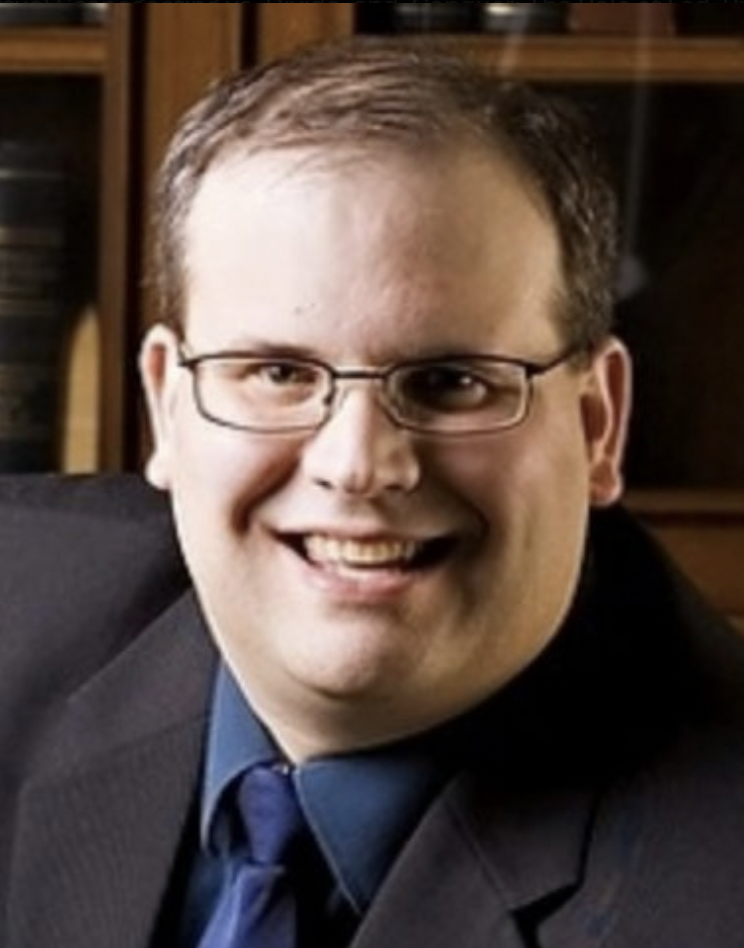
August 10, 2026
With Quebec’s provincial election exactly eight weeks away, the latest numbers — from an August 5th Pallas Data-Qc125-L’actualité poll — have Charles Milliard’s Liberal Party and the Parti Quebecois of Paul St-Pierre Plamondon a margin of error apart, at 27 and 31 per cent, respectively.
Roughly 10 points back, we have Premier Christine Fréchette’s Coalition Avenir Québec (CAQ) in third place at 19 per cent, Éric Duhaime’s Conservative Party at 14 per cent, with Québec Solidaire (QS) bringing up the rear at 9 per cent.
One of the central aspects of the CAQ’s political agenda, since its co-founding by François Legault in 2011 and in this election season, is a staunch defence of provincial autonomy.
This autonomist approach, which rejects outright independence but stresses the need for a more decentralized federal system, is also now explicitly embraced by Éric Duhaime, the leader of the Conservative Party of Québec, which seeks to seduce autonomist voters to help win seats in places like the greater Quebec City area.
Now that Legault is gone and Fréchette is trying to save the CAQ from a potentially crushing defeat on October 5th, it is hardly surprising that Duhaime is emphasizing provincial autonomy, including through the publication in April of a manifesto that strongly embraces provincial autonomy titled Destination Autonomy: Expanding Quebec’s Powers within the Canadian Confederation.
Maurice Duplessis led the Conservative Party of Quebec from 1933 until 1936 before merging it with Action libérale nationale to form l’Union Nationale, the party he led until his death in office in 1959 after 15 years as premier.
Duhaime, 57, has been the leader of the revived Conservative Party of Quebec (CPQ) since April 2021. Registered in 2009, the party only became a significant force within Quebec’s fragmented party system in the aftermath of the October 2022 general election, in which it won nearly 13 per cent of the votes.
Although the nature of the first-past-the-post system contributed to the fact that the CPQ did not win any seats in 2022, since then the party has added a single seat with the floor crossing in March of this year of CAQ MNA Maïté Blanchette Vézina, and maintained a relatively favourable position in the polls, making it more likely based on recent polling that it could finally win at least some seats come October.
Duhaime is trying to take a page from the Duplessis and Legault autonomy playbooks to rejuvenate the ‘third way’ between federalism and independence that the CAQ is typically associated with.
Today’s Conservative Party of Quebec is very different from the party Duplessis led before creating the Union Nationale, but in the course of embracing provincial autonomy, Duhaime is also attempting to rehabilitate the Duplessis legacy — long tainted by his reputation for ruthlessness, fondness for control over civil rights, and attachment to Quebec’s secular power structure at the expense of progress to an extent that prompted the label La Grande Noirceur (‘The Great Darkness”) for his tenure.
Duhaime’s strong emphasis on provincial autonomy, coupled with his rejection of sovereignty, is partially designed to lure voters who support decentralization but are against the Parti Québécois’s agenda to organize a third referendum by 2030.
This emphasis on autonomy without independence could also attract francophone federalists who think that the current Liberal Party of Quebec, even under the leadership of Charles Milliard, is not doing enough to support provincial autonomy and the cultural and political affirmation of the Quebec nation.
In other words, Duhaime is trying to take a page from the Duplessis and Legault autonomy playbooks to rejuvenate the “third way” between federalism and independence that the CAQ is typically associated with.
A former “shock jock” radio host known for his populist rhetoric, Duhaime holds a BA in political science from the University of Montreal and a master’s in public administration (MPA) from the École nationale d’administration publique (ÉNAP), Quebec’s respected public administration school.
Duhaime makes a case for provincial autonomy against what he labels “toxic federalism” (i.e. the political dynamic created by the centralizing tendencies of the federal government), Duhaime discusses many past examples of provincial resistance against centralization since Confederation, from Oliver Mowat’s Ontario to Danielle Smith’s Alberta.
He also cites examples from Quebec’s own history, including the Duplessis era. Of the former premier, Duhaime writes that “It would be a mistake to view Duplessis merely as an authoritarian leader. His commitment to autonomy is genuine; it is rooted in the post-war context, during which Ottawa capitalized on crises to expand its taxing powers and transform those levers into an enduring political presence.”
It remains to be seen whether this strategy will help provincial Conservatives in the upcoming campaign. But at a time when history, like so many things, isn’t what it used to be, the embrace of a premier long associated with holding the province back marks an approach to framing autonomy that Legault himself could identify with.
A Fellow of the Royal Society of Canada, Daniel Béland is professor of political science and director of the McGill Institute for the Study of Canada at McGill University.