
‘Run Like a Girl’: An Embed Report from the Policy Trenches
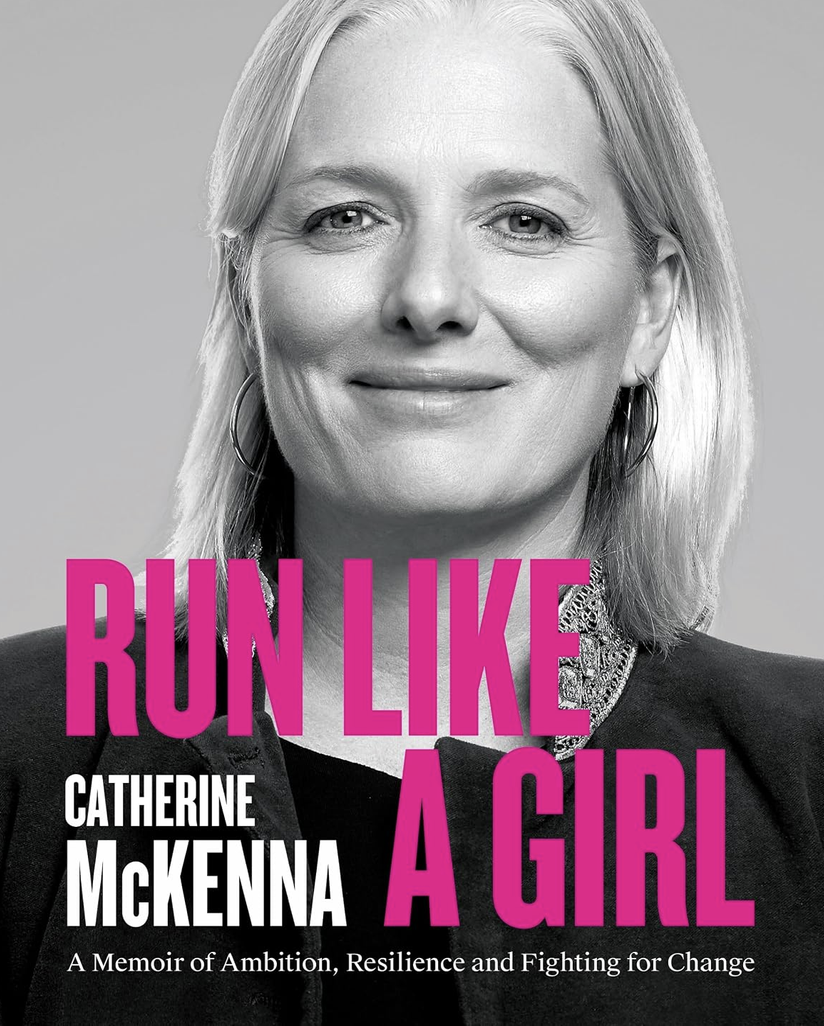
Run Like A Girl: A Memoir of Ambition, Resilience and Fighting for Change
By Catherine McKenna
Sutherland House Books, September 2025/312 pages
Reviewed by Sen. Wanda Thomas Bernard
August 19, 2026
Run Like a Girl by Catherine McKenna is an engaging political memoir that offers rare, candid insight into the inner workings of government.
Its greatest strength lies in the author’s ability to translate lived political experience into clear, accessible analysis. McKenna writes openly about entering politics, navigating cabinet, and confronting sexism. She does so with a level of transparency that is both refreshing and instructive.
McKenna’s gender analysis is sharp; naming the cultural and structural barriers women face in public life and exposing the ways political institutions continue to reproduce gendered inequities.
The memoir also reveals the limits of a gender‑only framework. For readers concerned with climate governance, equity, and democratic resilience, these limitations matter.
One of the book’s most compelling contributions is the author’s examination of how government actually works. McKenna describes cabinet dynamics, party discipline, and the constant negotiation between political risk and policy ambition. These sections offer a rare window into the machinery of decision‑making, including the pressures, compromises, and calculations that shape policy outcomes long before they reach the public.
Her account is grounded in lived experience, weaving the personal with the political realities she lived through. It clearly demonstrates how even principled leaders must navigate systems designed to reward caution and short-term political survival. McKenna’s insider perspective is invaluable for anyone seeking to understand why policy, especially climate policy, so often falters.
Indeed, Run Like a Girl is particularly instructive in its treatment of climate governance. The author traces her early climate commitments: ambitious, science‑aligned, and urgent. She then shows how those commitments were gradually weakened by electoral considerations, regional tensions, and bureaucratic resistance.
McKenna’s analysis of what happens inside government is powerful.
She illustrates how climate policy goes off the rails not through dramatic reversals, but through a series of incremental concessions that ultimately reshape the agenda. In essence, it becomes a case study in the fragility of climate governance: a reminder that climate ambition is vulnerable not just to industry influence, but to political winds, institutional inertia, and the ever-present pressure to avoid controversy.
McKenna’s insider perspective is invaluable for anyone seeking to understand why policy, especially climate policy, so often falters.
While the author offers a strong gender analysis, it is limited because it does not include a meaningful race analysis or an explicit intersectional lens. Gender alone cannot explain the full landscape of political exclusion or climate vulnerability.
For example, African Nova Scotian, Indigenous, and other racialized communities disproportionately experience environmental harm. Women from equity-deserving groups face compounded barriers in political participation. Climate impacts are shaped by race, class, geography, disability, and colonial history.
These realities matter. As a white woman, Mckenna’s perspective will obviously dominate her own autobiography. But as a memoir of governance, without some intersectional analysis, the book risks universalizing her experience to the omission of the layered inequities embedded in climate and social policy. This gap limits the book’s ability to speak to the realities of climate justice and equitable governance in a fulsome way.
In the same vein, McKenna’s memoir touches on backlash but does not address the systemic nature of political violence against women. This is another critical omission from an otherwise comprehensive memoir. Political harassment, online abuse, and threats do disproportionately target women, and these harms are magnified for Black, Indigenous, racialized, 2SLGBTQ+, and women with disabilities.
This violence is not incidental. It is a structural barrier that keeps many women from running for political office at any level and shapes the conditions under which they govern. A deeper analysis of political violence, from an intersectional lens, would have strengthened the book’s policy relevance and provided a more complete picture of the risks women face in public life and how those risks inhibit our politics from being fully representational.
But overall, Run Like a Girl is a compelling political memoir with notable strengths: a clear gender analysis, a powerful insider account of government, and an instructive look at how politics can undermine climate ambition.
These insights serve as actionable intelligence for Policy readers seeking to understand and navigate the realities of governing.
Dr. Wanda Thomas Bernard, C.M., is a member of the Senate of Canada. A social worker, educator, researcher, community activist and advocate of social change, she has worked in mental health at the provincial level, in rural community practice at the municipal level, and, since 1990, as a professor at the Dalhousie School of Social Work, where she also served as director for a decade.