
25 Years after Covering 9/11 from Washington: A Reflection on Loss, Hope and Rebuilding Trust
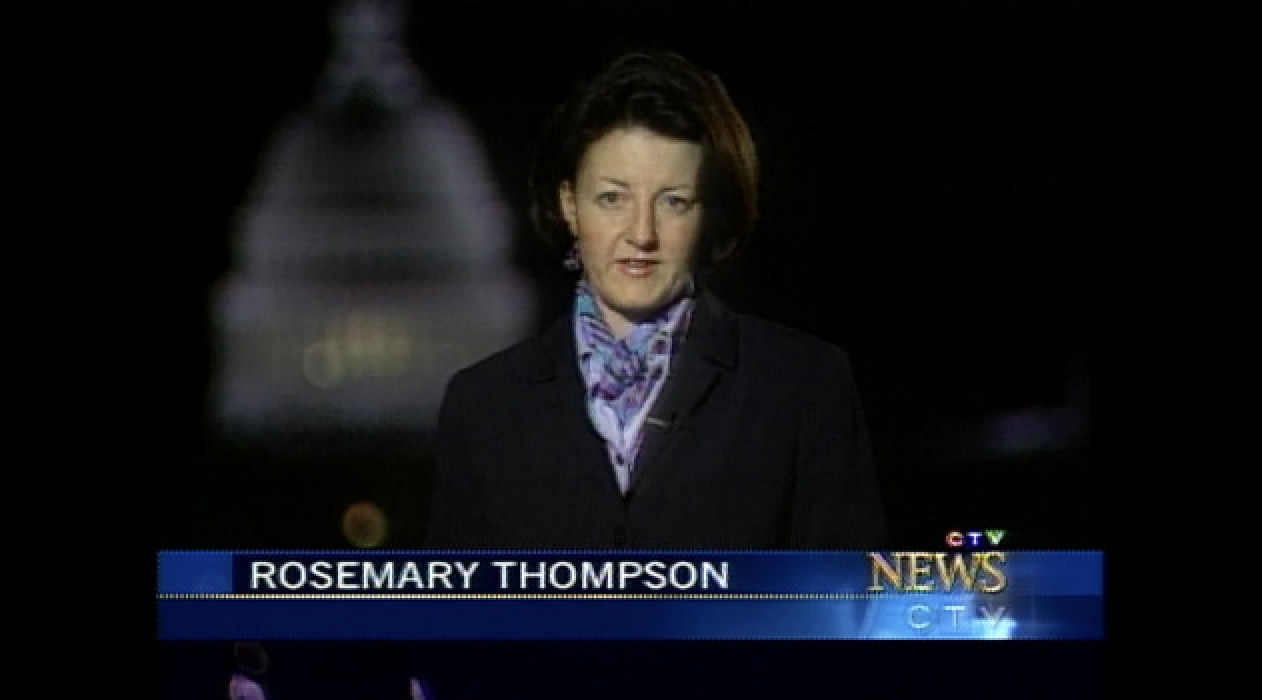 Reporting from Washington after 9/11/CTV
September 8, 2026
On the morning of Sept. 11, 2001, my husband, Pierre, drove me to the Metro station in Bethesda, Md., so I could catch the train into work for another day of reporting as the Washington correspondent for CTV News.
It was a bright, sunny morning, with not a cloud in the sky. We chatted about our two little boys, Louis and Max, about the day ahead of us, and about how much we were enjoying our life in Washington. I gave Pierre a kiss as I got out of the car.
As I descended the escalator to the subway platform, my phone rang. It was Konstantin Shuknov, the early assignment editor on CTV’s editorial desk in Toronto.
“Hi Konny, what’s up?” I asked.
“Rosemary, a plane has struck the World Trade Center. We don’t really know what is going on. I need you to rush to the office,” he said.
It was a few minutes after the first attack on the South Tower at 8:46 a.m.
By the time I crossed the threshold of CTV’s office on M Street near Dupont Circle with its maple leaf etched into the carpet, the second plane had hit the South Tower.
Because everyone who works and lives in downtown D.C. does so with the knowledge that it is one of the most symbolically valuable terror targets on earth, the fear that was palpable that morning in America’s capital also felt inevitable — a sense of, “This is it, but I still can’t believe it’s happening.”
I could sense at that moment that the relationship between Canada and the United States would be changed forever. There was misinformation in the early hours after the attacks, some commentators falsely speculated that the terrorists had entered the United States through the Canadian border.
Within minutes, we were calling the Canadian Embassy in Washington to get more information, calls that continued in the days and months that followed.
At first, I did live reports from the telephone at my desk. When the TV crew arrived, we went live from our small studio. When the report came in that a third plane had hit the Pentagon, bureau chief Alan Fryer and I decided that he would stay at the office and monitor the news feeds while I headed to the White House with cameraman Jim MacDonald.
We walked toward the White House against a tide of human panic headed in the opposite direction — people streaming out of office buildings, abandoning their cars, fleeing the immediate vicinity of 1600 Pennsylvania Ave. as the possible next target, the plumes of black smoke in the background marking the stricken Pentagon just across the Potomac.
At the Northwest Gate, also known as the White House press gate — where media credentialed to cover the White House and foreign press with day passes enter the grounds from Pennsylvania Ave. — Secret Service agents yelled at us to get out of the area, saying another plane was coming.
We later learned about how the passengers of United Airlines Flight 93 — actually destined for the U.S. Capitol — fought back against the hijackers and crashed the plane into a field in Shanksville, Pennsylvania.
We happened upon Helen Thomas, the legendary United Press International correspondent who at 80 years old was still filing daily stories from the White House briefings. She was crouched down, speaking into her cellphone, reading from her notebook to a copy editor on the UPI desk two blocks away who was reporting her eyewitness account to the world.
When she finished, Helen looked up and said, “It reminds me of Pearl Harbor.”
As we did live reports into the network, I spoke to our anchor, Lloyd Robertson (may he rest in peace), who was hosting from CTV headquarters in Toronto. As always, he was calm, encouraging, and told us to “stay safe, be a witness, report the facts, call me when you get to the office.”
My parents were a little less sanguine. My cell phone rang; we were near the Washington Monument; it was my Mum and Dad on the line. “Rosemary, what are you doing at the White House?” my mother said. “Dad and I are very upset.” I tried to calm them down, saying that Jimmy and I were fine, we were across the Potomac River from the Pentagon, and that the kids and Pierre were safe.
We sensed that the world would never be the same. The many ways in which that happened over time have been exhaustively chronicled and analyzed, but as someone who was in Washington that morning, there was a visceral feeling of living through a hinge moment in history.
The attacks claimed the lives of nearly 3,000 people, 24 of them Canadian. The response from Canada was immediate and overwhelmingly compassionate. From the massive vigil of more than 100,000 people on Parliament Hill on September 14th to the phenomenal generosity of Ganderians who opened their homes and their hearts to grounded air travellers, Canadians made clear their love and support.
When the U.S. declared war on Afghanistan a month later in response to the Al Qaeda-claimed 9/11 attacks, Canada immediately joined the coalition and, over the next 13 years, sent 40,000 soldiers to serve in the conflict. By the time the operation ended in 2014, 158 Canadian soldiers had lost their lives in what proved to be the longest conflict in Canadian military history.
The events of 9/11 affected each of us who covered them — who witnessed them, who processed the tragedy and loss of that day in concentric circles of impact from the immediate to the empathetic — in different ways. It was an act of war in peacetime, and it redefined national trauma as a goal of terrorism for a new century.
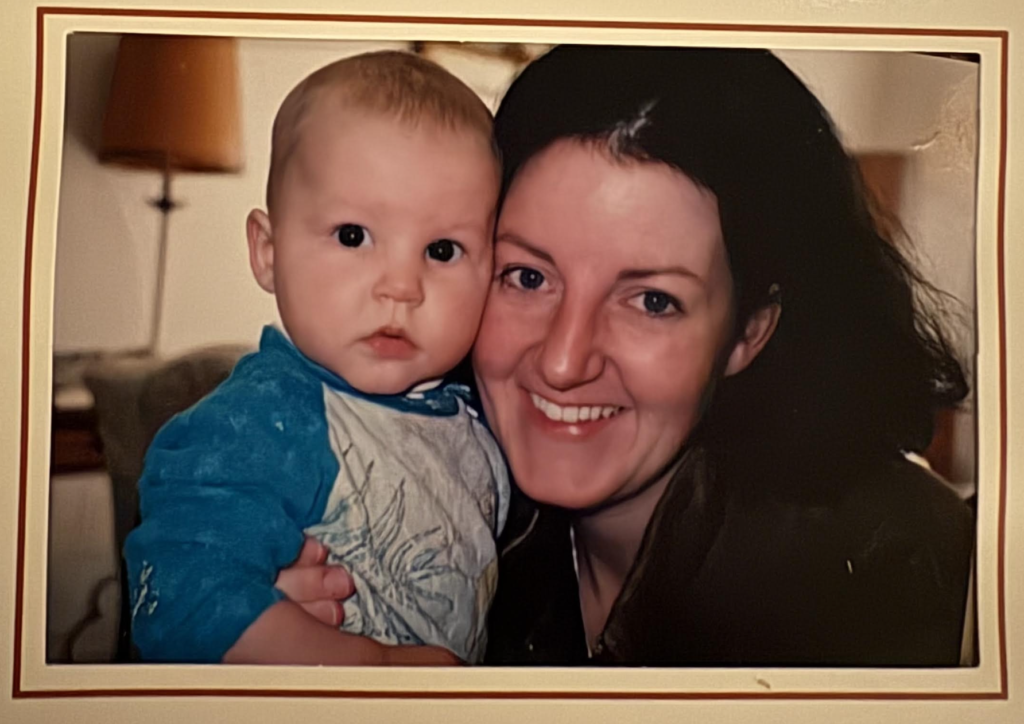 Maxime Nigel Boulet with his Mum
I was faced with a whole other dimension of loss when, a year after 9/11, tragedy struck our own family. Our youngest son, Max, was killed in a traffic accident while we were on vacation in British Columbia. Suddenly, we were moving through the intense grief of losing a child, trying to hold ourselves together.
What gave me hope during those difficult years was the love and compassion I received from my husband, from our older son Louis-Alexandre, from my immediate family and from colleagues in politics and journalism — both Canadian and American.
They would embrace me, walk with me, take me out for lunch, give me little objects of strength. They helped me hold myself together on bad days, and helped put me on a path to rebuilding our family through adoption.
People came out of the woodwork unexpectedly, sharing how they, too, had faced painful losses and had learned how to endure. They were with us every step of the way on the five-year journey that took us to China to adopt our daughter Jasmine.
We felt the love and empathy of American and Canadian friends and family who saw us through the darkest chapter of our lives. Their compassion, too, was borderless.
Today, Canada’s relationship with the United States is strained.
As I look back on 9/11 and Canada’s response, my hope is that individual Canadians will continue to reach across the border and build friendships with their colleagues in the United States, the way we did back then, and the way my colleagues did for me.
People-to-people connections are important at times like these, because the bonds of friendship and trust built up over decades between Canada and the United States must endure. Administrations come and go, but our people, businesses and institutions and their relationships remain.
In my own work now for the Royal Canadian Geographical Society, some of the most exciting projects we are working on involve partners in many countries including the United States, the United Kingdom, France, Spain, Norway, and Denmark.
Time and again, Americans say they are sorry for the current climate between Canada and the U.S., and Europeans simply want to embrace us. I want the Americans to be able to stop saying they are sorry; let’s keep working together despite the negativity from the White House and try to realize great projects together.
For me personally, remembering our shared history with the U.S. is critical in forging a path forward even in these complex times. It’s my hope that we can continue to work closely with our southern neighbours as we strengthen our ties with the rest of the world, and that we can restore the bilateral trust that saw us through those dark days of September 2001.
I will be in Washington for the 25th anniversary of 9/11 this week. I plan to give my Canadian and American friends a hug.
Rosemary Thompson is Senior Vice President, External, for the Royal Canadian Geographical Society. She served as CTV News Washington Correspondent from 1999 to 2002.