
Remembering 9/11: A Day Like No Other at Canada’s Embassy in Washington
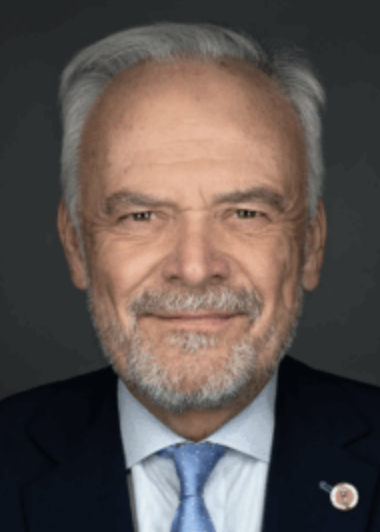
By Peter Boehm
September 8, 2026
Tuesday September 11, 2001, dawned bright and clear — another gorgeous day in that Washington half-season when summer starts to become livable beyond the AC again and before its long, beautiful fall kicks in.
We began our daily commute from our home in Maclean, Virginia to our embassy across the Potomac in Washington DC. I had begun a new assignment as Minister (Political and Public Affairs) at the embassy just 10 days earlier after serving for a lively four years as Canada’s ambassador and permanent representative to the Organization of American States, also in Washington.
So, the assignment began with a relocation three floors up in the embassy building and a move to Virginian suburbia. It also meant relinquishing the ambassadorial role, the official residence, its blandishments, and its many social obligations.
In short, a move from hemispheric multilateral work to a concentration on the bilateral relationship with our large neighbour, friend and closest ally was both a change and a challenge I welcomed.
During the drive, NPR announced that an aircraft had struck one of the World Trade Center towers in New York.
Making my way to my sixth-floor office in the embassy where I enjoyed a splendid view of the U.S. Capitol right across Pennsylvania Ave., I passed the office of the late Peter Bakewell, a highly experienced officer and our counsellor responsible for Middle Eastern issues.
Looking grim, Peter was watching developments on CNN and pointed out that such a conflagration could only have been the result of a large commercial airliner hitting the building. I picked up some documents and went to meet with Ambassador Michael Kergin and my colleague Bertin Côté, deputy head of mission and responsible for economic and trade issues.
We were discussing our latest brouhaha with the Americans over our softwood lumber exports when two things occurred. Public Affairs Counsellor Louise Blais (now Québec’s representative for CUSMA) knocked on the door to inform us that another plane had struck the second tower.
Within minutes, we noticed a great deal of smoke on our own skyline to the south, where yet another passenger airliner had crashed into the Pentagon. Suddenly, we were in crisis mode and not without a bit of panic.
The first minutes and hours were critical. We ordered an embassy lockdown, asked visitors to leave and tried our best to assess what was taking place in real time. To the extent that I could, given that they were also scrambling, I called my contacts in the NSC and State Department.
Ambassador Kergin and I were on the phone constantly, speaking with our leadership in Ottawa. Like other staff members, I was concerned about the welfare of my loved ones. Were they safe?As professional diplomats, we clearly had a job to do in dealing with what — despite the many qualifiers and cautions of the live news coverage — we assumed in short order to be a terrorist attack, but it was also personal.
There was chaos on the streets. Phone lines went down but our Blackberries continued to function (an advantage we had over others). A breathless American official called to inform me that there was another aircraft heading to DC, aiming for the Capitol, and that our embassy could become collateral damage.
We ordered all staff to lower the blinds in their offices (to be sure an ineffective barrier against shattering glass). In the end, that plane was the one the passengers took down in Pennsylvania. Many colleagues had to leave to pick up children or other family members.
We collected our autistic son late in the day and remarked with gratitude on the dedication of his teachers, who despite their own family concerns had stayed with their students. With all air traffic stopped except the fighter jets circling high in the sky, it was an eerie, unsettling, and tense time in the nation’s capital.
In operational terms, we organized an embassy task force that I chaired. It consisted of the program managers and a parallel group on the security side (DND, CSIS, RCMP, our intelligence liaison officer) that met in our “vault,” which is basically a surveillance-proof meeting room housed inside a steel vault usually used for Five Eyes meetings or conversations on the secure line with our various departments and agencies.
Objective number one was to make sense of what was going on, inform Ottawa of our perspective and offer recommendations. Of primordial importance was keeping our border open and assessing next steps for cooperation.
Many of the personal bonds established in that time of crisis endure to this day, and all our team members went on to occupy senior positions at Global Affairs or serve as ambassadors in key postings. I could not have been more proud of them. Each one deserved the Order of Canada.
An article published in the Boston Globe suggested that several of the terrorists had come from Nova Scotia to Maine. Correcting that fallacy became a public affairs nightmare, requiring “whack-a-mole” refutation tactics every time the issue arose publicly, including in a speech by then-Senator Hilary Clinton of New York. Fortunately, this was before social media postings became a way of life. Clinton and I reminisced about this at the Munich Security Conference a few years ago.
In the following weeks and months, the embassy team worked closely with officials in the line departments in Ottawa, and particularly with senior planners in the Privy Council Office. The Americans established the Department of Homeland Security, run by a new Cabinet Secretary, Tom Ridge, a former governor of Pennsylvania.
Prime Minister Jean Chrétien designated deputy prime minister John Manley as Ridge’s counterpart. Their great rapport, cooperation, diligence, and leadership resulted in the Smart Border Action Plan: collaborative tighter security controls without impeding commerce. Our strategy was quite simple: bring forward policy suggestions and initiatives to the Americans while they were still flexible; in other words, before the post-crisis scrambling of Washington’s political power grid locked in a new, post-9/11 reality.
It was the same in terms of how to deal with Al Qaeda, particularly in Afghanistan, with helpful ideas put forward by our talented embassy team for democratization, development aid and civil society in that country (of course with the return of the Taliban years later, this was frustratingly all, ultimately, for naught).
Our level of collaboration on such practical but not-necessarily- public measures with the George W. Bush administration was without peer even when our government decided not to join the “coalition of the willing” for the invasion of Iraq.
When I say, “our talented embassy team,” all officers reporting to me at the embassy worked their files around the clock, earning respect and admiration not just from Ottawa and their colleagues but from their American interlocutors in the State Department, National Security Council, and the White House.
Many of the personal bonds established in that time of crisis endure to this day, and all our team members went on to occupy senior positions at Global Affairs or serve as ambassadors in key postings. I could not have been more proud of them. Each one deserved the Order of Canada.
Upon my return to Ottawa in the summer of 2004, I became the Assistant Deputy Minister for North America and Consular Affairs, serving as the “senior official” for the North American leaders’ summits under first Prime Ministers Paul Martin, then Prime Minister Stephen Harper.
The plan was to develop a Security and Prosperity Partnership of North America through greater collaboration among the US, Mexico and Canada. These summits, which became less formally known as “The Three Amigos”, have unfortunately fallen into desuetude, thanks in large measure to the indifference and animus to trilateralism of the two Trump administrations. The last one was held in Mexico City in 2023, revived by the Biden administration.
In reflecting on 9/11 twenty-five years later, I am struck by a few things.
Perhaps most famously embodied by the good citizens of Gander and immortalized in Come from Away, the impact of the 9/11 tragedy engendered an accentuated collaboration and mutual trust with the United States that lasted well beyond its immediate aftermath.
That collaboration and mutual trust have become casualties of Donald Trump’s bilateral belligerence, economic and otherwise.
Indeed, while we commemorate the 25th anniversary of 9/11 and will no doubt be transfixed by images from that day, there is a convenient, revisionist narrative in the Trump administration that this tragedy only impacted America.
This fiction is indispensable to the tactical trope of “What has Canada ever done for us?” No matter how many positive examples we provide, they will be refuted on social media, including by some of our fellow citizens.
Lastly, experiencing 9/11 became an inflection point for me personally, as it undoubtedly did for many others. It prompted a deep reflection on inhumanity, humanity, and the values that guide and define us, as well as the future of our species.
Lest we forget.
Policy Contributing Writer Sen. Peter M Boehm is Chair of the Senate Standing Committee on Foreign Affairs and International Trade and a former ambassador and deputy minister. He served as Minister, Political and Public Affairs, at the Canadian Embassy in Washington from 2001-2004.