
As Parliament Returns, Carney is in the Hot Seat but the Pressure is on Poilievre
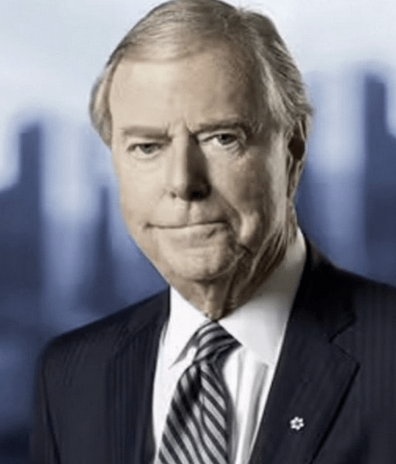
By Don Newman
September 19, 2026
Over the summer of 2026, the annual escape from the daily battleground of question period overwhelmingly benefited Prime Minister Mark Carney.
Carney used his summer vacation from the House of Commons to burnish his economic credibility with Canadians through infrastructure announcements, boost his global currency by standing up to Donald Trump on trade, and renew his parliamentary majority via three by-election wins.
But on Monday, when MPs return to their seats in the House for the first day of the fall sitting (as opposed to a parliamentary session, which begins with a throne speech and ends with a dissolution as opposed to an adjournment), all eyes will be on Conservative Leader Pierre Poilievre.
While Carney will be greeted like a conquering hero by his own caucus after a week of hosting the Canada Investment Summit at home and fashioning a closer relationship with the EU abroad, the stakes for Poilievre, whose summer vacation was not quite as beneficial to his political leadership, will be much higher.
Poilievre will get his moment in the Parliamentary sun, leading off the daily question period with what he judges to be zingers and Carney will reportedly be there to answer them — a preview of his return delivered to the Liberal caucus on Friday.
There is a political truism that public approval of a government goes up when Parliament is not sitting, attributed to the absence of question period as a daily grilling, with the opposite true when the House is sitting.
Poilievre will have to hope that pattern holds with Carney. Since winning 87.4 per cent support from the party membership in January, the trend for Poilievre and his Conservatives has been steadily down. Four defections from floor-crossers to join the Liberals pushed the Government into a small majority.
Three recent by-election wins by the Carney team added a seat to that majority when the Liberals captured a riding in Quebec the Conservatives had held, after the sitting MP accepted a Senate appointment from Carney, further embarrassing Poilievre.
Harper’s appearance at the investment summit was yet another blow to Poilievre on a key weakness — partisanship. As a political figure who built his persona around partisan pummelling, the image of Harper standing with Carney and Chrétien was especially potent.
For Carney, returning to Parliament and question period could be an adjustment after such heady stuff. And while Carney has until 2029 before he has to go to the polls, Poilievre’s political future may be on a tighter timeline.
Poilievre’s low personal approval rating and the Conservatives slumping stature in the polls have party members both elected and non-elected wondering again whether things would be better with a new leader.
No one is calling for a change yet — partly because Carney’s popularity is such that no contender of sufficient stature to beat him would want to try at this point — but this could be the last year before the Conservative caucus votes to dump Poilievre. That would set the stage for a leadership race ahead of the next election, depending on how Carney’s popularity holds up.
After all, that is what the Conservatives did to Erin O’Toole in 2022, and he was in much better political shape the Poilievre is now.
For now, Poilievre will have to come up with a clear position on the Alberta referendum, which, if successful, would lead to a second vote on whether the province wants to remain in Canada.
As a federal party leader, Poilievre must support the “remain” side. But some of the Alberta separatists in Premier Danielle Smith’s United Conservative Party (UCP) base who’ve demanded this process despite opinion polls that show two-thirds of Albertans support remaining in Canada are also federal Conservative voters.
So far, neither the federal nor provincial Conservative leaders has been especially vigorous in stumping for the remain side.
The major event this fall in the Commons will be the federal budget, which will have feature some controversial measures flowing out of the Canada Investment Summit. Where the Conservatives come out on those between Poilievre’s populist base and the party’s traditional business constituency will be important.
One hugely important illustration of the degree to which that traditional constituency has been siphoned away by Carney’s economic acumen and credentials happened at the Canada Investment Summit, where former Prime Minister Stephen Harper both helped launch the event in an appearance with Carney and former Liberal Prime Minister Jean Chrétien, and then delivered the closing address.
Harper’s appearance at the investment summit was yet another blow to Poilievre on a key weakness — partisanship. As a political figure who built his persona around partisan pummelling, the image of Harper standing with Carney and Chrétien was especially potent.
It also underscored that, at a moment of national crisis, Canadians expect not just unity but maturity.
So, the pressure in the House will be on both Carney and Poilievre. But the prime minister’s task will be political dominance. Pierre Poilievre’s will be political survival.
Policy Columnist Don Newman is an Officer of the Order of Canada, and a lifetime member and a past president of the Canadian Parliamentary Press Gallery.