
The Dynamics, High- and Low-Level, of the UNGA
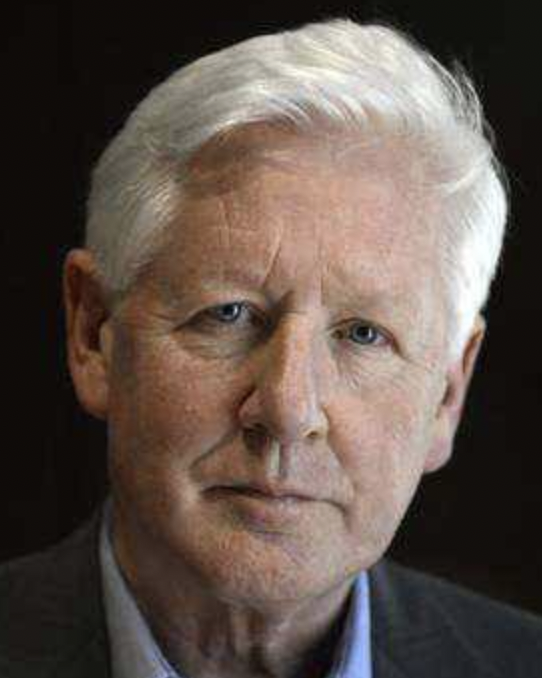
By Bob Rae
September 23, 2026
Every September, the United Nations General Assembly (UNGA) high-level week converges on New York City.
The week was once largely confined to the General Assembly. While the general debate remains its centrepiece, high-level week now also involves tens of thousands of delegates, observers, lobbyists, advocates, critics, enthusiasts, and hangers-on meeting in countless venues.
There is “pre-HLW”, “post-HLW”, main meetings, side meetings, pull-asides, motorcades, limos, travelling medical teams and thousands of security guards, police officers, special-service SWAT teams, horns and sirens blaring, helicopters hovering overhead.
The most coveted item of this ecosystem is a credential, without which you are a non-person, a PNG, a high-level outcast. The credentials are carefully bedecked and colour-coded — because there is nowhere more status-conscious than the House of Equality and Inclusion, where all are said to be equal, but some are far more equal than others.
Amid the chaos, the jockeying, and the vortex of bilats, you will find — usually walking alongside a prime minister or a foreign minister — the “Perm Rep”, or permanent representative, smiling knowingly at a colleague. She or he winks and mouths the words “this too shall pass” as they both know the dozens of side meetings, assembly speeches, and receptions always do by the end of September.
As a former Perm Rep, I can attest to this firsthand.
Yet, through this chaotic noise some signals will have been planned. For the previous several months, staff have been in meetings in New York and far-flung capitals about how different countries want to use the events to push for their agenda.
This will not happen spontaneously. It needs to be put in the context of all the other choreographed meetings of the year that fill the underreported and misunderstood calendar of daily, weekly, monthly, quarterly and annual events that then become the critical frame of every first minister in the world.
It is the never-ending discipline of how the international community goes about the business of being the international community, but a discipline that is rarely judged by its outcomes.
By attacking Ukraine in a ruthless manner, and by tearing apart ties that bind us, Presidents Vladimir Putin and Donald Trump have shown themselves to be allies in the undermining of the global order and fellow destroyers of the institutions and ideas that are crucial to humanity’s survival.
One of the hallmarks of change has to be a real willingness for countries to work together outside their usual comfort zones. So, Brazil, Kenya, the Council of Europe and Canada have joined together to reinforce the simple idea that for the vast majority of people, multilateralism and solidarity are not a luxury, they are a necessity.
By attacking Ukraine in a ruthless manner, and by tearing apart ties that bind us, Presidents Vladimir Putin and Donald Trump have shown themselves to be allies in the undermining of the global order and fellow destroyers of the institutions and ideas that are crucial to humanity’s survival.
It is against these body blows and betrayals that other countries need to come together to reassert their common belief in what we stand for and the actions that must follow in defence of the rule of law, fairer and free trade, and an end to aggression and threats to national sovereignty.
This is both harder than ever and harder than it has to be because the U.S. has abandoned any pretext of accepting the need for order, liberty and democracy as a global goal. President Trump’s boasting in his speech to the General Assembly about his use of raw power and his threat to “annihilate” Iran run counter to the UN Charter.
So, as it was for Dickens in A Tale of Two Cities, it is also true of UNGA 2026: “It was the best of times, it was the worst of times. It was the age of wisdom, it was the age of foolishness. It was the epoch of belief, it was the season of incredulity. It was the season of Light, it was the season of Darkness.”
The UNGA high-level week still draws a roster of world leaders irresistibly lured by the magnetic effect of the green podium. Unfortunately, some of them are also inebriated by the power of their titles and the abuses of power they license.
The next secretary-general will have a challenge getting the organization back on track in the face of resistance from strutting and swaggering authoritarians.
Policy Columnist Bob Rae teaches and writes on law and public policy. He is the Visitor of Massey College, a Distinguished Fellow at the Munk School at the University of Toronto, a Senior Fellow at the Forum of Federations, and a Matthews Fellow in public policy at Queen’s University. He served as Ontario’s 21st Premier, interim leader of the Liberal Party of Canada, and as Canada’s Ambassador to the United Nations.