
What the PQ Minority Victory Means
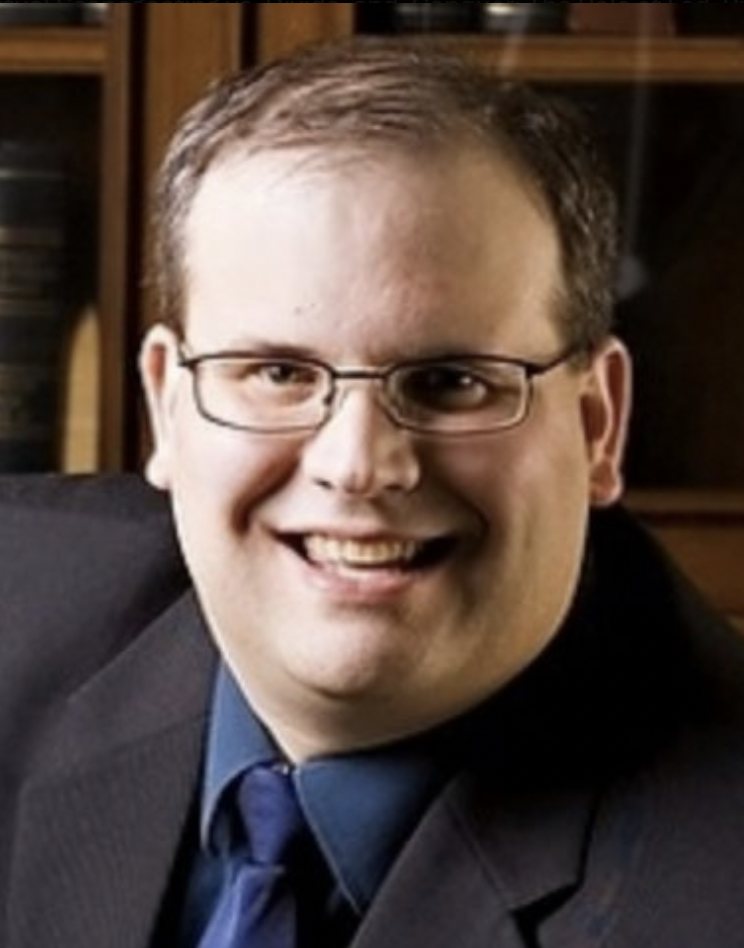
By Daniel Béland
October 6, 2026
On Monday night, Quebecers learned relatively early that, as expected, the Parti Québécois (PQ) would form the next government of their province.
Yet, despite all the talk of a possible majority government, the PQ won 59 seats out of 127, five seats short of reaching majority territory.
The PQ achieved this result by securing only about 28 per cent of the popular vote, which is a record low in Quebec for a winning party. The previous record low was held by Pauline Marois’ PQ, which in 2012 won about 32 per cent of the popular vote while securing 54 seats, just enough to form a minority government.
PQ leader and future premier Paul St-Pierre Plamondon will have a stronger minority government than Marois’ despite scoring significantly lower in terms of popular vote.
Beyond this PQ victory, yesterday saw the collapse of the Coalition Avenir Québec (CAQ), which failed to elect a single MNA despite receiving about 13 per cent of the popular vote. This was not a surprising development considering the recent collapse of the party in public opinion polls.
While CAQ leader Christine Fréchette did well towards the beginning of the campaign in the context of the trade war between Canada and the United States and her alignment with popular Prime Minister Mark Carney, lackluster performances at the three televised debates and, later on, a debacle over foreign interference allegations hurt a party already profoundly weakened by eight years in power and a growing and even overwhelming sense that Quebec voters wanted a change in government.
The other dramatic development last night was the election of 19 Conservative MNAs. This is the first time MNAs are elected in the province under the Conservative banner since 1935. While polls indicated that their party would win seats yesterday, the Conservatives electing 19 MNAs and securing nearly 21 per cent of the popular vote is something most observers would not have anticipated just a few months ago.
Here we must give full credit to Conservative Leader Éric Duhaime, who ran an excellent campaign. Now the Conservatives are truly dominant in the greater Quebec City area and in the Chaudière-Appalaches (Beauce) region.
Although the collapse of the CAQ and the rise of both the PQ and the Conservatives, which had respectively won only three and zero seats back in 2022, are the biggest stories of Monday’s election, the Liberal Party of Quebec under politically inexperienced leader Charles Milliard found a way to more than double the number of seats it held at dissolution.
With 40 seats and a broader geographical base that now extends far beyond the island of Montreal, the Liberals will form a much stronger Official Opposition than they were after the 2022 general election, when the party witnessed its worst results in modern times. With the popular vote at around 24 per cent, higher by about 10 points compared to 2022, the Liberals are in a much better shape than they were back then, even if they need to significantly increase support among francophone voters if they want to have a shot at winning next time around.
For the Carney government, the victory of the PQ is bad news but the fact that they will have a minority rather than a majority government makes the situation far more bearable.
Finally, there is Quebec Solidaire (QS), the only social democratic party in Quebec, which has faced major internal divisions and political challenges in recent years. Because of the geographical concentration of the QS vote in some parts of Montreal but also because of the strong campaign of co-spokesperson Ruba Ghazal, the party was able to secure nine seats, two fewer than in 2022 but enough MNAs to hold the balance of power in a minority legislature, a situation that directly increases the political clout of that small, pro-independence party.
Talking about independence, it is crucial to keep in mind that the PQ will now form government even though a large majority of Quebecers oppose both independence and the organization of third referendum on the topic by 2030, something St-Pierre Plamondon promised ahead and during the campaign, even if he added such a referendum would not take place before President Trump leaves the White House.
If independence is supported by only about 30 percent of voters, why did the PQ win yesterday, in the end? Three main factors seem to be at play.
First, the federal, anti-referendum camp was divided, as both the Liberal Party of Quebec and the Conservative Party of Quebec attracted support from people who wanted to stop the PQ from winning.
Second, the PQ remained ahead in the polls during the entire campaign, not only in general but also among francophone voters and, in that last case, by a wide margin. In that context, the PQ benefited disproportionally from the decline of support for the CAQ among the francophone electorate, although this dynamic only paid off for the party in some regions of the province.
Third, and relatedly, the first-past-the-post system and the geographical distribution of the votes also helped the PQ in the context of a fragmented partisan system in which five parties competed for seats.
For the Carney government, the victory of the PQ is bad news but the fact that they will have a minority rather than a majority government makes the situation far more bearable.
Because the life expectancy of a minority government in Quebec is typically between 18 and 24 months, it is now simply harder for the PQ to trigger a referendum, even if QS would agree to support relevant legislation to that effect.
St-Pierre Plamondon already pledged to not hold such a referendum before President Trump leaves the White House in January 2029, which is 27 months away.
Having to focus on surviving confidence votes and perhaps also winning a potential snap election in 18 or 24 months, St-Pierre Plamondon might also carefully pick his battles with the federal government, especially because, at least for now, in Prime Minister Carney and the Liberal Party of Canada are clearly more popular in Quebec than are St-Pierre Plamondon and the PQ.
Carney and St-Pierre Plamondon will have to work together on key files like trade and immigration and tensions are clearly present in these areas but here the PQ minority government might have to tread more carefully than if it was in majority territory.
Only time will tell how long this PQ government will last and how much of a headache it will be for the federal government in uncertain times marked by geopolitical tensions and the trade war between Canada and the United States.
A fellow of the Royal Society of Canada, Daniel Béland is professor of political science and director of the McGill Institute for the Study of Canada at McGill University.