
Translating the Costs of AI to the World, with the IMF, the World Bank, and Arundhati Roy
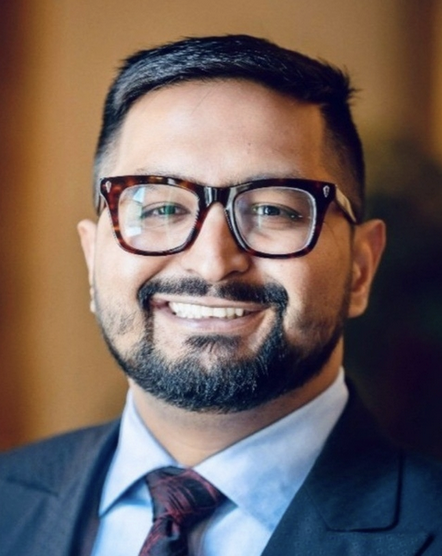
By Anil Wasif
October 21, 2026
Kristalina Georgieva, the Managing Director of the International Monetary Fund (IMF), starts each day with a 30-second briefing from her AI assistant.
On the first morning of the recent IMF-World Bank Annual Meetings in Bangkok, it told her that her most important job was a panel with World Bank President Ajay Banga and Singapore President Tharman Shanmugaratnam. “Be ready,” it said.
Georgieva shared the story with that panel, after opening her remarks more bluntly: “AI: love it, hate it, fear it… it is here.”
Last month in New York, outgoing United Nations Secretary-General António Guterres named runaway AI the first of three existential threats to humanity, along with the climate crisis and deepening inequalities. The UN General Assembly’s subsequent AI debate was mostly about who should govern it.
In Bangkok, the key players were finance ministers and central bankers, so the question the was who pays for AI. The answer came in the form of two very different pricings.
The first was from Banga, who told delegates about a typical farmer in Uttar Pradesh who points a 3G phone at a diseased leaf, learns which insecticide is stocked by her cooperative, and pays 25 rupees with a tap. She does not need to know the name of the disease.
Georgieva’s price was of a different kind. A year ago, the IMF forecast 3.1% global growth for 2026, and it still does, she told the plenary, because an AI boom has offset an energy shock that would otherwise have pulled the number down. The boom, she added, is “increasingly funded by debt.”
Private AI investment could top US$2 trillion this year, per outside estimates the IMF cites. The Global Financial Stability Report (GFSR) counts the borrowing. Fourteen publicly disclosed AI deals since 2023 involve about US$300 billion of equity and US$650 billion of debt, exchanged for US$1.4 trillion in promised future revenue. Hyperscalers now account for 10% of global investment-grade bond issuance, up from less than 1% in 2024.
The borrowing has not struggled to find lenders. At the World Bank’s session on private capital, the moderator noted that institutional investors and banks manage around US$280 trillion and keep only 5% to 8% of it in emerging economies. The AI build-out has had no such trouble.
The large asterisk on the global economy’s resilience that represents AI now has a price tag, and the IMF has also priced the scenario in which the bet goes wrong. If the productivity gains fail to arrive, the World Economic Outlook projects US equities falling 20% and global output ending 1.1% below baseline by 2028.
The evidence that the gains are coming is, by the IMF’s own account, still mostly at the level of individual tasks: customer-support staff 14% to 15% more productive, software output up 26%, and large surveys showing little effect yet on wages, hours, employment or measured productivity.
The large asterisk on the global economy’s resilience that represents AI now has a price tag, and the IMF has also priced the scenario in which the bet goes wrong.
The scenario’s most uncomfortable detail concerns who pays. In it, corporate risk premiums rise 75 basis points in the United States, where the boom is concentrated, and as much as 100 basis points in emerging markets. Sovereign term premiums rise 30 to 50 basis points in advanced economies and 75 to 100 in emerging ones.
The economies with the least stake in the boom would see their borrowing costs jump the most. Because so many countries increased their holdings of US equities between 2022 and 2026, the GFSR adds, the shock would also travel through portfolios far from the data centres. Low-income countries already spend 14% of their revenue on debt service, Georgieva said, up from 6% a decade ago.
Banga’s price is counted in people. About 1.2 billion young people will reach working age in developing countries over the next 10 to 15 years, and those economies are projected to create roughly 400 million jobs. He puts the shortfall near 800 million. “A job is not a statistic,” he told the plenary. “A job is dignity.” Tharman warned that Asia’s fast-growing economies already produce growth without enough jobs, and that AI “is going to widen that divergence if we are too passive about it.”
Banga’s answer is small AI. Frontier models, he argued at a civil society town hall, need computing power, electricity, data, specialized talent and capital that, by his account, no emerging market has. “For emerging markets to follow the logic of just doing frontier AI,” he said, “you will lose.” The host country agreed.
Thailand’s finance minister, Ekniti Nitithanprapas, said his government does not want “an expensive AI highway that only large companies can afford to use” and is working to cut the cost of tokens. Almost one million Thai merchants already use a government AI assistant built into the wallet app they use to access subsidies.
Georgieva made the same case in macroeconomic terms. The first wave of AI, she said at the World Bank’s small AI forum, is an investment shock concentrated in a small number of economies. The next wave is adoption, which could be “as democratic as the cell phone.” That second wave is where the productivity has to come from if the first is to pay for itself.
One price is holding up the world economy. The other is meant to help close an 800-million-job gap. The developing world is being sold the second while carrying the risk of the first.
Meanwhile, perhaps the most vivid examples recently imparted on the costs of AI come from bestselling author Arundhati Roy’s essay in Equator, Apocalypse Now and Then, describing the creative and economic threats.
Roy, who won the Booker Prize for The God of Small Things and whose latest book is the memoir Mother Mary Comes to Me, received a class-action settlement notice that offered her a couple of thousand dollars per title for books of hers that Anthropic used to train its models, with a claim number and a PIN to collect it. The notice says the books came from websites hosting pirated copies, and the company denies wrongdoing.
“It’s like having the organs of my body harvested without my knowing,” Roy writes.
Roy’s message, visceral and universally relatable, goes further than either the IMF or the World Bank could or would. But it serves their true and stated interests for it to be heard.
Policy Columnist Anil Wasif is a public servant in the Ontario government. He serves on the University of Toronto’s Governing Council and the Advisory Board of McGill’s Max Bell School. Internationally, he serves on the OECD’s Infrastructure Delivery Committee and the Board of Trustees at BacharLorai Global. The views expressed are his own.