
Carney has Avoided a Constitutional Quagmire. For Now.
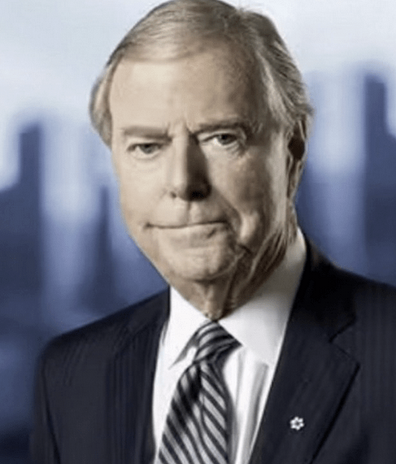
By Don Newman
October 22, 2026
The decisive, pro-remain result of 75% in the Alberta referendum has prompted two questions, one in that province and the other in Ottawa.
The Alberta question is whether Premier Danielle Smith can remain in office after telling separatist members of her United Conservative Party (UCP) to “join a different party” if they can’t accept the referendum results.
“The United Conservative Party is not an independence party,” Smith said in a statement two days after referendum results that registered the overwhelming unpopularity of independence.
In Ottawa, the question is whether Prime Minister Mark Carney and his government will keep their laser focus on Carney’s ambitious economic and security agenda or get sucked into the vortex of Canadian unity battles that consumed much of the country’s political oxygen in the final 30 years of the twentieth century.
Smith’s conundrum is the most immediate. Some Alberta polls show that at least half the membership of the UCP did support voting to hold another, binding referendum. The issue could quickly come to a head.
The United Conservatives have their three-day annual meeting starting November 27th, and already there are reports that a separatist coup awaits Smith. Per Politico, the UCP separatist faction plans “to push the party to adopt a position on seceding from Canada — and to challenge Smith’s leadership if she won’t.”
Carney campaigned in Alberta the week before the referendum vote. The day after the vote he expressed satisfaction with the result and said it showed that Canada works and resumed his regular schedule. Two days later, he departed for Turkey on a mission to sign economic and military cooperation agreements with that country, much as he has with others.
But while he left pleased with the Alberta outcome, Carney also knew that the day he left, a new Parti Quebecois government was sworn into office in Quebec. That new government won minority control in the October 5th election, after promising a referendum on separation after Donald Trump leaves office.
The PQ under Paul St-Pierre Plamondon won just 28% of the vote in a multi-party race and ended up with 60 seats in the Quebec National Assembly, four fewer than needed for a majority.
In the shorter term, Carney may have to deal with both demands for more autonomy from Smith in Alberta and the PQ maneuvering to mobilize referendum support in Quebec.
Polls in Quebec show no more than 30% of the population currently support the province leaving Canada. The delay while Trump remains president could give PSPP, as the new premier is known, the time to build up that support. His more immediate problem could be keeping a minority government in power that long.
In the shorter term, Carney may have to deal with both demands for more autonomy from Smith in Alberta and the PQ maneuvering to mobilize referendum support in Quebec.
The history of the late 20th century — from 1970 to 2000 — shows just how time consuming and attention monopolizing constitutional wrangling can be in this country. After the PQ under founder René Lévesque won power for the first time in 1976 promising an independence referendum, Quebec independence was the overriding issue in Canadian politics for the next 25 years.
The first Quebec referendum failed in 1980. But it led to two important Supreme Court of Canada decisions in 1982 on the patriation of the Constitution and on Quebec’s right of veto over constitutional amendments. Those decisions informed the patriation of the Canadian Constitution without Quebec in 1982.
When Brian Mulroney was elected prime minister in 1984, he made it a priority to negotiate Quebec’s belated inclusion in the Constitution, which led to the Meech Lake Accord and its failure, and the subsequent Charlottetown Accord and the 1992 referendum by which Canadians rejected it.
That led to the election of another PQ government, and another Quebec independence referendum in 1995. That referendum was won by the federalists in Quebec by just 1% of all the votes cast.
That near-death constitutional experience prompted another reference to the Supreme Court of Canada, on whether a province could unilaterally declare independence from Canada under either or Canadian or international law. The court said no, but laid out a path to possible separation if a “clear” majority voted yes on a “clear” question to leave. The definition of clear was not clearly defined.
That ambiguity produced the Clarity Act, whose specific requirements informed Danielle Smith’s decision to avoid them by holding a pre-referendum referendum.
The possibility of another Quebec referendum is distant in political terms. But the campaign to try and build support for one is already underway. Danielle Smith has said there will not be another referendum in Alberta as long as she is premier. But she has made it clear she’ll be angling for more power for Alberta within Confederation to try to hold onto her job.
Carney already has a full and complicated agenda fighting off Donald Trump’s economic and rhetorical belligerence. We should all hope that he doesn’t get bogged down in constitutional battles, like many of his predecessors.
Policy Columnist Don Newman is an Officer of the Order of Canada, and a lifetime member and a past president of the Canadian Parliamentary Press Gallery.