
Why Canada’s National Security Strategy Needs to Add Water
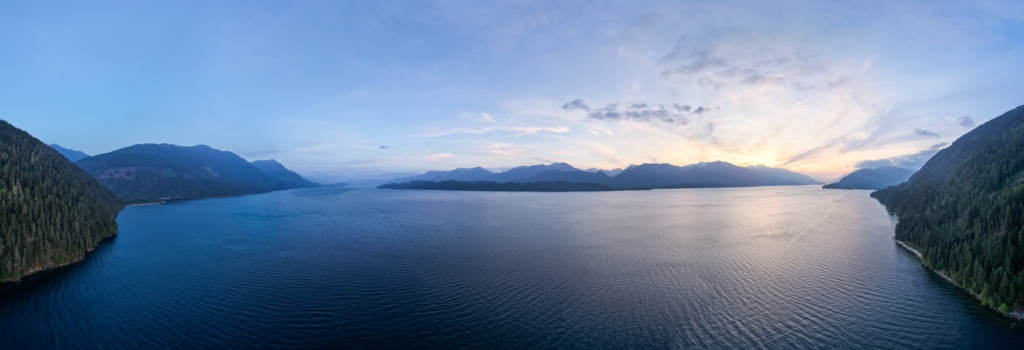 Harrison Lake, British Columbia/Shutterstock
By Thomas S. Axworthy and Ralph Pentland
November 19, 2026
On November 15th, Canadian Press published a story by veteran reporter Jim Bronskill headlined Freshwater supply challenges threaten Canada’s security, internal federal memo says. It revealed the contents of an internal 12-page Canada Water Agency memorandum prepared for Environment Minister Julie Dabrusin and obtained through access-to-information legislation.
The memorandum warned that, if left unaddressed, growing pressures on freshwater threaten Canada’s “long-term security and prosperity”. It questioned whether Canada can remain water-secure even as growing cities and industries require additional supplies.
On October 29th, Prime Minister Mark Carney released Canada’s first comprehensive national security strategy in more than two decades. The Plan for a Stronger Canada: National Security for Canadians is a welcome recognition that national security encompasses far more than military preparedness and intelligence.
Economic sovereignty, technological independence, secure supply chains, and the capacity to withstand external shocks are essential to Canada’s future.
In 2004, Canada’s first national security strategy was developed by the Paul Martin government when the Cold War with Russia seemed a thing of the past and terrorism after 9/11 was seen as the main threat. Today, with Russia’s invasion of Ukraine, the Russian threat has returned with a vengeance, and the tools at the disposal of our adversaries have multiplied, particularly in cyberspace.
It is a far more dangerous world in 2026 than it was in 2004.
The Carney strategy recognizes this by identifying eight strategic capabilities:
- Emerging technologies
- Critical minerals
- Defence
- Energy
- Transportation
- Pharmaceuticals and biotech
- Food security
- Payments, settlement, and investment
The key strategic capability missing from the list is water security.
Water security is a precondition for the success of virtually every one of the other eight strategic capabilities in the NSS. Agriculture cannot flourish without reliable water supplies. Mining and critical-minerals processing require water. Energy production, pharmaceutical manufacturing and emerging technologies depend upon freshwater. The expansion of artificial intelligence and data centres creates significant demands for both water and electricity.
Safe drinking water is a condition of public health. Healthy rivers, lakes and wetlands are indispensable to the ecosystems on which our economy depends.
Water security is not simply another category to be added to the government’s list. It is fundamental to achieving the objectives of the strategy itself.
There can be no national security without natural security.
Assessing Canada’s Water Security Risks
Two days after the release of Carney’s strategy, the Forum for Leadership on Water (FLOW), a voluntary network of freshwater experts, submitted a major report to the Canada Water Agency titled The Future of Canada’s Water Depends on Water Security.
The report is the culmination of several years of work. In September 2025, FLOW and Massey College convened a conference, Ensuring the FLOW: Water Security in Canada and the World, bringing together more than 80 participants to examine the relationship between freshwater, economic development, climate change, international relations, and national security.
Following that conference, FLOW developed a risk-analysis framework based on three questions: How likely is a threat? How serious would its consequences be? And how well equipped is Canada to respond?
Twelve FLOW experts assessed 50 risks across five areas: geopolitical security; infrastructure, technology and innovation; the economy; watershed and ecological integrity; and governance. From these, we identified 15 priority risks, selecting the three highest-scoring risks in each category.
The purpose was not to produce another catalogue of Canada’s environmental problems. It was to identify where the risks are greatest so governments can act now to prevent future disasters.
The assessment identified three broad priorities for national action:
Canada must reduce climate-related risks while adapting to changes already unavoidable. Arctic and permafrost-driven freshwater degradation tied with increasing floods and droughts as the highest-scoring risk. Exposure of water-dependent economic sectors to drought and scarcity ranked third. A severe drought can simultaneously reduce agricultural production, interrupt hydroelectric generation and constrain industrial development. Better forecasting, protection of wetlands and headwaters, and more efficient water use can reduce these risks.
Canada must also protect its critical water infrastructure. Statistics Canada’s October 2026 infrastructure survey estimated that drinking water, wastewater and stormwater assets in poor or very poor condition had a replacement value of $124.3 billion in 2024. This is the value of deteriorating assets, not an annual funding shortfall, but it illustrates the magnitude of the challenge. Physical vulnerability is compounded by technological vulnerability. A cyberattack on a water-treatment facility could quickly become a public-health emergency. Investments in infrastructure, cybersecurity, skilled personnel and Canadian water technologies are therefore investments in national security.
Canada must govern water at the scale at which it moves. Rivers cross provincial, territorial, Indigenous and international boundaries, but the authority to manage them is fragmented. FLOW recommends strengthening watershed institutions, protecting environmental flows and establishing a public trust duty for freshwater, with Indigenous governments exercising meaningful governing authority.
The pursuit of one national security objective must not undermine another. A new mine, data centre, or manufacturing facility may appear manageable in isolation. Several developments drawing upon the same watershed may exceed its capacity. Water availability and cumulative environmental impacts must be assessed before investment decisions are made.
A Warning from Within Government
The omission of water from Carney’s national security strategy is particularly striking because the government’s own water agency has reached conclusions remarkably similar to those of FLOW.
Between 2021 and 2023, only 49 per cent of 165 monitored sites on southern Canadian rivers had excellent or good water quality. Nearly one-third of Canadians depend upon groundwater for drinking water, yet information about some of Canada’s aquifers remains inadequate.
The establishment of the Canada Water Agency as a standalone institution in 2024 was an important achievement. Its work in developing Canada’s first National Water Security Strategy is equally welcome.
The Dabrusin memo reported by CP this week points out that the pressures on Canada’s water supply emerge against a global context of declining water security due to climate change, population growth and industrial pollution.
“For decades, Canadians have been raising concerns about the possibility of fresh water being exported in bulk to the U.S. and beyond,” the memo says. “Some Canadians strongly oppose diverting lakes and rivers, and this opposition has extended to any form of bulk export of water.”
In September of 2024, Donald Trump as Republican presidential nominee mused about turning on a “very large faucet” so that Canada’s water supply could be drained to solve American water shortages.
Whether that fantasy has informed Trump’s musings about making Canada the 51st state, the national water security strategy and the national security strategy must not proceed on parallel tracks. They are intrinsically connected.
Canadians appear to understand this. A national survey of 1,239 Canadian adults conducted in August 2026 found that 93 per cent considered water security a high national priority and 86 per cent supported substantial federal involvement in freshwater coordination.
There is substantial public support for national leadership, as well as compelling expert advice.
Water at the First Ministers’ Table
Carney’s national security strategy proposes a First Ministers’ Meeting on National Security. This provides an immediate opportunity to address a major omission in the strategy.
The Prime Minister should devote an afternoon session of that meeting to water security, with Indigenous governments participating as full partners. Alternatively, he should establish a federal, provincial, territorial and Indigenous working group on water security reporting directly to first ministers.
FLOW’s risk assessment and the Canada Water Agency’s research could provide the foundation for the discussion. The objective should be to agree on the greatest risks, the preventive investments required, the responsibilities of each government and a timetable for action.
Governments must move from reacting to disasters to anticipating and preventing them. Canada has considerable scientific expertise, institutional capacity and financial resources. But we must deploy those resources where the risks are greatest.
Carney’s national security strategy is an important framework for strengthening Canada in an increasingly dangerous world. It will be stronger still if it recognizes the natural systems upon which Canada’s strategic capabilities depend.
Water belongs at the first ministers’ table.
Policy Contributing Writer Thomas S. Axworthy is Public Policy Chair at Massey College.
Ralph Pentland was awarded the Order of Canada for his work as the primary author of the 1987 Federal Water Policy. Both are members of the Forum for Leadership on Water.