
A Midsummer Trip to the Land of the Midnight Sun
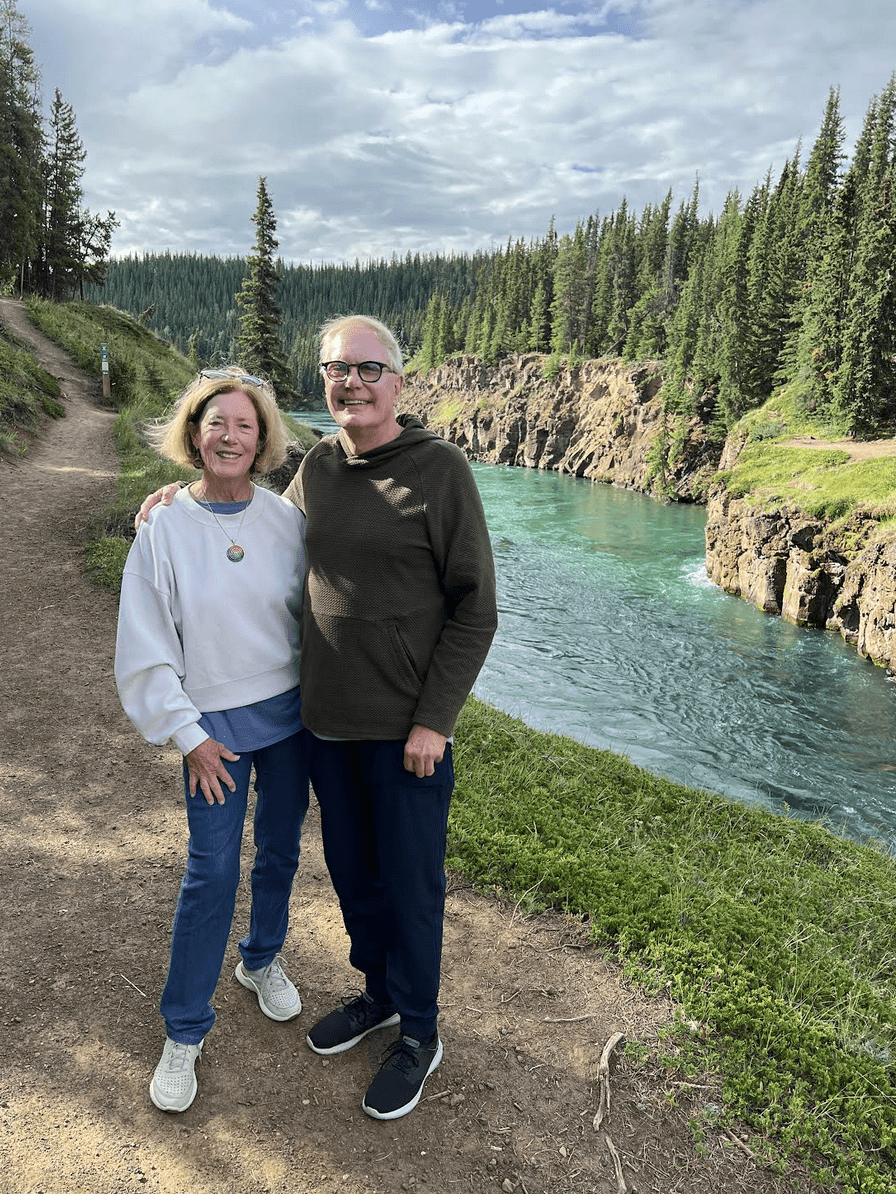
The authors at Miles Canyon, Yukon
By Colin Robertson and Maureen Boyd
September 6, 2025
I wanted the gold, and I sought it.
I scrabbled and mucked like a slave.
Was it famine or scurvy—I fought it;
I hurled my youth into a grave.
Robert Service, The Spell of the Yukon
“The land of the midnight sun” was an early entry on Colin’s lifetime travel list. As a boy, Jack London’s Call of the Wild and White Fang kept him turning pages long after he was supposed to have turned off his bedside light.
When the Robertsons went camping, Colin’s dad would recite Robert Service, the “Bard of the North” around the campfire – a tradition we would repeat with our own children. Once heard, who can forget the pathos and drama of The Shooting of Dan McGrew or The Cremation of Sam McGee.
Over the years, we had both travelled ‘north of 60’ for work. Eager for more, we recently bid on and snagged a trip to Whitehorse at a charity auction. Whitehorse’s history is as compelling as its scenery – born in the Klondike Gold Rush when over 100,000 brave souls passed through to seek their fortune. And so, we spent four days in Yukon’s capital city, choosing a warmer July trip over the attraction of winter’s Aurora Borealis.
Air North flies Boeing 737s from Ottawa. With a stop in Yellowknife, it takes about seven hours, crossing three time zones. It’s about as long a flight as Ottawa to London, a reminder of the vastness of Canada. Direct flights from Europe add a cosmopolitan flavour, but more than half of visitors come from the United States and almost a third from Canada.
From Erik Nielsen International airport, it’s less than a 15-minute drive to downtown Whitehorse, where we stayed at the comfortable Edgewater Hotel on Main Street. Whitehorse cuisine was an unexpected delight. Dinner at the Edgewater’s ‘Belly of the Bison’ featured seared cod and crispy beet salad that was so good we returned for our parting dinner.
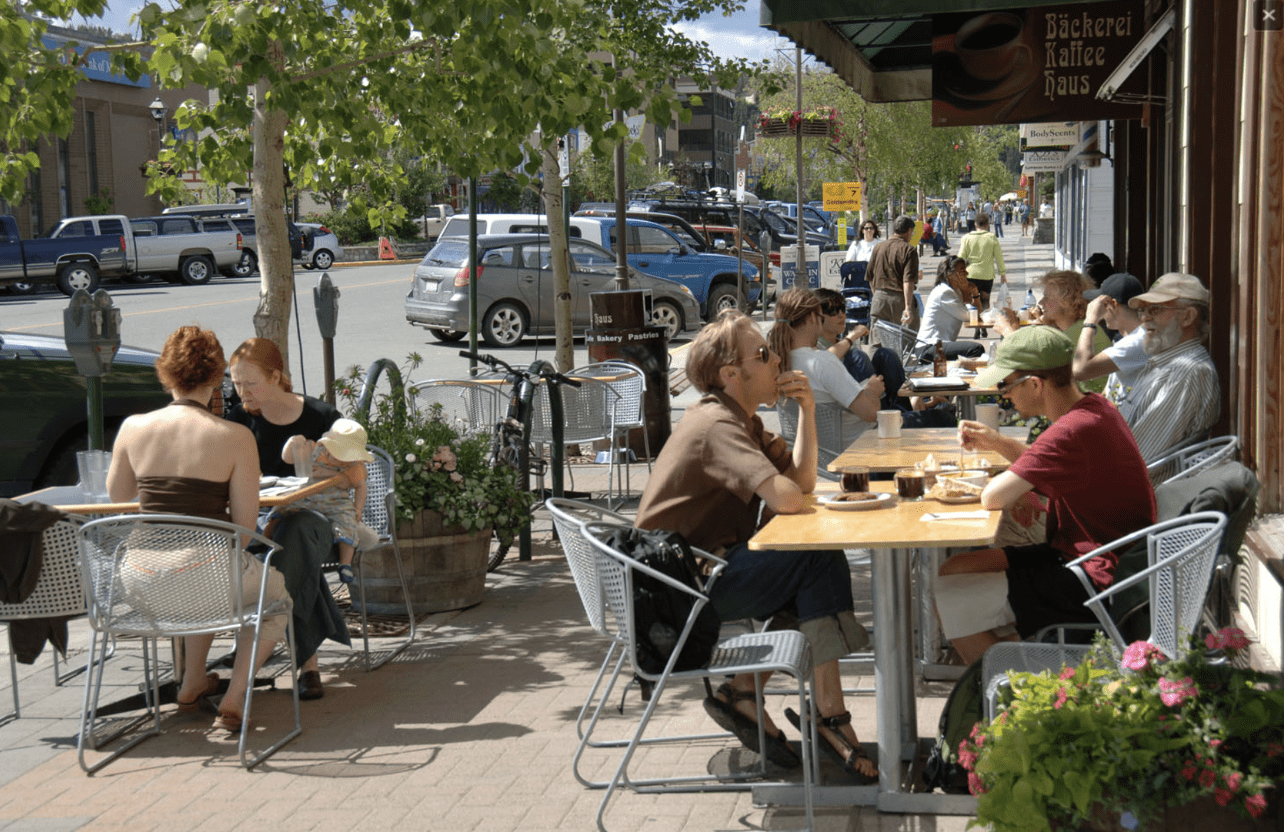 Baked, a popular breakfast spot on Whitehorse’s Main Street
Across the street, locals lined up for the 7 a.m. opening of Baked café to enjoy their breakfast croissants, scones, smoothies and coffee. Baked is linked to Horwoods Mall, an eclectic collection of stores featuring handicrafts and the work of local artists and artisans. Our other favourite eatery, 2nd Avenue’s Klondike Rib & Salmon, is housed in a building dating back to the Gold Rush and has kept faith with that era’s appetite for fine food. Only open during summers, its halibut chowder and Millar’s miners beans were as good as advertised.
We were surprised to find short line-ups and available dinner reservations during a prime summer weekend. One official said business was slower – down about 10% with fewer Canadians and Americans traveling north — and blamed politics, speculating that Canadians weren’t coming if they didn’t want to include Alaska in their trip and that Americans didn’t feel as comfortable as in previous years.
The three blocks of Main Street provide a journey through Yukon history thanks to the Hougen family, whose generosity has funded a series of bronze busts and storiesof notable Yukoners and expats, including Sam Steele of the North-West Mounted Police, who preserved peace and order during the 1898-99 Gold Rush, Jack London, and Service, who first came to Whitehorse in1894 to work in a bank. After running Miles Canyon and the Whitehorse Rapids in the summer of 1897 at the age of 21, London stayed a year before returning to California to write his famous books and short stories.
Author Pierre Berton was born in Whitehorse in 1920 and grew up in Dawson City before moving to Vancouver. His popular history Klondike: The Last Great Gold Rush and Charlotte Gray’s Gold Diggers are must-reads. Both are featured prominently in local bookstores.
Artist Ted Harrison, whose illustrated books of Service’s most famous ballads are in our library, lived in Whitehorse from 1971-93 and his cabin is now an artists’ retreat on Crag Lake, near Carcross.
Our walk down Main Street set us up for the MacBride Museum of Yukon History, skilfully renovated with soundtracks, photos and film representing pioneers, prospectors and First Nations as well as a hands-on look at a Gold Rush-era cabin, sled and clothing.
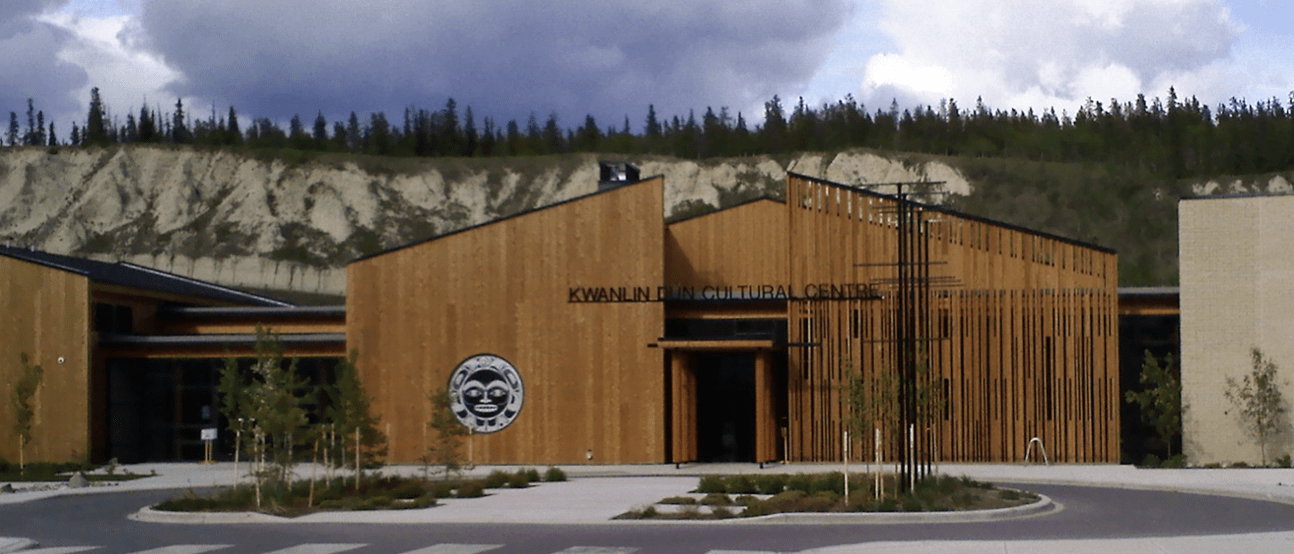 Kwanlin Dün Cultural Centre
A short walk from Main Street, overlooking the Yukon River, are the modern, light-filled Whitehorse Public Library and, next door, the architectural landmark Kwanlin Dün Cultural Centre, featuring a longhouse, cultural events and rotating exhibits on the traditions, tales and handicrafts of the Kwanlin Dün First Nation and other Indigenous peoples.
We made two short excursions, first to the Yukon Wildlife Preserve and then to Miles Canyon.
Water and salt licks situated right by roadsides criss-crossing the 700-acre Preserve’s wildlife sanctuaries provided bison, elk, caribou, moose, thinhorn sheep, and mountain goat sightings worthy of a north-of-60 safari.
Miles Canyon was calm the day we visited. But its 40-foot cliffs let us imagine the terror the prospectors must have experienced as they shot the rapids on homemade boats to make their way inland.
The highlight of our visit was a day trip to Skagway, Alaska, on the narrow-gauge White Pass & Yukon Route known as the “Scenic Railway of the World”. Recognized as an international historic civil engineering landmark, the tracks climb up mountain passes at the edge of the tree line, hug the sheer cliffs and cross wooden trestles. In some places, we could see the narrow trail once used by the ‘Stampeders’ who made the trek on foot from Skagway to Dawson City before the railway began operation in 1900.
Skagway now caters to flocks of tourists borne by the cruise ships that travel up the coast from Seattle and Vancouver. Whitehorse, on the other hand, continues to be a commercial centre for mining, driving economic development. Gold remains the crown jewel but there is also silver, zinc, lead, copper and other base metals.
With the new rush for critical minerals, of which Yukon has plenty, there is a boom of arrivals from the south, making Whitehorse one of the fastest-growing cities in Canada. Whitehorse has a population of just over 30,000, making up three quarters of Yukon’s population. Between a median income 35% higher than the Canadian average, the natural beauty of its landscape, and the isolation of its location less of an issue than it was before the internet, it is attracting a whole new generation of fortune-seekers.
They would do well to keep in mind this passage from Robert Service’s The Men That Don’t Fit In:
If they just went straight they might go far;
They are strong and brave and true;
But they’re always tired of the things that are,
And they want the strange and new.
…
And each forgets that his youth has fled,
Forgets that his prime is past,
Till he stands one day, with a hope that’s dead,
In the glare of the truth at last.
Colin Robertson and Maureen Boyd have lived in Ottawa, New York, Hong Kong, Los Angeles and Washington during diplomatic postings and have visited more than 60 countries.