
A Visit to Ahakista: Remembering the Air India Bombing 40 Years On
 Cork County Mayor Joe Carroll (centre) Ambassador Bob Rae (immediate left) Taoiseach Micheál Martin (immediate right) Canadian Public Safety Minister Gary Anandasangaree (third from right), with other dignitaries on June 23, 2025 in Ahakista, Ireland/Cork County Council
By Bob Rae
June 25, 2025
Ahakista is a picturesque Irish hamlet located 100 km west of Cork on the Sheep’s Head peninsula. Its population is so close to a handful that Wikipedia doesn’t list a count. And if not for the events of June 23rd, 1985, its claim to fame would be the primarily local one of the annual Ahakista Regatta, held every August.
But the people of Ahakista and its neighbouring towns are a steadfast link in the circle of grief with the families of those who perished when Air India Flight 182 exploded 30,000 feet above the North Atlantic. While the crash site was 180 km off the coast, Ahakista was the village the families — mostly Canadian — gravitated to in the days and weeks that followed as a place where they could await news of recovery and toss wreaths into the sea in memory of their loved ones.
So, Ahakista has become an unlikely international dateline and ground-zero memorial for the worst act of terrorism ever committed against Canadians, and the cascading, generational tragedy it unleashed. And the people who live there take that responsibility very seriously.
Because this year marked the 40th anniversary of the tragedy, the memorial ceremonies were more elaborate, more heavily attended and drew people from farther afield than most years.
It was a powerful weekend of remembrance, with local dignitaries, representatives of the Irish, Indian and Canadian governments and family members of the victims all gathered by the sea.
To recall, on that day 40 years ago, bombs were placed on planes heading west and east from Vancouver. The western flight killed two baggage handlers at Narita Airport in Japan. The eastern flight stopped in Mirabel, and the bags were transferred to the ongoing flight, Air India 182, bound for London, Delhi and Mumbai. That plane, called Kanishka”, blew up in midair, killing all 329 passengers and crew.
There was a powerful humanitarian and rescue operation conducted by hundreds of search and rescue professionals and volunteers, and the families were welcomed and cared for by the local communities. Canadian consular officials, diplomats and intelligence and police officers from Dublin, Ottawa and all over Europe also converged on the area.
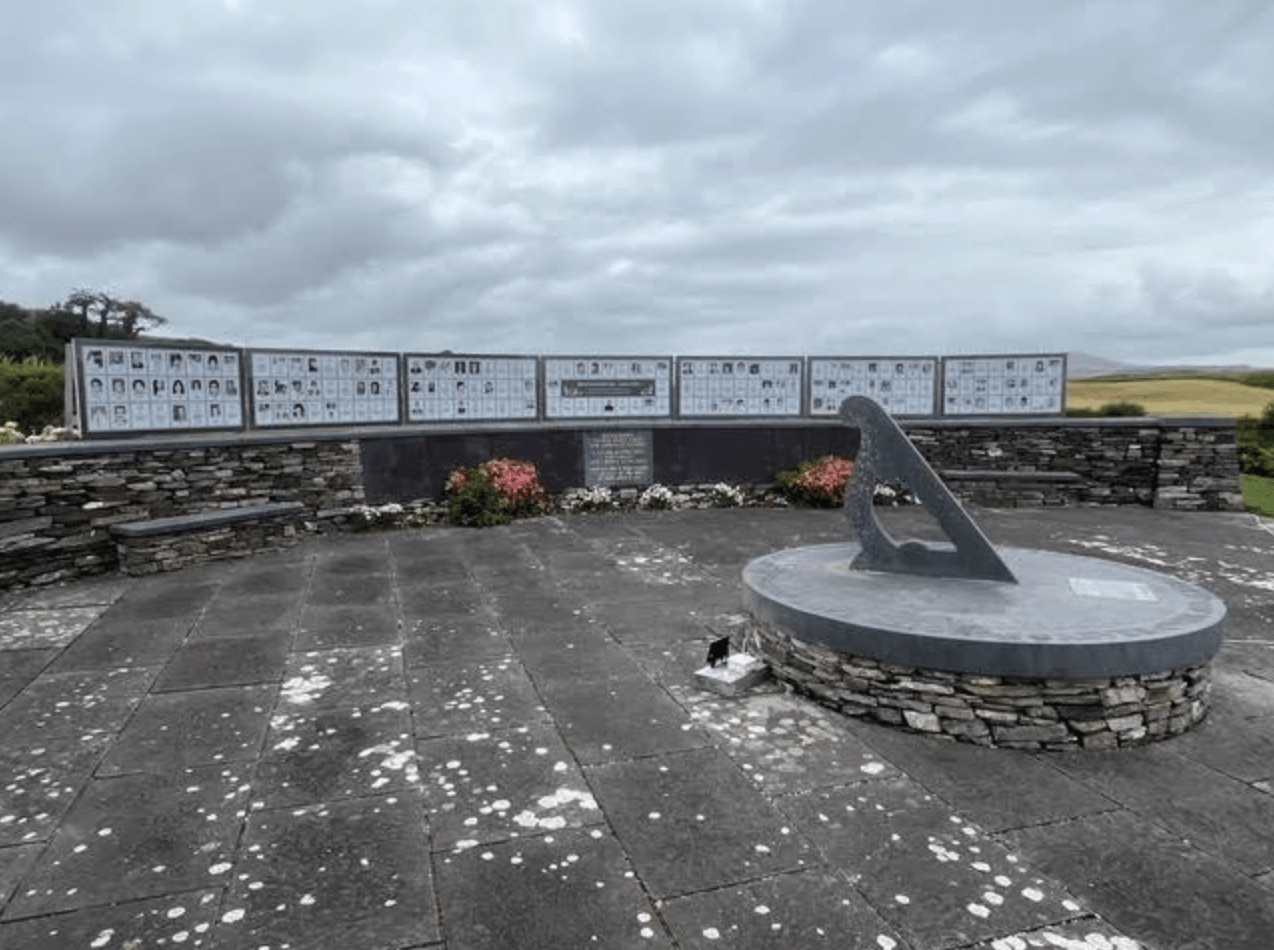 The Akahista Flight 182 Memorial/Courtesy Bob Rae
Air India Flight 182 carries special significance for me. When I was asked to review Canada’s response to the tragedy in 2005, I began my own journey of truth and reconciliation.
My mandate from Minister of Public Safety Anne McClellan was to meet with the families after two individuals charged with responsibility for the bombing were acquitted by a British Columbia Judge after a long trial. In another trial, one individual was charged with involvement in building the bomb, but he had refused to co-operate in providing further information and also spent time in jail for perjury.
I was ably assisted by two young public servants, Taleeb Noormohamed and Michelle Semple. They have since married. Taleeb is now the Member of Parliament for Vancouver Granville and Michelle is a successful lawyer. David Lederman of Goodman LLP also provided valuable legal advice.
The mandate took us across the country, visiting with families, police, government officials, prosecutors, lawyers, security experts, provincial leaders and security experts in London and Washington.
The families felt that their loss and struggle over twenty years had never been sufficiently recognized by their government and Canadian public opinion more broadly. Because the bomb brought the plane down thousands of miles from Canada, because it took so long for justice to clarify the cause of the catastrophe, and because the victims were brown and not white, of Indian and not European extraction, an “othering” of the tragedy took place. Canadians never really processed it as “our” trauma. Years later, in 2010, Prime Minister Stephen Harper apologized for all of the sins that compounded the devastating loss of so many on that day.
It took years for the government to conclude that the cause of the midair explosion was a bomb. Expert inquiries were launched to deal with issues of airport security. The police investigation both before and after the bombing was bedeviled by the recent split between the RCMP and CSIS, the new security agency established as a result of the McDonald Inquiry into RCMP activities. With the Cold War still a preoccupation, resources to deal with domestic extremism were inadequate, despite many warning signs that security threats were becoming more diverse and more complex.
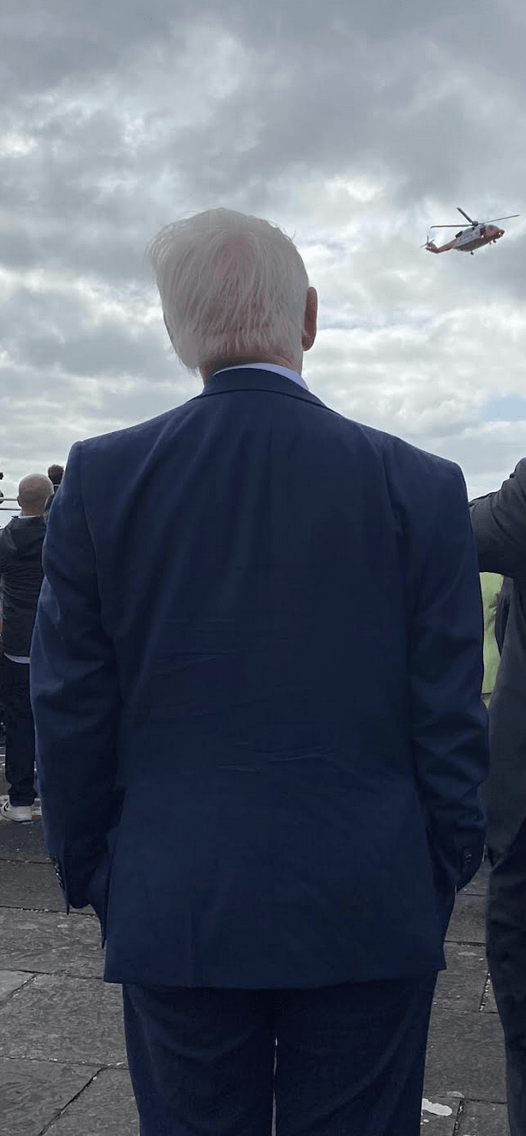
The Irish Coast Guard pays its respects/Courtesy Bob Rae
My report, Lessons to be Learned, was published by the federal government in late November 2005. It documented the failures of agencies to see the warning signs of increased radicalism and extremism within the Canadian Sikh community as a result both of internal tensions and the political situation in India. Failure to share information between CSIS and the RCMP, and between government departments reflected on a fatal dependence on silos and outdated doctrines of “need to know”, as opposed to “need to share”.
Surveillance of key suspects was not consistently pursued. Resources were thin. Punjabi translation of a key intercept was late in coming. A bag was checked without a passenger boarding. Sniffer dogs were not used on bags at Mirabel and other equipment was broken. As I wrote in the report “everything that could have gone wrong did go wrong”.
But the questions I raised in my report, and Justice Jack Major reinforced in his much more complete public inquiry about why it took so long for Canadian governments to fully embrace the tragedy as a major Canadian disaster, where Canadian lives were lost because of a criminal conspiracy carried out by Canadians on our own soil, remain. Justice Major’s inquiry made findings and recommendations similar to mine, but only some were implemented. Our common conclusion was that a national calamity had not been sufficiently embraced as our own, with real consequences for ourselves and others.
In carrying out my work, I spent time in both Washington and London to discuss directly the experience of our allies. The Americans were preoccupied by the events of 9/11. They had barely heard of the Air India event. Yet many of the conclusions I was coming to — the failure to realize that the well-worn habits of the Cold War did not address the more diverse and dangerous world of insecurity we were living in, the absence of a truly diverse intelligence service that could deal with “homegrown terrorism” in a new way, the dangers of violent extremism in a wide range of communities, the need to break down the barriers between police forces and intelligence units that led to rivalries and crossed wires and a failure to read the signals — forced me to realize that Canada’s failure to embrace the full horror of what had happened, to share conclusions with other intelligence and police agencies, and other tough conclusions about what could only be described as a true system failure meant that what should have been a hard lesson for the world was allowed to be forgotten.
Meeting British officials made me realize that the challenges of dealing with the violence in Northern Ireland since the 1970s had forced intelligence, military, and policing to work together more closely, to understand the “need to share” as opposed to the “need to know”, and to deepen political commitment to engaging with security and intelligence issues at the most senior levels of government on a consistent and fully organized basis.
Paul Martin became the first Prime Minister to meet with the families of the Flight 182 victims, and he quickly realized that this had to be a long meeting. It started at 5 in the evening and went well into the wee hours of the morning. He then flew to Ireland with the families to attend the 20th anniversary of the bombing and asked me to make recommendations on how we should commemorate the bombing in Canada. My advisor Taleeb Noormohamed worked with families and provincial and municipal governments across the country to ensure that we were able to create monuments and places of remembrance across the country. June 23 is now a nationally recognized Day of Remembrance for Victims of Terrorism.
Nowhere is that day recognized more fully and with greater feeling than on the southwest coast of Ireland, where the bodies were found and identified.
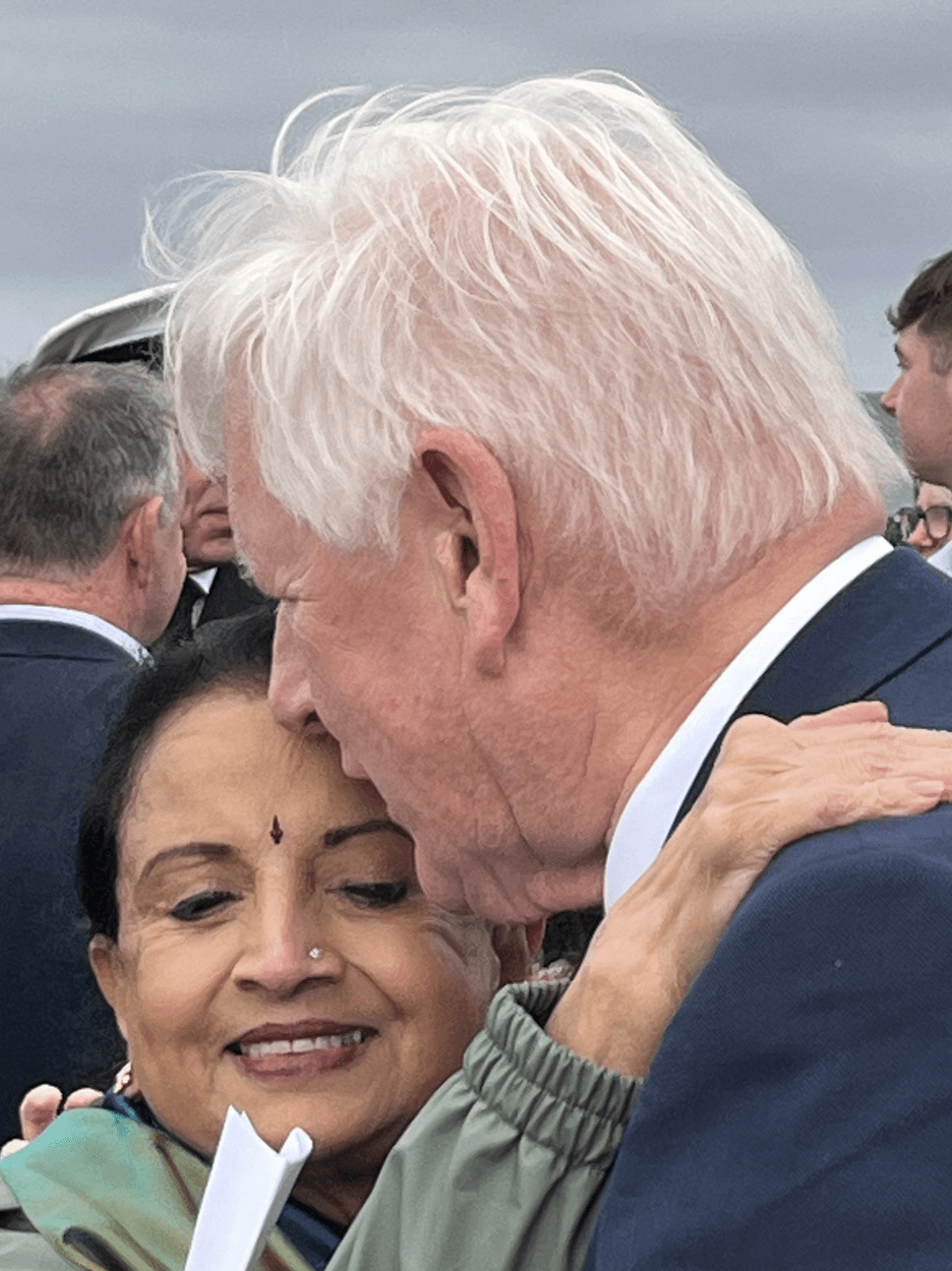
In Ahakista with families’ advocate Lata Pada
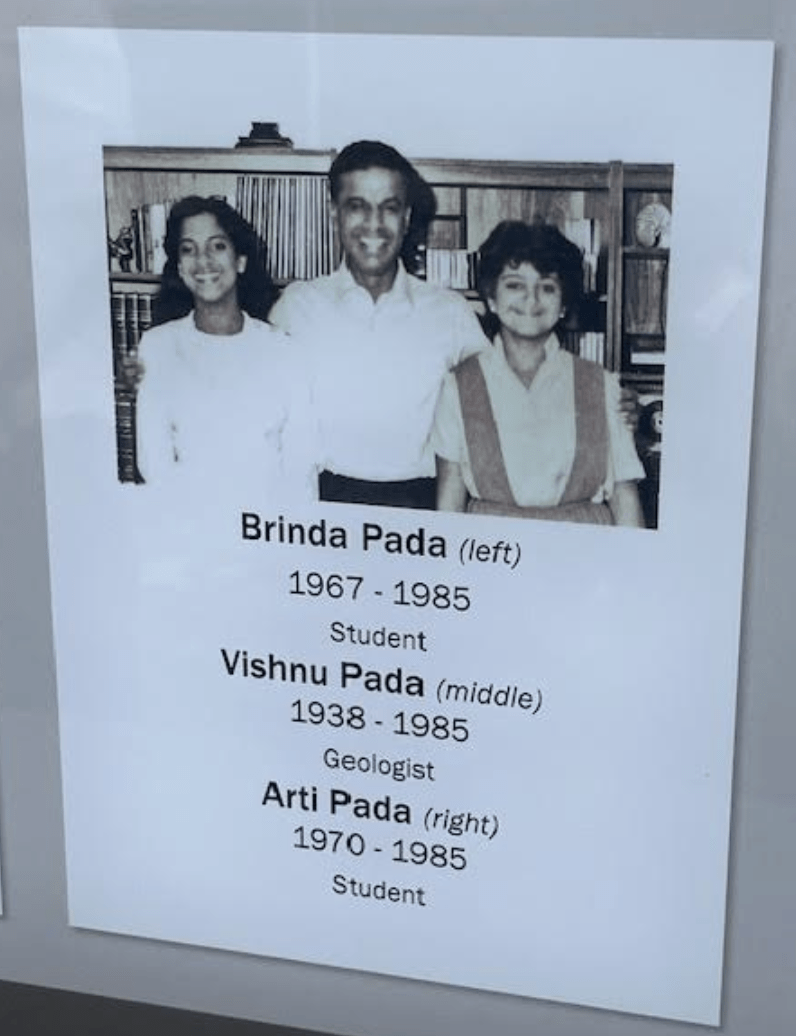
Lata Pada’s late husband and daughters
As the years since the atrocity have passed, I’ve had the privilege of getting to know many of the victims’ family members, including families’ spokesperson Lata Pada, the renowned Bharatanatyam dancer who channelled the grief of losing her husband and two daughters into founding and running the foremost Indian dance academy in Canada.
This year, it was extraordinary to feel the emotion and connection among families that have gathered every year at the memorial site in Ahakista, and to admire the monument that has been so lovingly maintained by the local community. Among the mourners this June 23rd was a 41-year-old woman who was just a baby when her mother was taken in one monstrous moment above the ocean. Her loss was still palpable.
A choir from the local school sang a heart-wrenching rendition of Let it Be and, on pennywhistles, Morning Has Broken. Scholarships were given to local students by the Air India families. Over the weekend before Monday’s ceremony, there were quiet dinners shared and reminiscences of all that happened in the days after bodies were discovered and brought ashore.
Of course, it is only right that the site of the accident, thousands of miles away from homes across Canada, should be an emotional centre for all the memories of what happened. But what is not right is the ongoing failure to understand the deep significance of this event in our lives as Canadians. The biggest lessons, that hate was allowed to turn to violence without effective intervention, that security is not someone else’s problem, but very much ours, that a loss of this dimension (per capita larger than 9/11) is one that all Canadians, and indeed a much wider community, need to join those families that still feel they have been asked to bear this largely alone and apart from their fellow Canadians.
It is never too late to improve and deepen our understanding and response. The 40th anniversary was a good beginning. Both Canada and India were represented by senior ministers. Ireland’s Prime Minister spoke at the ceremony and spent time with the families and the responders. It was the largest gathering in many years. Going forward, the leaders of our country need to continue to set an example, by understanding better what happened, with all its consequences, and then taking this event and turning it into a learning moment for our whole country.
Children need to be taught about this in school. The price of freedom and security is not just eternal vigilance. It is also eternal recognition, and eternal memory. This moment must be etched deeply and permanently into our history and our lives. “Closure” is a gimmicky word in these circumstances. Wounds heal with time and care, but deep scars and memories remain.
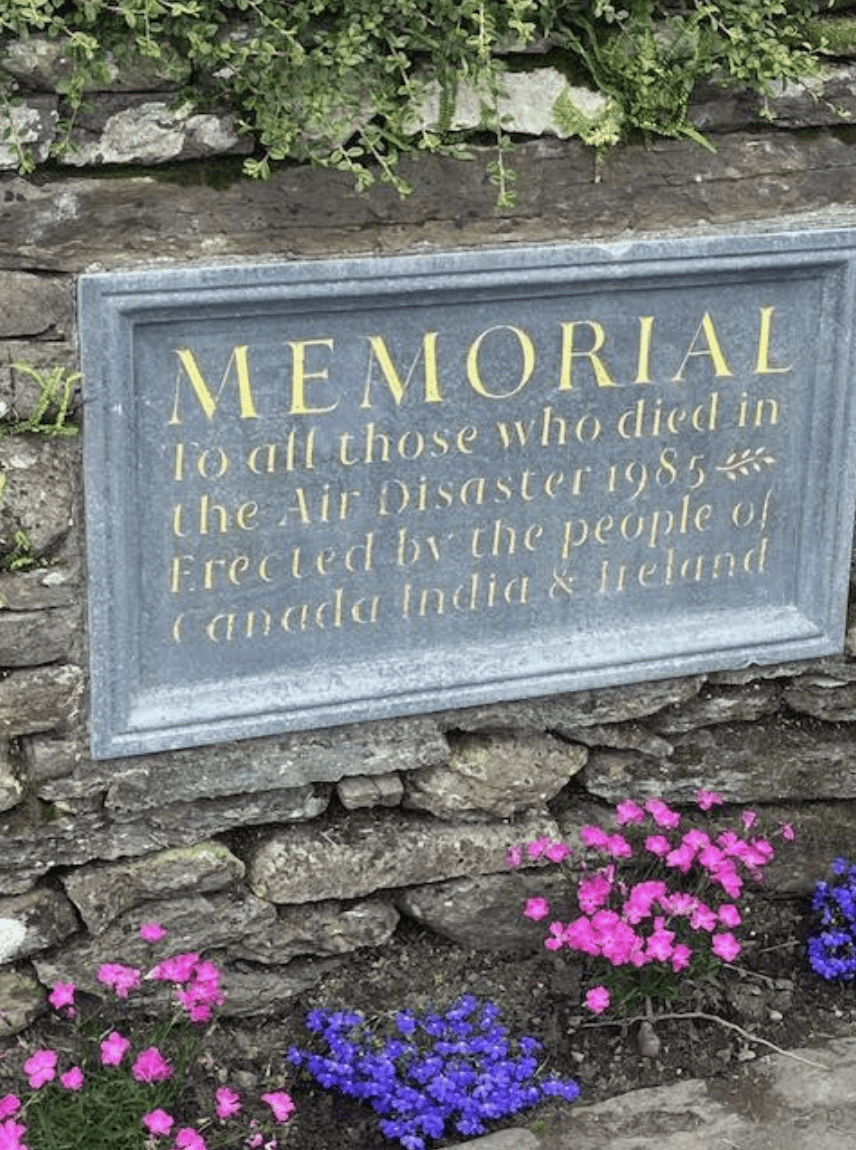
We now have five monuments for the tragedy. The words below remain with me, engraved in stone in Ahakista, Vancouver, Toronto, Ottawa, and Montreal. Let us embrace them and commit to the actions we know we must take, not with bitterness, but with determination to learn and do better.
“Time flies, suns rise and shadows fall. Let it pass. Love reigns forever over all.”
Bob Rae is Canada’s Permanent Representative to the United Nations.