
After a Year of Carney, the Conservatives are Biding Their Time
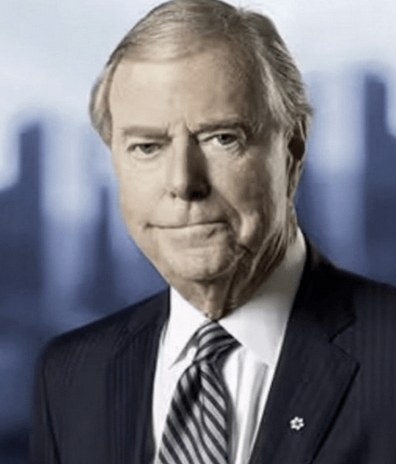
By Don Newman
May 12, 2026
On the recent anniversary of the April 2025 election that confirmed Mark Carney and the Liberals as Canada’s government, there were many analyses offered on what the year had achieved and what the next one might hold.
But few people took a closer look at what the first year of Carney’s tenure has meant to the Official Opposition, the Conservative Party, and its leader, Pierre Poilievre.
Their past year was the flip side of a major political story of a scale unseen before in Canada. That, of course, was the four members of Parliament elected as Conservatives a year ago who, in a steady drip of defections, crossed the floor to sit in the House of Commons as Liberals.
Beginning with Chris d’Entremont in November of 2025, through Michael Ma in December, and then Matt Jeneroux this February and Marilyn Gladu in April, the Conservative Party switchers helped tilt Carney toward the majority he secured with three by-election victories on April 13th.
That immediately changed the political calculations of all the parties in the House of Commons. The Liberals could now start planning up to 2029 to implement their transformative agenda of resource development, building infrastructure to support the export of resources and products to new trading partners, and a massive increase in defence spending.
The Conservatives now have to face the prospect of another three years without a chance to get back in power instead of expecting a snap election triggered by a minority Parliament that could come at any time. Suddenly, things have to be looked at through the prism of a longer time frame.
One way to take the Conservatives’ temperature amid these new circumstances was to attend the recent Canada Strong and Free Conference. Originally called the Manning Conference after its founder, former Reform Party Leader Preston Manning, the annual event conference brings party members from across Canada to meet in Ottawa for two and a half days of speeches, policy discussions and hardcore networking.
One obvious takeaway from the event is that the Conservative Party has grown younger, and somewhat more diverse. Contrasting with the convention that elected Andrew Scheer leader in 2017, where everyone seemed to be a white man with white hair, the meeting in Ottawa was full of millennials, men and women, and while still predominantly white, not entirely homogeneous.
Perhaps that contributed to the lessened sense of disappointment over the governing Liberals gaining a majority through floor-crossers. Younger party members have a longer political runway to effectively change things.
In fact, it was Poilievre who, in his speech, was the most incensed about the defectors. After all, he now has to face a problem that he thought he had put away when he won 87.4 per cent in a leadership review vote in January. The convention and vote were held following Poilievre’s return to Parliament via an Alberta by-election after losing his own Ontario seat in the April election.
At the time, the Conservatives already had two floor-crossing defections. But the possibility of a Liberal majority and four years without an election seemed remote. Now, that has changed and so has the leader’s relationship with the party.
There are some caucus members who are presumed to be on the list of possible successors, but given Poilievre’s history of hardball, any signs of leadership aspirations are kept close to the vest.
Already around Parliament Hill, some Conservatives are discussing the possibility of a leadership change. Not right away, but to start the process by the end of 2027.
If Poilievre is not competitive with Carney in public opinion polls by then, some Conservative MPs in the Parliamentary caucus will invoke the “Chong rule” named after Conservative MP Michael Chong, who in 2015 proposed a private members’ bill that became law allowing MPs to trigger a leadership review to replace a leader.
So far, only the Conservatives have used the law, and just once. After the 2021 election loss, the caucus deposed Erin O’Toole as leader and kicked the process that ultimately led to Poilievre winning the leadership.
For the mechanism to work, 20% of caucus members have to call for a review. At the moment, no one has stepped forward as a potential challenger, although if Poilievre is ousted that will change quickly.
There are some caucus members who are presumed to be on the list of possible successors, but given Poilievre’s history of hardball, any signs of leadership aspirations are kept close to the vest. It would be far easier for outsiders — one name floated recently is that of Mark Mulroney — to plot a challenge in advance.
Since some of the defectors complained that Poilievre’s management of caucus and treatment of his MPs was one reason for leaving, it is possible to imagine loyalty to the leader might not be at its highest. In his speech at the Strong and Free conference Poilievre did not present much hope that the new, friendlier version of himself unveiled in the lead-up to his January review and afterward was a permanent metamorphosis.
Poilievre packaged his persona problems as: “Some people have accused me of being a fighter, but that’s because some things are actually worth fighting for.”
Even those who think a leadership change will be needed don’t want it to happen right away. Choosing a new leader too soon would give the Liberals the opportunity to attack and define that person. A leadership review that started at the end of 2027 or the beginning of 2028 and a new leader picked in the summer or early fall of that year would be better timing. An election would come no later than in the spring of 2029.
Which means Pierre Poilievre will have a lot of time to keep fighting, not only the Carney government but possibly his own caucus as well. The past year has been an eventful one for Mark Carney, but the changes to the Conservative Party may have only just begun.
Policy Columnist Don Newman is an Officer of the Order of Canada, and a lifetime member and a past president of the Canadian Parliamentary Press Gallery.