
Beyond Tariffs: What Canada Should Do Next
 Shutterstock
September 7, 2026
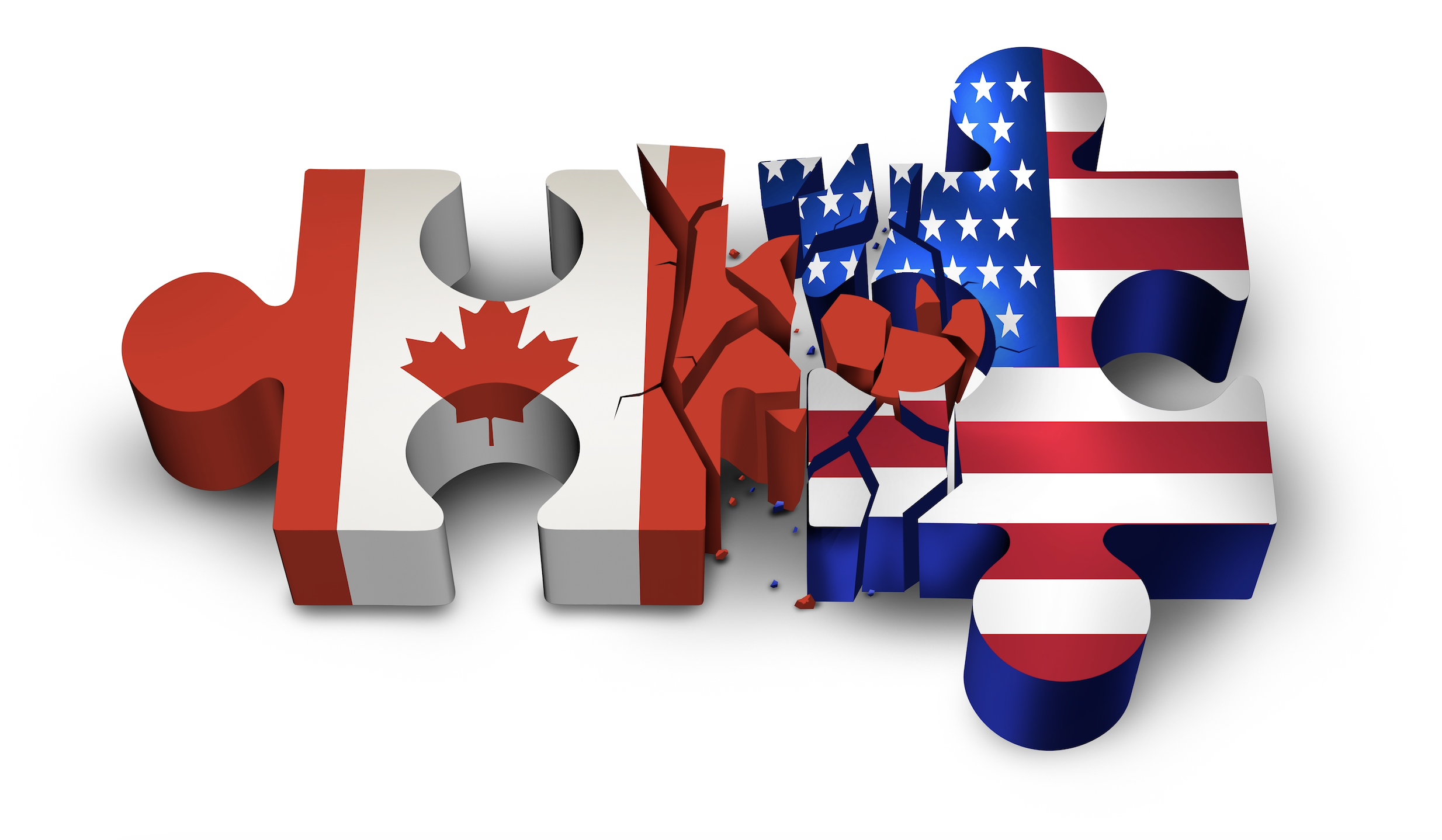
Donald Trump’s trade war against Canada enters a new phase at one minute after midnight tonight. Barring any last minute developments, that’s when Canada’s counter-tariffs of 15, 25 and 50 per cent on $27.6 billion of U.S. goods will kick in.
They target steel and aluminum, dairy, appliances, farm equipment, pulp and paper, plastics and electronics, and a range of other goods, matching Washington dollar for dollar and rate for rate.
Trade wars raise prices, deter investment and destroy jobs. Yet Mark Carney was right to reject a bargain that threatened Canadian industry, identity and policy autonomy.
Saying no was the easy part. The harder task is turning resistance into strategy.
Washington’s objective is clear: use access to the world’s largest market to coerce manufacturing, especially autos and parts, into the United States.
That may serve Trump’s nationalist politics, but it fractures efficient continental supply chains.
Canada cannot out-muscle the United States. It can raise the political cost of coercion while lowering its own vulnerability.
The national economic effect may be manageable, but the damage will be concentrated.
University of Calgary economist Trevor Tombe estimates nearly 90,000 Canadian jobs could be lost, with British Columbia, Ontario and Quebec among the most exposed. That makes adjustment support and national unity economic necessities, not patriotic decoration.
Geography pulls us south. Canada cannot decouple from the United States but should not drift back into dependence when the immediate crisis passes.
Strategy must give us options: preserve preferential American access where sovereignty permits, build productive capacity at home and diversify abroad. That requires four priorities.
First: Use Targeted Retaliation to Achieve Preferential Access
CUSMA remains in force, but layered U.S. tariffs have made it commercially unreliable. Canadian retaliation should be targeted, proportionate and temporary. Its purpose is to mobilize the American customers, producers, governors and legislators who rely on Canadian energy, aluminum, potash, critical minerals and auto parts, and to bring Washington back to a workable bargain.
Carney says Canada is “ready to sit down and strike that deal when the Americans are ready,” provided it has “stability and credibility.”
Readiness should mean more than a better tone. Talks should resume when officials can identify a written landing zone that: substantially reduces Section 232 and 338 tariffs; leaves viable Canadian auto, steel, aluminum and other strategic industries; protects language, culture and Canada’s freedom to trade with third countries; and provides durable rules and enforceable recourse.
The route back should be staged: quiet technical talks first, ministerial negotiations only after the terms are written, and leader-level approval once the trade-offs are clear. No more ambiguity about what was agreed. Every Canadian concession should purchase a measurable American concession. Until then, keep channels open, challenge unlawful tariffs through CUSMA and the courts, coordinate closely with Mexico and maintain the counter-tariffs.
Second: Create Genuine Free Trade Within Canada
Premiers must dismantle barriers in procurement, trucking, credentials and product standards. The IMF estimates that fully eliminating non-geographic barriers could raise real GDP by nearly seven per cent over time. Use mutual recognition wherever safety permits and harmonization where one national rule is genuinely necessary. Governments should publish deadlines and scorecards so local interests cannot turn implementation into delay.
Third: Build Canada
Trump’s tariffs expose chronic weaknesses: low investment, poor productivity, slow approvals and dependence on one customer.
Pipelines, grids, railways, roads, ports, Arctic infrastructure, digital networks and critical mineral processing are instruments of sovereignty. Faster decisions, predictable regulation, Indigenous equity participation and skilled workers matter as much as public money.
The $7.5-billion federal support package for affected workers and firms should be temporary, transparent and conditional—a bridge to adjustment, not permanent protection.
The September 14th and 15th Canada Investment Summit in Toronto should produce named projects, lead investors and decision dates, not another catalogue of aspirations.
Fourth: Diversify with Discipline
Agreements from ASEAN to India, combined with deeper ties to Europe, Japan, Korea, Mexico and other CPTPP partners, deserve sustained attention. But diversification is not measured by agreements signed. It requires export-ready firms, customers, trade finance, reliable transport and governments able to deliver projects.
All four priorities require Team Canada—led by the prime minister and sustained by premiers, business, labour and Indigenous governments. The burden will vary across our vast federation: autos in Ontario, aluminum in Quebec and forest products in British Columbia are exposed differently.
Governments must explain the trade-offs and support those carrying disproportionate costs. Consultation is essential but it cannot become a veto.
Success will be measured not by dollars announced or summits convened, but by infrastructure completed, firms entering new markets, rising private investment per worker and higher productivity.
The objective is a more resilient Canada—still deeply North American, but stronger at home, more diversified abroad and harder to coerce.
Canada did not choose its closest neighbour. But it can choose the strength with which it meets that neighbour. This is the crossroads. Carney and Team Canada must now build a more self-confident Canada to meet the moment.
Contributing Writer Colin Robertson, C.M., C.D., a former career diplomat, is a fellow and host of the Global Exchange podcast with the Canadian Global Affairs Institute in Ottawa.