
Bill 21 and the Politics of Secularism: Who Carries the Burden?
This piece is part of our Emerging Voices series.
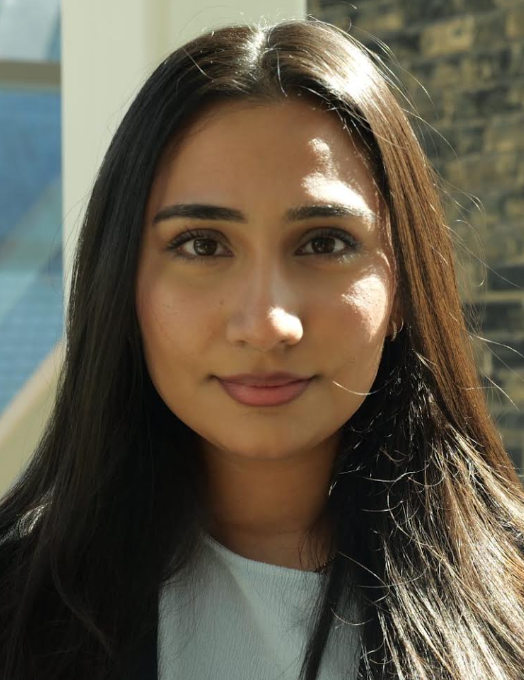
By Rupinder Liddar
November 29, 2026
On November 27th, the Supreme Court of Canada largely upheld Quebec’s secularism law (Loi sur la laïcité). It ruled that governments may invoke the notwithstanding clause and, once it is invoked, judges may declare that a law violates the Charter, despite being shielded by the notwithstanding clause.
With four of the seven judges upholding most of Bill 21 (with one exception under Section 8), this ruling settles who may decide upon religious freedoms and expression within Quebec’s public sector jobs.
The question of religious freedoms is political as much as it is legal, and this Supreme Court ruling arrived less than two months after the Parti Québécois (PQ), which seeks independence from Canada, was elected to a minority government.
The PQ ran on a platform promising to extend the incumbent Coalition Avenir Quebec (CAQ) government’s ban on religious symbols to elementary school students; this court ruling solidifies the government’s commitment to secularism across the province.
Bill 21 rests on a particular model of secularism, one that restricts individual religious expression rather than asking the state and its institutions to protect religious groups equally. Who carries the burden of that choice depends on the society it affects.
In Quebec, much of it falls on Muslim women, as well as on Sikh and Jewish Canadians and their families. In another province, due to demographic specificities, the same logic would land on different people. Secularism in Canada, then, is not a single principle but a set of definitions that impose different policy consequences upon different communities.
Models of Secularism
Debates over Bill 21 are often framed as secularism vs. religious expression. But a more useful question is where each model places the burden of neutrality.
In the rest of Canada, the burden often rests on institutions to treat religious groups equally and to universally uphold religious freedoms. In Quebec, as in France, it rests on individuals.
This logic argues that if the state is to be neutral, it must also appear neutral, with many public employees being asked to choose between visible religious expression and public employment.
But this choice falls disproportionately on communities whose faith is visible. It also creates a democratic paradox where citizens’ religious freedoms are protected in their daily life, but not while carrying out the functions of the state and its authority.
The Case of Quebec
Supporters of Bill 21 point to the deep roots of laïcité in Quebec, which grew out of the Quiet Revolution’s rejection of the pervasive power of the Catholic Church, and to the law’s popularity. While it is argued that Bill 21 is widely supported, that support is strongest among certain groups of Quebecers.
In a 2018 survey, 55 per cent of Quebecers said that overt religious symbols should be banned in positions of authority, with a majority of this view held among those over the age of 55. In 2022, this gap between older and younger Quebecers became more pronounced, with more than 70 per cent of those aged 65 to 74 saying they supported the ban, and only 27.8 of 18-to-24-year-olds saying they did.
With Anglophone Quebecers expressing considerably lower support for Bill 21, it is clear that Quebec is not unanimous, and neither was the Supreme Court in its ruling.
The same law would play out differently elsewhere. In Ontario, the affected communities would be larger (especially in cities such as Mississauga and Brampton with large Muslim and Sikh populations), and the consequences would carry real electoral weight.
Secularism therefore creates both policy and political tension, shaped by electoral and partisan incentives. The Quebec ruling shows that it cannot be applied the same way elsewhere: its costs depend on a province’s history, its demographics, and the balance of power between majority and minority populations.
Who Decides?
That balance of power helps explain why the law has endured. Supporters present it as a defence of state neutrality, of gender equality, and as an expression of a distinct Quebec identity. The law’s appeal also draws on other narratives, including criticisms of multiculturalism, anti-immigration sentiment, and a rise in Islamophobia.
These facts sit alongside a tension in Quebec’s own immigration policy. Muslims make up about 5 per cent of Quebec’s population, compared with 6.7 per cent in Ontario, and are the largest non-Christian religious group in the province.
Quebec’s preference for French-speaking newcomers means many immigrants come from francophone countries. In 2025, for instance, its top five source countries were reported to be Cameroon, France, Algeria, Tunisia, and Morocco; three of them are majority-Muslim countries.
Muslims account for 21 per cent of Quebec’s immigrant population, compared with 14 per cent in Ontario, 13 per cent in Alberta, and six per cent in British Columbia. The province selects these newcomers partly for their French-language abilities and yet limits how visibly they can express their faith in public employment.
This raises the question of whether the newcomers Quebec recruits are as welcome to take part in its public institutions as they are to settle in the province.
The Next Generation
The consequences will affect the future of Quebec. Some members of affected communities will choose different careers while others may leave Quebec entirely and take their skills to another province.
Children who see their families excluded from public service may not see themselves represented in these roles and may come to view the state with distrust.
If the PQ extends the ban to elementary students, the message will reach children directly: that a part of their identity does not belong in the classroom or, more broadly, in the province.
The Supreme Court rules that Quebec may decide. Whether the law remains, and at whose expense, is a question for voters, for legislators, and for the communities whose futures are shaped by the answer.
A debate that takes secularism seriously must consider who carries its costs.
Rupinder Liddar is a PhD candidate in political Science at McGill University. Her research examines racialized political behaviour with a focus on the political engagement of the South Asian diaspora, particularly Sikh Canadians. She is affiliated with the Centre for the Study of Democratic Citizenship and holds a doctoral fellowship from the Social Sciences and Humanities Research Council.