
Carney, Havel, and the Rebirth of Freedom
March 24, 2026
Speaking in January at the World Economic Forum in Davos, Canadian Prime Minister Mark Carney stirred great interest when he said that the present world order had been “ruptured” by the “brutal reality” of the great powers acting without any constraints, requiring middle powers like Canada to chart a new course.
In making this argument, Carney referenced “The Power of the Powerless,” the famous essay written in 1978 by the Czech dissident and later president Vaclav Havel, who said that since the communist system was built on lies, people could recover their freedom only by “living in truth.”
For the middle powers today, Carney said, living in truth meant breaking with “the lie” that global integration brings mutual benefit when, in fact, such integration is “the source of [our] subordination.” It also meant that the middle powers had to “develop greater strategic autonomy” and build “coalitions that work, issue by issue,” leading ultimately to “a new order that embodies our values.”
Echoing Havel, Carney said that the middle powers “are not powerless” and that “the power of the less powerful begins with honesty.”
On no issue today is a new coalition more urgently needed than in addressing the deteriorating state of global democracy. The U.S. organization Freedom House has charted 20 consecutive years of declining political and civil liberties in the world, and the Swedish democracy-monitoring group V-Dem has said that the current “wave of autocratization has been going on for at least 25 years and shows no signs of cresting.”
The backsliding hasn’t occurred in just fragile and low-income new democracies but also in the long-established liberal democracies of the West, including the United States, where illiberal populism has made significant gains.
Also troubling is that the U.S., which has been the leader of efforts to defend and advance democracy in the world since the administration of Ronald Reagan, has now abandoned democracy promotion and is dismantling, or trying to dismantle, all the soft-power institutions that have been the bedrock of American assistance to people abroad striving to build democratic societies.
It is reasonable to ask, therefore, if it’s possible to reverse this trend, or if the fight to advance democracy in the world is doomed. The fight is certainly more difficult than it’s been since the end of the Cold War. But what’s crucial to stress is that the battle for democracy has by no means ended, even if the U.S. government no longer supports it. The struggle continues today on many fronts.
During the past year, for example, Gen-Z youth-led protests erupted against corruption, economic distress and ineffective government in Nepal, Peru, and Madagascar where the governments fell, as well as in Indonesia, Morocco, Kenya, and the Philippines. These protests followed upon earlier youth-led uprisings that toppled corrupt and abusive governments in Sri Lanka in 2022 and Bangladesh in 2024.
The issue of democracy is also at stake in the bitter wars that are being fought today in Ukraine and the Middle East. For obvious reasons, the issue of sovereignty and survival, not democracy, is paramount in both Ukraine’s resistance to the Russian invasion and Israel’s response to the October 7 massacre. Still, it is important to note that the wars being fought by Ukraine and Israel have already had an extraordinary political impact and will powerfully affect the prospect for democracy both regionally and globally.
While Vladimir Putin’s rule in Russia remains unchallenged, it has become more precarious as a result of Ukraine’s extraordinary resistance to his disastrous aggression. Russia’s economy is suffering from unsustainable war spending, growing inflation, and a shrinking sovereign wealth fund that has been cut by more than half to cover budget deficits and war costs. Alexandra Prokopenko writes in The Economist that “Russia’s economy has entered the death zone.”
It’s also extraordinary that more than 325,000 Russian soldiers have been killed in the four years of war, a number that exceeds by 22 times the losses suffered by the Soviet Union in its decade of war in Afghanistan. As Putin well knows, it was Moscow’s debilitating failure in Afghanistan that precipitated the collapse of the Soviet Union, which he called “the greatest geopolitical catastrophe” of the last century.
The consequences of Russia’s even more costly failure in Ukraine will inevitably affect the stability and legitimacy of Putin’s regime.
In the Middle East, Israel’s severe weakening of both Hezbollah and Iran contributed significantly to the fall of the murderous Assad regime in Syria following a devastating civil war in which 600,000 people were killed. The long process of recovery in Syria has now begun under a new government that has unlocked over $30 billion of investment and international reconstruction aid, begun the difficult process of building a stable and ethnically integrated country, and become part of a new coalition to stabilize the region that is supported by the U.S.
In Lebanon, Israel’s degrading of Hezbollah’s leadership and military capability ended a political deadlock that made possible the election of a new government committed to restoring state authority, disarming Hezbollah, and making reforms needed to attract aid and investment to rebuild the country.
A regenerated Community of Democracies could be one of the possible new coalitions that Prime Minister Carney spoke about in his Davos speech — a new international coalition for democracy and human freedom.
Not least, the dramatic blows that Israel delivered against Iran starting in October 2024 weakened the Islamic Republic’s military capability and political legitimacy, setting the stage for the current joint attack by Israel and the United States. While the outcome remains uncertain, Saudi pressure on Trump to stay the course against the Islamic Republic could lead to the epochal fall of an odious regime that murdered tens of thousands of protesters in January and poses a grave threat to regional stability.
China has held off on attacking Taiwan, perhaps realizing that conditions there are far more volatile than they appear and that another political convulsion like Tiananmen Square is not unthinkable. Mass political resistance erupted in 2022 against the draconian zero-COVID lockdown in the form of the White Paper Protests, the most significant revolt since 1989.
The uprising occurred just a month after a dissident named Peng Lifa, later called the “Bridge Man,” hung banners from a busy overpass in Beijing with slogans reading “We don’t want lockdowns, we want freedom,” “We don’t want lies, we want dignity,” and “We don’t want to be slaves, we want to be citizens.”
He was immediately arrested, but his demonstration set off solidarity rallies in 31 Chinese cities and at over 350 universities around the world. The subsequent White Paper Protests soon broke out in over 50 cities across China, forcing the regime to call off its zero-COVID policy.
This brief survey of some of the battles that are taking place today shows that there are significant opportunities to make democratic gains despite the setbacks of the recent past.
While the dismantling and drastic downsizing of the U.S. democracy-support infrastructure that was created over the last four decades will make the job more difficult, the principal institutions that comprise this field still exist, along with a far-reaching global community of pro-democracy practitioners, activists, and advocates. It is a resource that can be tapped into and mobilized.
The Prague-based democracy organization Forum 2000, which was created by Havel and Elie Wiesel in 1996, is exploring the possibility of building a new global movement to try to fill the vacuum created by the U.S. withdrawal from efforts to advance democracy internationally.
Its worldwide International Coalition for Democratic Renewal (ICDR) is the nucleus of a potentially much larger network of democracy organizations and activists. Given Prime Minister Carney’s affinity with Havel, he may be willing to help Forum 2000 build this new global movement.
There is a very practical form of assistance that Carney can provide. Forum 2000 is exploring the possibility of establishing a formal partnership with the inter-governmental Community of Democracies (CoD), a global coalition of states headquartered in Warsaw that is dedicated to promoting and defending democracy worldwide.
The CoD was an initiative of Secretary of State Madeleine Albright and Polish Foreign Minister Bronislaw Geremek, who took the lead in organizing its founding assembly in Warsaw in 2000. The assembly was attended by foreign ministers from 106 countries who adopted the Warsaw Declaration, a comprehensive statement of fundamental democratic principles. Not all of the founding states were democracies, however, which prompted a critical lead editorial in The Economist, among other problems.
Though the CoD was able to create a Democracy Caucus in the U.N. and a U.N. Democracy Fund (UNDEF) that continues to operate, it was never able to fulfill the hope that Albright had placed in it. It was seen as a U.S. project of only marginal significance, which made it hard to get other countries to take ownership of it.
The key question today is whether an effort should be made to revive and reform the Community of Democracies in an entirely new political context, in which middle-power democratic governments would be taking their own initiative and not following the U.S., adding the weight of governmental commitment to a global nongovernmental support movement for democracy.
A regenerated Community of Democracies could be one of the possible new coalitions that Prime Minister Carney spoke about in his Davos speech — a new international coalition for democracy and human freedom.
A first step would be for Forum 2000 and the CoD, working in cooperation with Canada and possibly other governments committed to developing a new democracy agenda, to establish an international commission of leading democracy specialists, activists, and practitioners to examine the lessons learned over four decades of aiding democracy, the last 25 years of which coincided with a period of continuous democratic decline.
The commission should also fashion a credible and realistic strategy for a new global coalition for democracy.
Havel wrote “The Power of the Powerless” at the request of Polish activists who were going through a hard time in the late1970s and were struggling to find a way forward.
The Solidarity activist Zbigniew Bujak said later that “The essay reached us in the Ursus factory in 1979 at a point when we felt we were at the end of the road….Reading it gave us the theoretical underpinnings for our activity. It maintained our spirits; we did not give up, and a year later — in August 1980 — it became clear that the party apparatus and the factory management were afraid of us. We mattered.”
He added that when he looks back on the victories of Solidarity and Charter 77, Havel’s own dissident group in Czechoslovakia, he sees “the astonishing fulfillment of the…knowledge contained in Havel’s essay.” It would be equally astonishing if that essay could once again inspire a new birth of freedom at a very dark and difficult time.
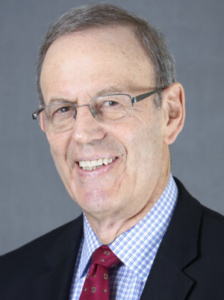
Carl Gershman is the Founding President (now retired) of the U.S. National Endowment for Democracy (NED).