Carney’s Davos Speech: Governing in Poetry
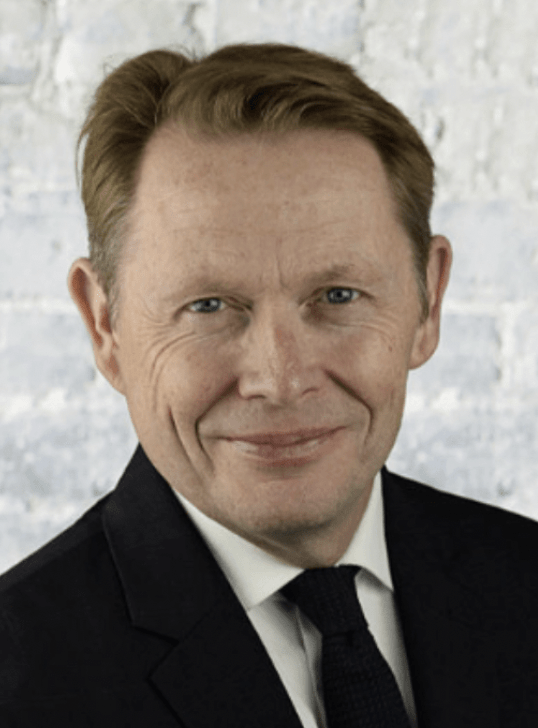
By John Delacourt
January 26, 2026
A week after Prime Minister Mark Carney’s Davos speech — a relative eternity in our attention economy — the reviews and analyses are still coming in.
There are many reasons why Carney’s speech has seemed to – cliché alert – meet the moment. And one of the residual benefits for our news cycle is that it has provoked an impressive range of responses about its historical, geopolitical and economic import during a January already epic for all the wrong reasons.
Timing and a conscious sense of occasion have undoubtedly played a significant role in the speech’s reception, but if reports are to be believed (specifically, as mentioned in The Rest is Politics podcast, with Alistair Campbell and Rory Stewart), the Prime Minister’s voracious appetite for work extended to labouring for countless hours on the draft.
Carney clearly had an acute awareness of his audience in Davos, what everyone was thinking and how important it was to call out this “rupture” in the rules based international order, but this was more than an address that would preach to the comfortable and the converted; this was a clarion call for, pace Carney’s reference to Václav Havel, “living in truth.”
And in this regard, one of the more interesting analyses of this speech was posted by UK speechwriter and podcaster Simon Lancaster, who focuses on the form rather than the content – the rhetorical devices and figures Carney employed in the English draft of the speech.
Lancaster identifies ten “super powerful” ones of significance, from tricolon, the rule of three, all the way to metaphor and rhyme. We can only speculate if the Prime Minister had a conscious sense of these tools at hand that he employed for maximum effect and impact, or if simply erudition, hard work and a good ear accounted for his final draft.
Like a gifted musician who cannot read music, he might be one of those writers who has just unconsciously absorbed and developed a sophisticated understanding of what persuades – and moves – an audience, and how essential these poetics are to performance.
But there’s a salient ‘takeaway’ from this speech that those working and writing for the Prime Minister might want to consider: this same attention to form – the music in his message – is going to be as vital a consideration as the content of his speeches in the months ahead.
The late New York senator, Mario Cuomo, famously said of the difference between aspirational campaigning and practical governing, “You campaign in poetry; you govern in prose”.
It might simply be the grind and churn of working in a 21st century PMO that can account for how unmemorable and unremarkable speech after speech have been from the country’s highest office over the last two decades.
Only the poetry in the political, rather than the political in poetry, is going to save us.
We’ve become jaded by values-larded platitudes and paragraph after paragraph that seemed written with no eye – or ear – for rhetorical devices that have literally thousands of years of road testing to validate their enduring power and impact.
The buck might stop with Prime Ministers themselves, but they’re usually the last ones who have enough time to work on final drafts, to turn what might simply be a paragraph-by-paragraph assembly of key messages, refined for search engine optimization, into something that can sing rather than sink like a stone.
Whatever the cause might be – workload or a simple awareness of the tools at hand – neither governing nor campaigning have yielded much to inspire beyond a few crumbs of sound bites, and occasional unguarded moments when authenticity has punctured Insta artifice.
The audience at Davos, like Canadians grappling with this rupture, has been in desperate need of this authenticity. But the paradox of transforming authenticity of message and intention is that it requires a sophisticated understanding of artifice —- of form over content.
As Carney and his government returned to the House of Commons and prepared to launch an ambitious legislative agenda, it was clear that he’s going to need to deliver Davos-level speeches here at home.
We’re all aware of how dangerous the world’s becoming, how much we might have to sacrifice or how dramatically the government’s priorities could shift in the coming months.
There has been a great deal of trust, a wait-and-see suspension of judgment accorded to Mark Carney, based largely on his bona fides outside of politics, his eminence in rarefied circles where evidence-based decision making and critical thinking rule.
But if we need any more evidence from south of the border, politics is not a rational arena, and sentiment can trump sense, with disastrous implications.
The image-based attention economy, transacting on every platform, has been engineered to elicit responses from our lizard brains, and it’s all working so tragically well. Only the poetry in the political, rather than the political in poetry, is going to save us.
The Prime Minister has proven, at Davos, that he understands this in his bones. It is time to bring it home, from union hall to hockey rink to House of Commons, not simply for his mandate but for Canada’s leadership in the world.
Policy Contributing Writer John Delacourt is Senior Vice President of Counsel Public Affairs in Ottawa. He is the author of several novels.