
Danielle Smith, Doug Ford, and Mark Carney’s Consultation Summer
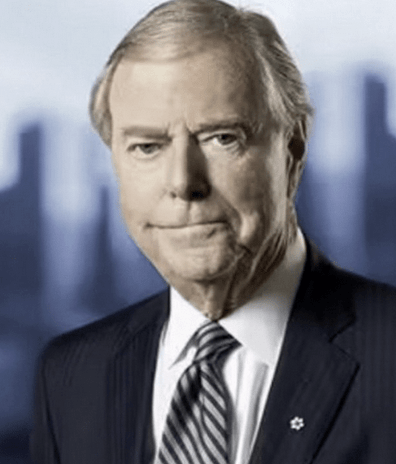
By Don Newman
July 8, 2025
While the premiers of Ontario and Alberta have overcome their differences over how to deal with the threatening tariffs President Donald Trump has imposed on Canada, their newfound harmony won’t necessarily be contagious this summer.
As Prime Minister Mark Carney implements the changes enabled by the One Canadian Economy Act, some differences may be more difficult to finesse.
This week, Doug Ford and Danielle Smith joined forces to leverage the federal government into approving national infrastructure projects they both want — including new pipelines, rail lines and ports — and dropping regulations, in particular affecting energy development.
Ford and Smith signed two memorandums of understanding (MOUs) this week against the backdrop of the Calgary Stampede. The agreements contrast with the previous approaches each has taken to Trump.
In Ontario, Ford has been aggressive in response to the tariffs, at one time talking about cutting off the electricity his province exports daily to the United States. In Alberta, Smith has taken a much more conciliatory approach to Trump’s trade war, including recently putting American wines and liquor back on the shelves of liquor stores in Alberta. While Smith has always claimed she is a loyal member of the Team Canada approach to dealing with Washington, some have questioned that claim, including, at one point, Ford.
Now, in addition to signing the agreement calling for more pipeline construction that Alberta wants and developing the “Ring to Fire” of rare earth minerals in Northern Ontario essential to Canada’s plans and a big economic boost to Ontario, Ford also said that Alberta and the Prairie provinces have been mistreated by Ottawa in the past and called for a new approach.
This latest shift in dynamic is just one of the things Prime Minister Mark Carney is going to have to deal with in the coming months. Until now, Ford has been seen as an ally of Carney and the federal government. Smith has been a wild card, submitting to Carney a list of demands basically mirroring those of the oil industry and threatening a constitutional crisis if they are not met. Now, Ford and Smith have become allies.
Since he announced he was running for the Liberal leadership, Mark Carney has lived a charmed political life, but that could start to change, and the One Canadian Economy Act could be at the heart of those difficulties.
When the House of Commons rose for the summer on June 23rd, it had passed two significant pieces of legislation; one an income tax cut that was promised in the election campaign and the other the two-section infrastructure and trade bill that could create controversy going forward.
Part of the One Canadian Economy Act is uncontroversial: the part that removes federal impediments to interprovincial trade, as promised by the Liberals during the election campaign. The other part promises to speed up the approval process for infrastructure projects deemed to be “in the national interest” by the federal cabinet.
The intent is to get projects approved within two years by a combining of federal and provincial approval processes so one approval will be acceptable for both levels of government. The provinces will nominate the projects they think are in the national interest. Ottawa will decide which ones will proceed.
Since he announced he was running for the Liberal leadership, Mark Carney has lived a charmed political life, but that could start to change, and the One Canadian Economy Act could be at the heart of those difficulties.
Although not specifically spelled out in the legislation, the bill is designed to make Canada less reliant on the US. The criteria for determining whether a project is in the national interest include strengthening Canada’s autonomy, resilience and security, providing economic and other benefits, and having a high likelihood of being successfully executed. Those conditions are widely supported by the provinces and the business community.
Although the Act also includes criteria to “advance the interests of Indigenous groups” and to meet “Canada’s objectives with respect to climate change,” both Indigenous groups and environmental organizations are sceptical and want further clarification.
This is where Carney’s difficulties could begin. Indigenous groups say the provisions of the Act could allow the government to put aside treaty rights and land claims when they approve new projects. Environmentalists say the same about laws protecting habitat and wildlife and compromising global warming prevention guidelines.
The Indigenous groups already have a history of contesting development projects that they don’t approve, particularly in British Columbia. However, a protest in one province can spread.
In February 2020, the Wet’suweten were protesting a pipeline development near Kitimat BC. Thousands of miles away, Mohawks living near Belleville on Lake Ontario decided to hold a protest in sympathy. Their protest was much more dramatic. They shut down the main railway line between Toronto and Montreal with a blockade that resulted in rail traffic being affected across the country. It took two weeks to get the blockade lifted.
Indigenous groups have been highly effective at getting an expansion of the Supreme Court requirement that infrastructure projects can only proceed after “free, prior and informed consent” of Indigenous groups affected. Groups affected have interpreted that to mean they have a veto over projects, although that apparently is not what the Court meant.
However, it does set a high bar for consultation, a requirement that delayed, for instance, the twinning of the Trans Mountain pipeline in BC.
Carney is holding summits with Indigenous leaders over the summer to agree on how the new project approvals process will work. His approach is to make those groups at least partial owners of the projects, with government loans and grants available to make that happen. The Assembly of First Nations will meet with the Prime Minister on July 17th, followed by the Inuit Tapirisat and then the Métis National Council.
But dealing with Indigenous group can be complicated. They are not homogeneous entities and if there is disagreement within groups, factions can split and act independently, setting up blockades, demonstrations or launching court challenges. Carney’s meeting with the three largest groups this summer will attempt to head off any of these outcomes.
The Prime Minister has said Canada must build the strongest economy in the G7. Part of that plan is to turn Canada into an “energy superpower” via both conventional sources and sustainable energy. Achieving this will require massive infrastructure projects, many of which will involve unceded Indigenous lands, which is why Carney is observing the duty to consult and meeting this summer with the Indigenous groups.
But the Prime Minister will hold those meetings against the backdrop of the premiers of the country’s wealthiest provinces now united in pushing the very projects that Indigenous Canadians might oppose.
Nobody ever said being prime minister of Canada was easy.
Policy Columnist Don Newman is an Officer of the Order of Canada, and a lifetime member and a past president of the Canadian Parliamentary Press Gallery.