
From Davos to Diplomacy: Canada’s New Foreign Service Marching Orders
August 5, 2026
It has been just over six months since Prime Minister Mark Carney stepped up to the podium at the World Economic Forum in Davos to tell a crowded room of global deciders what most of them already knew but hadn’t yet worded into a coherent argument.
Carney’s Davos speech became a catalyst first for commentary then for policy shifts in Europe, Japan, Australia, and elsewhere across a democratic world ingesting Trumpian Washington’s evacuation of the global leadership America has not only maintained but fiercely guarded since 1941.
Anyone born in Canada in the second half of the last century has, consciously or not, shipped aboard a multinational, globalist vessel steered, however unevenly, by the United States. That vessel has sailed by charts drawn per the collective agenda of the “free world.”
We nurtured open markets and stable finances and together addressed supranational challenges to life on Earth. The brief, unipolar post-Cold War consensus enabled the easing of ideological division and the threat of nuclear war, while addressing increasingly existential issues of climate change, global health, and chronic scarcities of food, water, and hope among and for the world’s poorest.
Globalization lifted billions out of poverty while hoisting the profiles of new centres of global power, notably China and India. But political change with the arrival of Donald Trump incited revanchist resentments, feeding American economic aggression against friends and rivals alike, and throwing the globalized status quo into chaos.
Dependency on the United States has now become a liability, and the most vulnerable country is Canada.
The circumstances gave Carney’s Davos message salience. He was already known to the Davos community as a serious and competent nonpartisan, globalist leader. But if he had been speaking in his former role as governor of the Bank of England, the WEF wouldn’t have booked him in its biggest room.
His top billing drew from his recent transition from Davos man to prime minister of Canada, a dutiful multilateral player involuntarily thrust into a role of existential defence against unfamiliar threats from its dominant neighbour and estranged partner. The Davos crowd listened to Carney as a correspondent from the front lines of a new war.
His advocacy of cooperative coalitions among likeminded “middle power” partners and others to hedge the danger of over-dependence rang a lot of bells in Europe and in the Pacific.
Invoking Thucydides’ early realpolitik aphorism from the Melian Dialogue in describing the amoral Athenian argument for invasion to frame the post-Trump “rupture” of the rules-based order, Carney quoted: “The strong do what they can, and the weak suffer what they must”.
As one would expect, it has taken some months for the vision Carney laid out in the Swiss Alps to transmute to Canadian diplomacy.
The task now is to reconcile the overarching goals of realignment and diversification with the need to maintain a mutually beneficial relationship with our truculent, disruptive, but crucially important continental neighbour.
Having re-branded Canada faster and more effectively than any prime minister before him, Carney now needs more than trusted chums to represent these ideas at top levels. We need foot soldiers working urgently to service new connections and opportunities around the world.
That’s what the Canadian foreign service did so well for decades until hobbled over the last 20 years of micromanagement from domestically-driven PMOs and a public service consumed by institutional myopia that saddled Global Affairs with managers who had never been posted abroad, and who saw as their main constituency not the Canadians serving from Argentina to Zimbabwe but the occupants of both sides of the Langevin Block a mile away.
On June 1st, Foreign Minister Anita Anand convened a Global Heads of Mission meeting (the first one in three years) to upgrade the foreign service policy brief for a post-Davos context, including via a keynote from Carney himself.
For those who had longed for an activist and energetic Canadian foreign policy, this moment is a Godsend, but its impact as a departure from the status quo remains to be seen.
In a recent interview with The Globe and Mail‘s Campbell Clark, Anand described the June process of moving from Davos theory to rubber-meets-the-road implementation by the foreign service.
“They acknowledge that this mission is 180 degrees different from what they have historically been doing, but they also are rising to the challenge,” she said. “Did it happen automatically? No, but has it occurred? Yes. Why? Because the urgency of the matter is clear.”
If that means a re-set from Justin Trudeau’s un-implementable “feminist foreign policy,” the re-purposing of valuable diplomatic capital will be welcome. If it projects Carney’s invocation to “be bold and move fast,” to serve the government’s ambitiously high threshold of risk tolerance, bring it on.
If it makes commercial interests the dominant priority — because diversifying trade, securing supply chains, and attracting foreign direct investment (FDI) to Canada are the dominant priorities of the government, with defence and security, notably in the Arctic, a second preoccupation — then, it makes sense.
But the focus on economic diplomacy isn’t new. George Hees, who served as John Diefenbaker’s trade minister in the 60s, distributed cuff links to exporters and trade commissioners displaying an acronym of the motto, “You can’t sell Canada sitting on your ass.” A more recent and activist example: Prime Minister Jean Chretien’s Team Canada missions around the world.
It should not imply setting aside what Clark in his Globe piece termed the “vaunted tradition of Canadian foreign policy — peacekeeping, UN multilateralism, Mulroney’s opposition to apartheid, the Axworthy/Chrétien human rights agenda.”
That humanistic vocation that Louis St. Laurent designated as foreign minister in 1948 a top foreign policy priority along with managing the U.S. relationship is, along with sound financial management, what earned Canada the national reputation Carney surfed into Davos on, along with his own global brand.
Having served successively as head of mission in four key capitals —Moscow, London, Rome, and Brussels — and having taken an appointment at my alma mater, Princeton University, I found myself at a private dinner in 2006 to honour Finance Minister Jim Flaherty, a fellow alumnus (and hockey player).
I conveyed my shock that the Harper government had abruptly stopped a program to support at minimal cost “Canadian studies” programs at US and European universities. If there was one prime necessity for Canada in the U.S., it was to enhance Americans’ knowledge of our country. “I get it,” Flaherty conceded, “but we’re not for all that cultural stuff.” On this, Flaherty, an excellent finance minister and fundamentally decent man was wrong.
When it comes to branding Canada effectively, everything is connected, as these examples illustrate:
- The transformation and privatization of the Italian telecommunications sector in the 90s opened opportunities for potential Canadian players. But we had yet to re-brand Canada as a high-tech solutions provider. Fortunately, Nortel and Blackberry were already prominent. But exposing an influential Roman audience to Rhombus Media’s outstanding cultural productions (Thirty Two Short Films about Glenn Gould, The Red Violin, and The Sound of the Carceri, with Yo Yo Ma) boosted our reputation with the right influencers.
- Branding migrates: In an intensive Canada promotional week in Florence, we included evidence of the National Research Council’s 3D scanning expertise in its restoration of ancient cave paintings. This preceded the NRC’s undertaking a high-resolution digital record of the Mona Lisa for the Louvre.
- The non-commercial foreign policy issues always count: PM Chretien aspired to a trade agreement with the EU as a sort of symbolic accompaniment to NAFTA, but the EU Commission balked because of fear such an industrialized side-deal gave the wrong signal as the Doha Round of the WTO global trade negotiations was floundering. Canada’s leadership on the Kyoto climate accord, the human security agenda, including the International Criminal Court, and the UN’s sustainable development goals (SDGs), persuaded EU Commission President Romano Prodi to urge Canada’s designation as the EU’s sixth strategic partner. That provided EU Trade Commissioner Pascal Lamy the bandwidth to enter into an unprecedented 21st century comprehensive economic agreement (CETA) that provided the foundation of transatlantic trust for our more recent Canada-EU partnerships.
It’s right to press for commercial transactions, but we also have to buck the current US-driven competition for profits and advantage by heeding the need to reinforce the globe’s eroding compassion, a “cognitive change” McGill University’s Jennifer Welsh warned about three years ago.
The OECD reports that in 2025, Western governments chopped international aid budgets by 23%, the largest decline ever recorded, with Africa suffering the biggest losses — leaving a massive opening for both China and Russia to double down on their already expanding influence on the continent. Simultaneous cuts by biggest donors, led by the US (57%), have eviscerated vital programs. (Canada cut by only 2.3%.)
The Lancet medical journal and a study by Boston University estimate that over 600,000 people have died as a result of cuts to medication to combat TB, malaria, and HIV, stemming from the Musk-led fiasco of DOGE that virtually closed USAID.
It’s a tragedy that Putin and Trump together have pushed our military budgets skyward. Fair enough, but we can’t shift our gaze from the humanitarian crisis brewing. Australia moved to a primarily trade foreign policy a few decades ago and had to re-build lost representational value in consequence
In order to make Anand and Carney’s new mission succeed, Canada’s diplomats will need to advance both economic and soft power files. Our credibility and attractiveness as an economic and major-project partner of choice depends on both.
Minister Anand is quoted in the Globe piece saying, “We’re not in meetings talking about global hegemons,” presumably meaning that Canadian diplomats are focused on more practical matters.
We all know that her counterparts in likeminded democracies are indeed thinking first and foremost about countering together the consequences of the rupture to the global order caused by predatory hegemons.
As anyone who has ever served with them can attest, Canada’s diplomats constitute a whole other army.
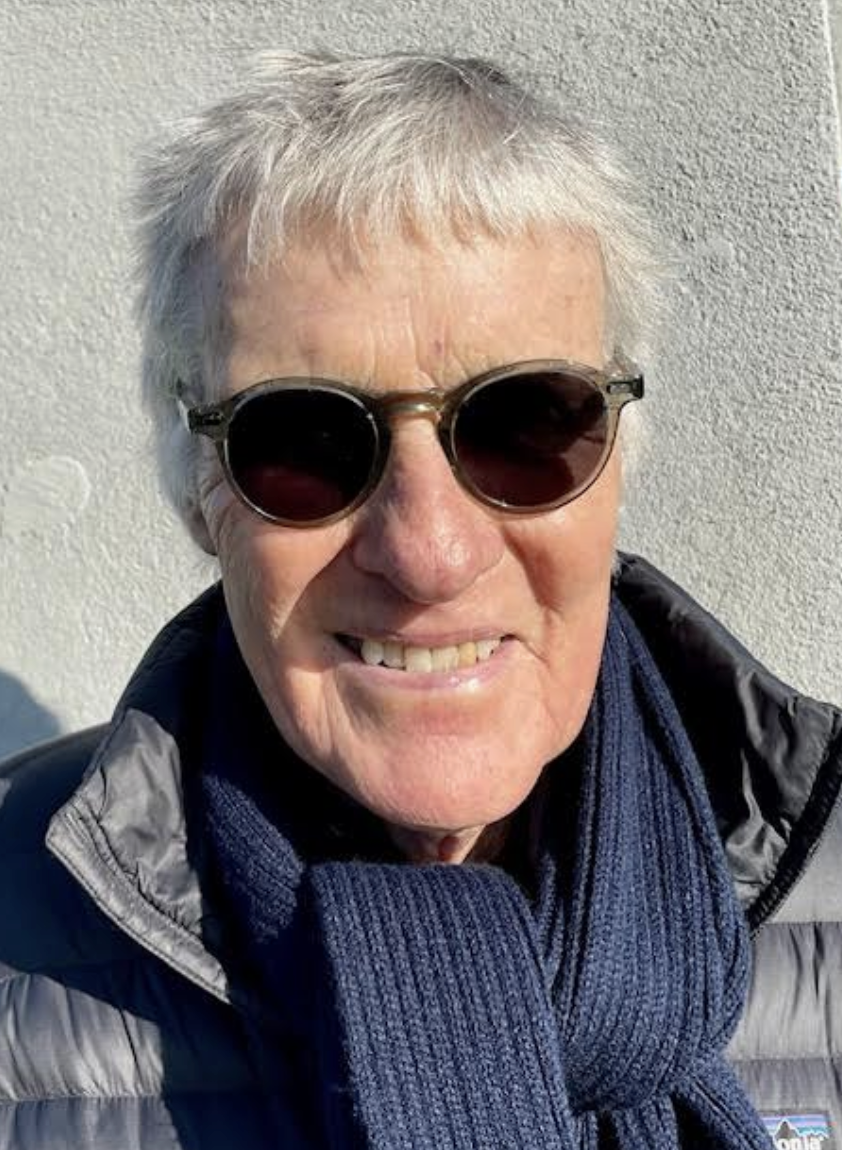
Policy Columnist Jeremy Kinsman served as Canada’s ambassador to Russia, high commissioner to the UK, ambassador to Italy and ambassador to the European Union. He is a Distinguished Fellow of the Canadian International Council.