
From Foreign Investment to the EU: Mark Carney’s High-Stakes Week Ahead
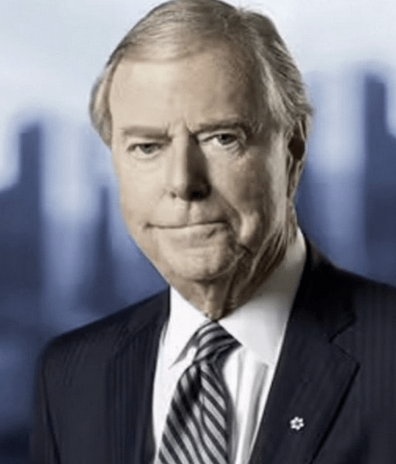
By Don Newman
September 12, 2026
The next week may be the most significant yet for Mark Carney’s government.
It will be defined by two events that fall into that new category of Canadian politics known as “classic Carney”, and the success or failure of one or both could determine the future of his government and of this country.
The first is the Canada Investment Summit in Toronto on Monday and Tuesday, and the second is Carney’s European Union trip to Strasbourg on Wednesday and Thursday. Both events are intended to accelerate Carney’s implementation of the vision he articulated in Davos.
The first event, it could be argued, would be difficult to imagine under any other political leader and most previous prime ministers, for that matter.
There is more than a little pressure as 300 top executives from the world’s leading investment funds prepare to be pitched on more than 160 projects associated with Carney’s Build Canada agenda.
The summit aims to collect a trillion dollars over the next five years to be invested in the government’s ambitious energy, defence and infrastructure projects, aimed at making Canada more self -sufficient, less dependent on the United States and capable of increasing trade with a variety of international partners.
No sooner is the summit over than the Prime Minister is on a plane to Strasbourg, France the home of the European Parliament.
While Justin Trudeau addressed the European Parliament twice, in 2017 and 2022, Carney will be the first non-European leader to attend the State of the European Union Speech to be delivered Thursday by European Commission President Ursula von der Leyen. The next day, Carney will address the European Parliament.
Either event would make the week a high-stakes one. But with the world watching as the Prime Minister tries to develop the connections that will be crucial to Canada’s future as a successful, sovereign nation, the importance of the week cannot be overstated.
And coming as it does as the Canada-United States trade war has escalated to its most punitive and intense chapter to date by United States President Donald Trump only adds to the pressure and the drama.
It also raises the question of what, if anything, Trump will do to try and deflect attention from either or both events and from Carney as he makes two pitches designed to put economic and geopolitical distance between Canada and the United States.
Between the Davos speech, Canada’s recent suspension of trade talks, Trump’s continuing tariff war, and his trash-talking of Canada, Carney has become the de facto leader of the resistance to the American assault on the same world order it helped form and led as a superpower for seven decades.
The Investment Summit has attracted almost 300 CEOs and heavy hitters — from Blackstone President Jonathan Gray to BlackRock CEO Larry Fink — and close to 40 mammoth private investment funds, sovereign wealth funds and governments, all personally invited by Carney.
Working with the provinces, Ottawa has put together a prospectus for potential investors that includes a $10.9-billion high-speed rail link between Edmonton and Calgary and a $57-billion expansion to create a year-round shipping facility at the Manitoba port of Churchill on Hudson’s Bay.
The potential investors will receive personal pitches from the premier of the province where the project in question will be located, in addition to some members of the federal cabinet; Foreign Affairs Minister Anita Anand, Finance Minister Francois Phillipe Champagne, Industry Minister Melanie Joly and International Trade Minister Maninder Sidhu.
Donald Trump may try to punish any American companies or investment funds taking part. Whether he could actually do this is beside the point that a headline threatening to would be an act of intimidation.
The prime minister’s speech two days later in Strasbourg is also not without its complications. Carney will have the world’s attention as he makes his second major speech in Europe this year.
In his Davos speech in January, Carney famously diagnosed a “rupture” in the postwar international order, warned that predatory hegemons had middle-power democracies on the back foot, and recommended alliances of likeminded countries per a “variable geometry” of interests — some overlapping, some not.
He famously said of this new status quo: “If you’re not at the table, you’re on the menu.”
The speech reportedly infuriated Trump, but it is one of the reasons that Carney and Canada have been able to develop agreements on a variety of issues that can be expanded further into more complete co-operation at the Canada-EU Summit next month in this county (location TBA).
It is also why Carney has been invited to speak in Strasbourg and why Canada is the only non-European country that has been admitted into the European Security Action for Europe (SAFE) procurement program, so can now bid on defence contracts as the continent, like Canada, rearms.
So, what Carney says to the European Parliament will have a far larger audience than the parliamentarians in the room, including in Washington, where Trump and his acolytes will be waiting to pounce on anything that offends their sensibilities.
Between the Davos speech, Canada’s recent suspension of trade talks, Trump’s continuing tariff war, and his trash-talking of Canada, Carney has become the de facto leader of the resistance to the American assault on the same world order it helped form and led as a superpower for seven decades.
That can be a powerful place for a Canadian prime minister to be, but it can also be perilous. Carney has demonstrated rare skills while in office. He will need to use all of them in the third week of September.
Policy Columnist Don Newman is an Officer of the Order of Canada, and a lifetime member and a past president of the Canadian Parliamentary Press Gallery.