
Getting Real About Trump’s Trade War
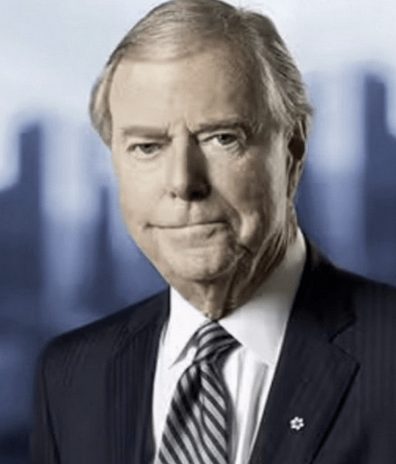
By Don Newman
July 27, 2026
There are a lot of unrealistic Canadians. They’re the ones hoping that the 30-day reprieve before Donald Trump imposes new 50% tariffs on a variety of imports from our country to the United States somehow represents an opportunity to press for a new Canada-US-Mexico agreement (CUSMA).
Not a chance. Without explicitly saying it, President Trump and USTR Jamieson Greer have telegraphed how the Americans are planning to move on CUSMA, and it is not toward the new comprehensive deal that both Canada and Mexico are looking for.
The new tariffs that are to go into effect on August 19th are on a wide variety of products. Everything from cut flowers to hockey sticks. Around the same time that President Trump was announcing the extreme, illegal, and punitive tariffs, Greer was signalling at a Senate finance committee hearing on Capitol Hill that the administration did not have a timetable for the completion of an entire CUSMA renegotiation.
Instead, Greer said he hoped to obtain smaller, less comprehensive agreements individually with Canada and Mexico — not at all what Canada is looking for — by the end of this year.
In Canada’s case, what do the Americans want a small, comprehensive deal to look like?
Here’s a hint. The coercive tariffs threatened by Trump had a few notable exclusions; energy, rare earth minerals, fish and potash. Canada is the major exporter and potentially exclusive large supplier of these products to the United States.
Trump says his country needs nothing from Canada, but of course it does. These four commodities are the most prominent exports we supply to the U.S. and Trump wouldn’t want to mess around with anything that could impede American access.
So, guess what the interim smaller agreement that Greer wants to achieve with Canada by the end of this year will be about? Do not be surprised if the Americans want an agreement that covers energy, potash and critical minerals.
This approach runs counter to Canada’s desire for a comprehensive agreement such as the current treaty, which precludes illegal tariffs on Canadian exports and restores duty-free access both ways across the border.
What to do when the Americans go ahead with their tariffs on August 19th? Discussion of that took up a good deal of time last week at the Council of Federation meeting of the thirteen premiers, joined on its last day by Prime Minister Mark Carney.
The premiers said they are united with Carney on a Team Canada approach to dealing with the Americans. However, there are differences over just what game the team should be playing.
Everything that is worthwhile is a struggle. From this confrontation, a stronger, more independent and influential country can emerge.
For Alberta Premier Danielle Smith and Saskatchewan Premier Scott Moe the tariffs will have insignificant effect. The major exports to the U.S. from both these provinces — including and most notably crude oil — are specifically exempt. Smith and Moe are cautioning against a dramatic response. As trade expert Carlo Dade wrote in Policy, three months before a referendum on Alberta separation, there is a divide-and-conquer quality to these tariffs.
Ontario Premier Doug Ford and British Columbia Premier David Eby know the tariffs have a much greater impact on their provinces. They are for a hard-line response. Ford goes even further, urging a “dollar for dollar” response to the tariffs much as he has since the Trump tariff war began.
The Prime Minister has said that everything is on the table to retaliate. But the argument on how to respond could be the forerunner of a much bigger dispute when it becomes clear that Trump and his team are not interested in a real negotiation.
After all, how can real negotiations be held with a country that says the latest tariffs are American retaliation for Canadian tariffs applied to American exports to this country when those Canadian tariffs were in retaliation for the original tariffs Trump illegally applied to Canada to bully us into either joining the United States or becoming a vassal country?
Obviously, normal negotiations are not in the cards. Canada is going to have to adopt tactics such as the provincial initiatives to remove America liquor from their liquor stores. Those have had a harmful impact on the American booze industry, particularly in California and Kentucky, in a way that has reverberated in Washington.
The other obvious option would be a list of retaliatory tariffs such as the one the Trudeau government issued in 2018 that forced Trump to back down then.
A more substantive option would be for Canada to establish a national export agency for natural and energy resources. Its raison d’être would be justified by the fractured world trading system the American tariff regime has created.
It would operate much like the National Energy Board has, when it allowed exports of natural gas only after being satisfied Canada had enough to meet domestic needs for years into the future. The new board would have the same mandate for potash, critical minerals and a variety of forms of energy, particularly electricity.
Temporary reductions in supplies of potash ordered by the new board would quickly attract the attention of the mammoth American agribusiness sector. Lights flickering or going out, air conditioning or heat failing because of electrical brown-outs would quickly get Americans in New York or Detroit upset.
Controls on the export of critical minerals would hamper the development of artificial intelligence and other cutting-edge technologies, giving China a leg up in the race to control development for the rest of this century.
The pressure tactics on the Trump administration to make a deal with Canada would be tremendous.
The Americans could retaliate in all sorts of ways. Most likely by cutting Enbridge Line 5, which delivers Alberta Oil to Ontario through Michigan and other northern states. That could be countered by supplying Ontario with oil bought offshore, but it could also spur construction of an Alberta-to-Ontario pipeline entirely through Canada, which the two provinces have agreed to in principle, and which should have been built years ago.
If events follow this course, it means difficult, even fearful times are ahead. Canadians are going to have to steel themselves for the fight.
But everything that is worthwhile is a struggle. From this confrontation, a stronger, more independent and influential country can emerge.
Policy Columnist Don Newman is an Officer of the Order of Canada, and a lifetime member and a past president of the Canadian Parliamentary Press Gallery.