
‘Hotel Exile’: The Riveting Wartime History of the Landmark Lutetia
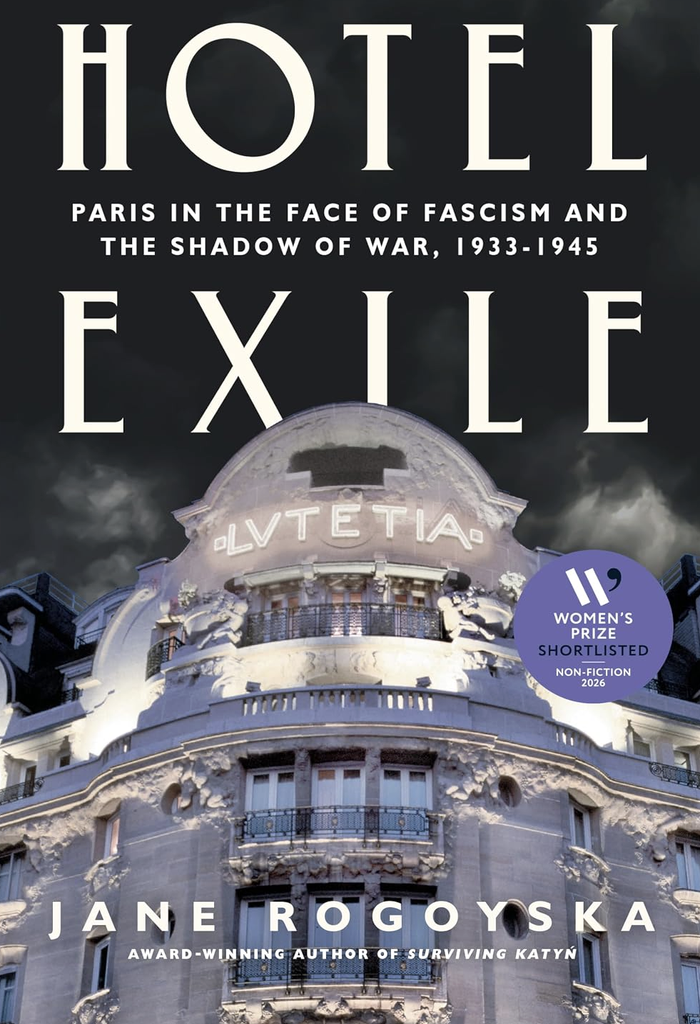
Hotel Exile: Paris in the Face of Fascism and the Shadow of War, 1933-1945
By Jane Rogoyska
Penguin Random House, May 2026/360 pages
Reviewed by Leslie Scanlon
June 23, 2026
I ordered Hotel Exile thinking it would be something like the fictional A Gentleman in Moscow by Amor Towles, in which the hotel and its staff are very present as characters in the story.
In Jane Rogoyska’s riveting nonfiction work, the Hôtel Lutetia — the very real Art Nouveau Left-Bank landmark named for the pre-Roman town that grew into Paris — and its staff are used more as a narrative loom to weave together the stories of so many people who knew incredible turbulence and tragedy before and during WWII.
For a lucky few, it was the scene of improbable reunions with loved ones after the Nazis were defeated and the Lutetia became a repatriation centre for POWs, displaced persons, and survivors of German concentration camps.
Having served as a diplomat in Paris in much calmer times, Hotel Exile offered me a window into a whole other life of the city I love.
When my family and I were posted to Paris in 2007, our apartment was on Rue du Faubourg St-Honoré in a beautiful Haussmanian building. The basement had a dirt floor and the first time I went down to our storage locker, I was reminded of the wartime history of the neighbourhood and the city, and wondered if any Jewish residents or neighbours had taken refuge in this basement during the war, and whether they had survived.
Having just arrived in the city, I had been so moved by the marble signs that can be found all over Paris marking the exact locations where members of the Jewish community were picked up and sent to the death camps, I was well aware of the stories of suffering that still lurk behind and beneath the city’s exquisite facades.
These stories of people who fatefully applied logic and reason to a situation defined by previously unthinkable evil are both relatable and heart-wrenching.
There are so many such beautiful buildings in Paris that speak to this past, including — for me, most movingly — the Musée Nissim de Camondo, the former private residence of the Jewish Camondo family that opens onto the glorious Parc Monceau.
Some of the Camondo family escaped the Holocaust, but others died in Auschwitz. Like so many, despite having the chance to leave France when the signs were pointing to a terrible future, they intensely believed that as French citizens who had given so much to the state, they would not be touched.
This feeling of being untouchable — or at least of being able to stay safe however they could — permeated the lives of so many in the early war years and is compellingly conveyed in Hotel Exile.
From Paul Léon, James Joyce`s secretary and close friend, who didn’t want to leave Paris until his son graduated from his prestigious lycée (and who was, tragically, picked up on the very day of his son’s graduation) to Irène Némirovsky, author of the moving Suite Française, who didn’t leave because she wanted to stay close to her publisher. She died in Auschwitz in 1942.
These stories of people who fatefully applied logic and reason to a situation defined by previously unthinkable evil are both relatable and heart-wrenching for readers who, per the proof of history, know what’s coming.
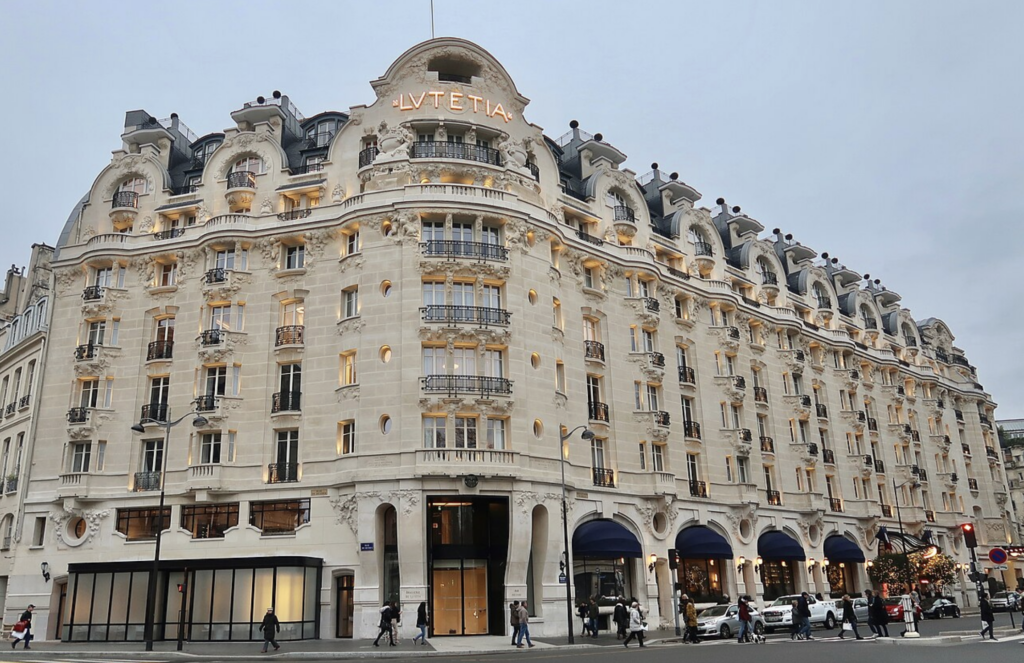
The Lutetia today/Wikipedia
In the lead-up to the war, the hotel played a role as an oasis for dissidents who left Germany when Hitler began his rise to power.
They included novelist and political activist Heinrich Mann (who led the Lutetia-based “Lutetia Committee”, aimed at forming an alternative German government) and Willy Brandt, anti-Nazi activist and future Chancellor of West Germany, who lived in exile in Paris and spent much time at the hotel in the company of his likeminded compatriots.
Here, as the author points out in so many of the vignettes, the hotel doesn’t care to whom or for what purpose meetings rooms are rented out, as long as the bills are paid.
This subtle form of subterfuge in a world gone mad permeated the Lutetia’s choice architecture at a time when collaboration with the Nazis in all matters was far safer and, for business establishments, much more profitable.
The chef caviste (chief sommelier) walled into a corner of the basement the best wines and champagnes to keep them out of the hands of the German military command who were staying in the hotel… and the wine survived the war. The staff who were able to keep their jobs despite the German takeover of the building stayed professional throughout, while possibly, it is rumoured, hiding members of the Jewish community in the basement of the hotel.
Canada makes an appearance. In 1944, the new ambassador (and future Governor General) Georges Vanier and his wife Pauline are horrified by the conditions in France at that late stage in the war, so they organize deliveries of food and clothing to the Lutetia from Canada, sometimes via the diplomatic bag.
Like a well-preserved dowager filled with secrets, the Lutetia’s real story lies in the human drama that swirled in and around her before, during, and after WWII.
Rogoyska quotes many who stayed at the hotel during the difficult pre-war, wartime, or post-war years, and others whose association was more tragic as they haunted the lobby for days, weeks or months, checking the information board to see if their relatives had been located. Most were disappointed.
Hotel Exile moves between intimate memories, accounts of intense bravery, stunning betrayals, tragic endings, interpersonal conflict, and fascinating statistics, to tell the incredible – and true – story that took place between 1933 and 1945.
In the end, we discover what happened to everyone whose stories we have read, sometimes to great satisfaction when those who deserved it got their due but mostly with sadness when the most terrible fates befell the undeserving.
The Hotel Lutetia, or the Hotel Exile, is a short walk away from the historic and beautiful Jardin du Luxembourg, the storied café Les Deux Magots, the Louvre, the Musée d’Orsay. It is an architectural gem that one can’t help but admire — especially now that it has been refurbished as a five-star Mandarin Oriental hotel.
But like a well-preserved dowager filled with secrets, the Lutetia’s real story lies in the human drama that swirled in and around her before, during, and after WWII.
Make sure you’re comfortable when you pick up that story, as you won’t be able to put it down.
Leslie Scanlon is a career diplomat who is currently serving as Canada’s ambassador to Israel.