
How CUPE’s Defiance Reset Canadian Labour Relations
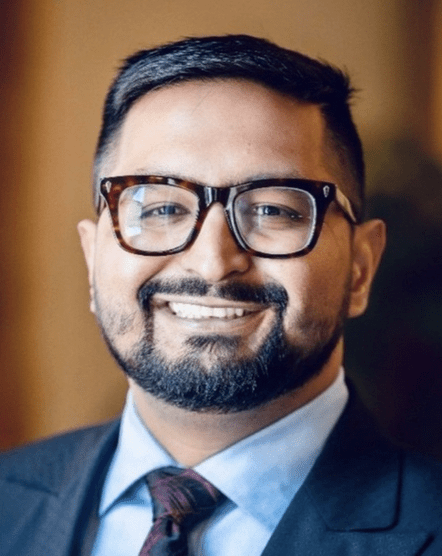
By Anil Wasif
September 1, 2025
During last month’s strike by Air Canada’s 10,500 flight attendants, an Angus Reid poll found that most Canadians sided with the flight attendants. Nearly 60% said they should be paid for all their work, as opposed to only the work they do when the plane is in the air, and 84% describe the current conditions as “unfair”.
Two days later, at 2:00 PM on Sunday, August 17, 2025, a line was crossed. As the deadline for a government-mandated return to work came and went, thousands of flight attendants stayed on the picket line as their union, the Canadian Union of Public Employees (CUPE) defied the back-to-work order. Their chants of “Forced to fly? We won’t comply!” echoed through the terminals, marking a potent moment of organized defiance that could redefine Canadian labour rights.
“This was a historic moment and it may have a ripple effect across the labour movement,” University of Saskatchewan political science professor Charles Smith told The Globe and Mail. “The membership was united, public support for flight attendants was strong, so CUPE made the calculation that they could defy the order and continue striking until they got a better deal for their flight attendants.”
Two days later, on August 19th, Air Canada resumed flying after reaching an early-morning tentative agreement with CUPE.
To view this illegal strike in isolation is to miss the systemic erosion of collective bargaining that made it necessary. The flight attendants’ defiance was a calculated response to a federal government that has systematically hollowed out workers’ most fundamental power, leaving unions with little recourse but to break the law to save the bargain itself.
The context for this showdown had been building for years. The core grievance was the industry-wide practice of “unpaid work,” where flight attendants are compensated only from the moment the aircraft door closes until it opens at the destination. CUPE estimated this cost the average attendant 35 hours of unpaid labour each month for mandatory duties like boarding and safety checks.
This issue was compounded by a decade-long contract that saw real wages eroded by inflation, a situation so dire that union locals had established food banks for junior members.
The federal government, meanwhile, had grown comfortable using Section 107 of the Canada Labour Code—a clause allowing the minister to unilaterally end strikes—as its default tool for managing disputes after a 2015 Supreme Court decision made back-to-work legislation more difficult by deeming the right to strike a constitutionally protected one.
The decision to defy the back-to-work order was not an attack on the rule of law; it was an attempt to restore it to a bargaining process that had become a sham.
This pattern has created what labour-rights experts call “permanent exceptionalism”: a state where the right to strike is honoured in principle but almost always deemed unacceptable in practice. For employers like Air Canada, this created a perverse incentive. Why engage in good-faith negotiation when you can simply wait for government intervention?
The airline’s management seemed to have no strategy beyond calling on Ottawa, a fatal miscalculation of the union’s resolve. Air Canada CEO Michael Rousseau admitted his surprise, telling BNN Bloomberg, “We thought that Section 107 would be enforced”.
This act of defiance was not without precedent. In 2022, CUPE education workers in Ontario successfully defied similar legislation, proving that a government order is only as powerful as the workers’ willingness to obey it. The Air Canada flight attendants, backed by a staggering 99.7% strike mandate, knew they were standing on solid ground.
When Jobs Minister Patty Hajdu invoked Section 107 just 12 hours into the strike, the union was ready. They openly defied the order, and CUPE National President Mark Hancock was filmed tearing it up, declaring he was prepared to face jail time rather than back down.
Hancock was backed by not only public sentiment but by the principle articulated in that 2015 Supreme Court ruling, Saskatchewan Federation of Labour v. Saskatchewan. The court declared unequivocally that the right to strike is “an essential part of a meaningful collective bargaining process”.
By repeatedly using a ministerial order to circumvent this right, the government was effectively tearing up its side of the post-war social contract: that workers accept restrictions on striking in exchange for a guarantee that bargaining will be meaningful.
Faced with an intractable illegal strike and daily losses estimated at $43 million, Air Canada’s leverage evaporated. The resulting agreement was a gamechanger. It shattered the old compensation model by securing pay for ground time—starting at 50% of the hourly rate and rising to 70% by 2028—and included a cumulative wage increase of up to 20% over four years.
The decision to defy the back-to-work order was not an attack on the rule of law; it was an attempt to restore it to a bargaining process that had become a sham. By refusing to comply, the flight attendants forced both the airline and the government to confront the consequences of a broken system. They had to break a specific order to uphold a fundamental principle of workers’ rights: for collective bargaining to mean anything, the right to withdraw one’s labour must be real.
This was a costly but crucial lesson, not in the virtue of breaking the law, but in the consequences of a bargaining system that fails to provide a legitimate path to resolution for workers.
Policy Columnist Anil Wasif is a public servant in the Ontario government. He serves on the University of Toronto’s Governing Council and the advisory board of McGill’s Max Bell School. Internationally, he serves on the OECD’s Infrastructure Delivery Committee and the World Bank Economic Development Institute’s Community of Practice. He co-owns and manages the global non-profit BacharLorai. The views expressed are his own.